

Shrimp and eel noodles 虾爆鳝面
A Hangzhou noodle-shop classic pairing springy wheat noodles with crisp-edged, tender eel and soft, sweet river shrimp; kitchens vary from a brothy bowl to a richer half-broth style.
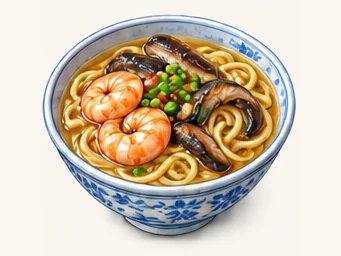
What to expect
虾爆鳝面 (xiā bào shàn miàn) is strongly associated with Hangzhou’s noodle tradition. Local reporting documents it as a signature at the long-running Kui Yuan Guan (奎元馆), while Hangzhou listings also show it on menus elsewhere in the city. It is best described as a Hangzhou classic, not as a dish exclusive to one restaurant or necessarily to Hangzhou alone.
A well-documented Kui Yuan Guan method starts with eel that is cleaned, deboned and cut into portions. The eel is fried twice in rapeseed oil to crisp its outside, then tossed in pork fat with aromatics such as ginger, onion and garlic shoots; a little sesame oil finishes the topping. River-shrimp pieces are lightly coated and cooked briefly so they stay pale and tender. This is one restaurant’s careful method, not a rule followed by every kitchen.
At the same restaurant, the noodles receive an unusual two-stage treatment: briefly blanch, cool and rest them, then cook them again for a springy, resilient bite. The eel’s seasoned cooking liquid enriches the noodle broth. Another Hangzhou shop’s reported “half-broth” version takes a different route: the noodles are tossed with soy and hot oil, then softened in eel sauce and water before the eel and shrimp go on top. The bowl can therefore arrive soupy, saucy, or somewhere between; ask what style the shop serves if you have a preference.
Look for a contrast of textures rather than a uniform topping: chewy wheat noodles, eel with a crisp edge and tender interior, and plump, lightly sweet shrimp. The sauce and broth are savory and rounded by the eel, aromatics and cooking fats; sesame oil gives the finished bowl a fragrant top note. A particularly rich serving may feel substantial, so eat it while the eel’s crispness and the shrimp’s softness are at their best.
How to order
Show the name 虾爆鳝面. If a menu offers 半汤儿 (bàn tāng er), that is a reported local half-broth style; ask the server to explain that shop’s version rather than assuming every restaurant uses the term the same way. Recipes, noodle texture, broth amount and topping proportions vary by kitchen. If boneless eel matters to you, confirm it when ordering.
More dishes to compare
Explore related local specialties and compare their names, preparation notes and ordering guidance.
Pianerchuan noodles 片儿川 →
Pork slices, bamboo shoots and preserved mustard greens are cooked into a savory topping and combined with wheat noodles in broth. The ingredients are usually cut small enough to distribute through the bowl. Preserved greens add tangy saltiness, bamboo shoots provide a clean bite, and pork enriches the otherwise light soup.
Longjing shrimp 龙井虾仁 →
Shelled shrimp are lightly seasoned and quickly cooked with brewed Longjing tea or tea leaves. Careful timing keeps the shrimp tender while allowing a restrained tea aroma to come through. The shrimp are springy and gently sweet, with a light grassy fragrance rather than a strongly bitter tea sauce.
Sources & reading
Recipes and servings vary between kitchens.