

Siwawa vegetable wraps 丝娃娃
Siwawa (丝娃娃) is a Guiyang snack built around a thin rice-flour pancake, a plate of shredded vegetables and a tangy dipping sauce. You assemble each small wrap yourself, so the meal is as much about choosing textures and learning the fold as it is about the sour, spicy flavour.
Tap any red Chinese text to hear it in Mandarin.
What it is
Siwawa is a Guiyang street-style snack served as components rather than as a pre-filled roll. A thin pancake is the “swaddling cloth”: add a small amount of prepared filling, fold it into a bundle, and dip it just before eating. The provincial Guizhou portal describes the wrapper as a paper-thin rice-flour pancake and explains the name through its resemblance to a baby in swaddling clothes.
The provincial heritage list also records 红酸汤丝娃娃制作技艺 Hóng Suān Tāng Sī Wá Wá Zhì Zuò Jì Yì—red sour-soup Siwawa preparation—as a traditional craft associated with Yunyan District, Guiyang. That listing documents a recognised local preparation tradition; it does not mean every serving uses one fixed red-sour-soup recipe.
Ingredients, texture and flavour
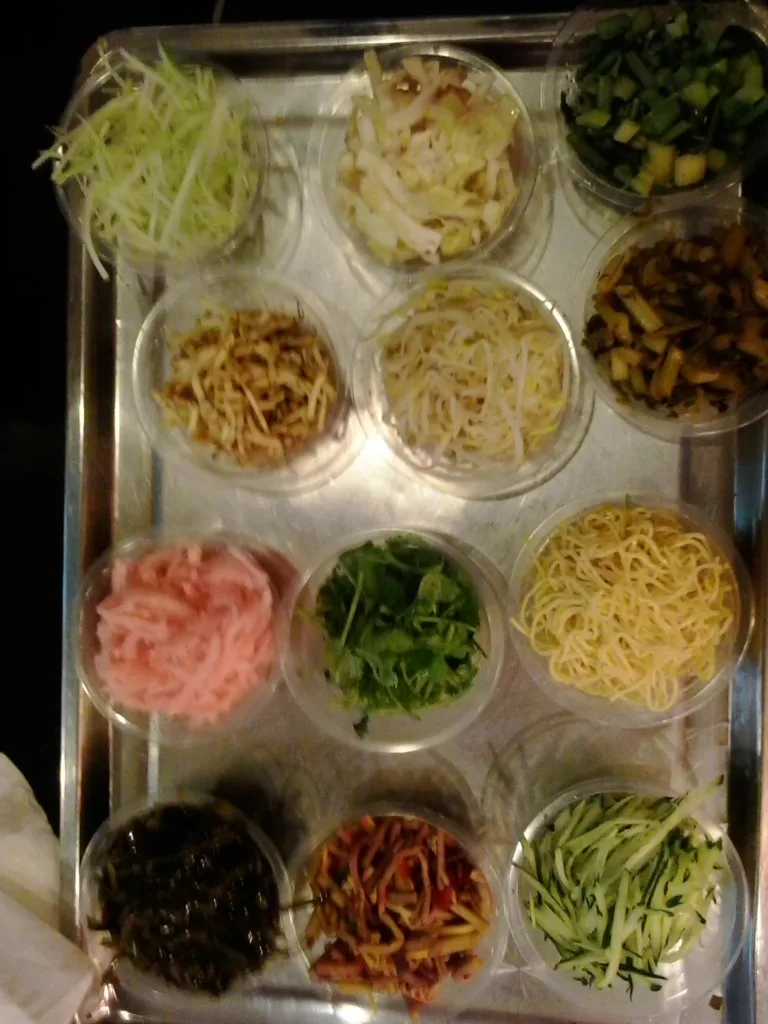
Commonly documented fillings include shredded radish, zhe’ergen (折耳根, fish mint), kelp, cucumber, pickled turnip, fried soybeans and crushed chilli. The fish mint can be an assertive herbal note, while the vegetables bring crunch against the soft, flexible wrapper.
A 2024 Nanming district heritage account records a local family craft using a wider set of shredded ingredients, including carrot, fish mint, pickled radish, lettuce, lotus root, kelp, potato, pickled cabbage, tofu strips, cucumber, cold noodles, mung-bean sprouts and salt vegetables, finished with crisp beans and dipping water. Treat this as a documented local variation rather than a universal ingredient list: kitchens change the vegetables, toppings and sauce.
The characteristic contrast is fresh or crisp vegetables, a tender wrapper and a sour-savoury, often spicy dip. A People’s Daily regional report describes the diner assembling the dish at the table with a soft, chewy skin and Guizhou sour dipping water. It also notes that locals eat it in summer and in other seasons, so the dish is not presented as a short, fixed-season attraction.
How to eat it
Start with only a few contrasting strips. Fold the lower edge up and the sides inward, then add a little dipping sauce immediately before eating. A small wrap is easier to close and keeps the sauce from spilling; once you know the texture, try different combinations instead of mixing every topping at once. If fish mint is new to you, ask for it separately for the first wrap so its strong aroma does not dominate the whole plate.
Keep the Chinese name handy: 丝娃娃 Sī Wá Wá. Ask the person serving it to demonstrate one wrap and confirm what is included in the set—wrappers, vegetables, toppings and dipping water can be counted differently. The amount of chilli and the contents of the sauce are worth checking before you order.
Finding it without choosing a particular shop
This is a dish rather than a single venue, so this guide does not assign it a restaurant, brand, address or door-to-door route. In Guiyang, search the exact name 丝娃娃 Sī Wá Wá in Meituan (美团) or Amap/Gaode Maps (高德地图) with your current location. Open nearby listings and check the menu or recent food photos for the dish itself, the date of recent reviews, the posted opening status and whether the listing says it is serving now. Then ask the vendor directly about today’s supply and the sauce before travelling; platform rankings are not a guarantee of quality or availability. Amap’s public search page accepts the Chinese dish name, but live listing details can depend on the app or current session.
Dietary notes
Do not assume that a colourful vegetable plate is automatically vegan or free of allergens. Fried soybeans and tofu strips are documented in local descriptions, and the dipping water may use fermented seasonings, chilli or other ingredients that vary by kitchen. If you have a soy allergy, cannot eat chilli, or need vegetarian or vegan food, ask about the wrapper, toppings and sauce separately. The provincial source describes a rice-flour wrapper, but individual vendors may use their own formulation; confirm ingredients if gluten avoidance is medically important.
More dishes to compare
Explore related local specialties and compare their names, preparation notes and ordering guidance.
Anshun rice-sheet rolls 安顺裹卷 →
Thin rice sheets are cut and rolled around vegetables and seasoned additions, then arranged for eating with sauce. Each roll is small enough to sample several filling combinations. The wrapper is smooth and soft, while the center can be crunchy, tangy and spicy, depending on the vegetables and dressing.
Guiyang tofu balls 贵阳豆腐圆子 →
Tofu is seasoned, formed into balls and fried until the surface becomes browned and crisp. The interior remains soft, and a separate dip adds the final seasoning. The shell cracks around a moist, airy tofu center, with a mild bean flavor beneath the stronger chili or other dipping ingredients.
Sources & reading
Recipes and servings vary between kitchens.
Image credits & notes (1)
- A tray of shredded vegetables, herbs, noodles and other toppings for siwawa (丝娃娃), photographed in Guiyang, Guizhou. Photo: Caitriana NicholsonPhoto: CC BY-SA 2.0