

Suzhou rice-dumpling candy 粽子糖
A small, hard Suzhou confection shaped like a four-cornered rice dumpling. The classic pine-nut version is made by cooking sugar, folding in nuts, pulling the candy into a rope and snipping it into angular pieces; it contains no rice merely because of its name.
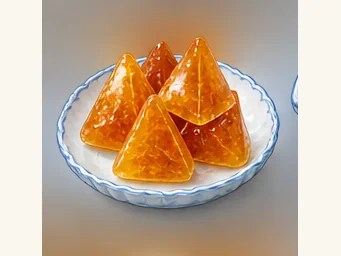
粽子糖 takes its name from its resemblance to a wrapped zongzi, but it is candy, not a rice dumpling. It is distinct from the soft, sticky rice-flour sweets such as gaotuan and qingtuan in Suzhou’s municipal food guide.
What it is made of and how it is shaped
A documented classic, pine-nut 粽子糖 (松仁粽子糖), uses white sugar, maltose syrup and pine nuts. At Caizhizhai’s workshop, a Suzhou news report describes dissolving and filtering the sugars, then boiling them into a clear syrup. The hot candy is poured onto a cooling table, scattered with pine nuts and repeatedly folded as it cools. Once pliable, it is worked and pulled into a long rope. The maker cuts the rope with scissors, turning it between cuts to form the candy’s faceted, dumpling-like shape. It hardens as it cools fully. That is a documented workshop method and formula, not a claim that every maker uses an identical recipe.
Flavor, texture and variations
The pine-nut pieces look amber-gold and glassy, with sharp edges and nuts visible inside. The report describes a sweet, fragrant taste, a pine aroma and a candy that melts cleanly rather than sticking; expect a firm, brittle bite before it softens in the mouth. Another Jiangsu food feature describes rose and pine-nut additions and mentions a green mint-flavored version. Recipes and flavorings can differ by producer, so use the package label rather than the shape to identify ingredients.
Try one piece on its own to notice the toasted, resinous aroma of the nuts against the cooked-sugar sweetness. It works as a small shareable sweet or a souvenir confection; it is not a meal or a rice-filled snack. For dietary needs, check the actual package for nuts and other ingredients, and ask the seller if the label is unclear.
Buying it in Suzhou
The candy is a Suzhou specialty associated with the long-established Caizhizhai confectionery, whose history is recounted in a local report.
Where to eat it
You can find Suzhou rice-dumpling candy all over Jiangsu, so there is no need to seek out one particular restaurant. To find one near you, search for “粽子糖” in Meituan (美团) or Amap (高德地图) and check recent reviews, distance and opening hours.
More dishes to compare
Explore related local specialties and compare their names, preparation notes and ordering guidance.
Changzhou sesame pastries 常州大麻糕 →
Wheat pastry is layered with fat, shaped into a broad cake and covered with sesame before baking. Sweet and savory fillings are made as separate choices. The pastry breaks into crisp, flaky layers with a strong toasted-sesame aroma. A sweet version is a tea snack, while a savory one feels more like a substantial breakfast bread.
Suzhou rice-flour sweets 苏式糕团 →
Rice and glutinous-rice flours are worked into a range of steamed cakes, dumplings and filled sweets. Bean paste, sesame and seasonal ingredients create different products rather than one standard recipe. Textures range from soft and crumbly to elastic and sticky, so appearance alone does not predict the bite. Most are gently sweet and suited to tea.
Sources & reading
Recipes and servings vary between kitchens.