

Flat Rice Noodle Soup 粿仔汤
Flat Rice Noodle Soup is featured among the local specialties of Taiwan.
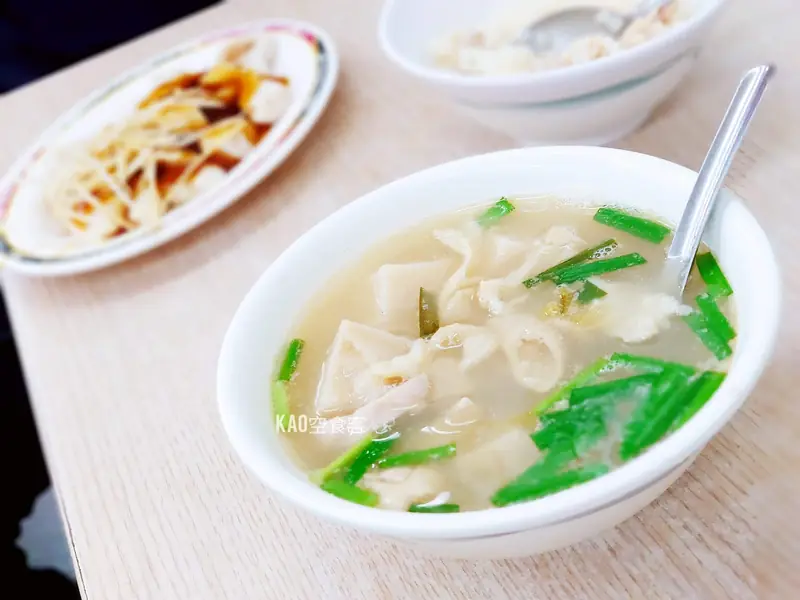
Image notes
Resized for the web; the photo itself has not been edited.
Flat Rice Noodle Soup (粿仔汤) is a Chiayi City soup of flat rice-cake strips in a light broth, a breakfast bowl for which the rice strips, not the toppings, set the texture.
How it is cooked
Rice is ground, steamed into a flat sheet and cut into wide strips. To serve, the strips are dropped into hot broth for a short time so they soften without breaking, and the bowl is finished with pork slices, offal, a boiled egg, fried shallot or a scatter of white pepper. The broth is usually made from pork bones and kept light so the rice strips stay the focus. Longer cooking turns them into porridge.
Flavour and texture
The strips are soft, a little chewy and slightly slippery, and they take on the salt of the broth without losing their shape. The broth is clean and savoury rather than rich, which is what makes the bowl a breakfast instead of a heavy meal. Toppings add the interest: pork for depth, offal for bite, fried shallot for aroma, and chilli or vinegar on the table for those who want more.
Local roots
Chiayi City is the region in the record, and a rice-strip soup fits a city where the day starts early and breakfast is eaten out. 粿仔 describes the flat rice cake rather than the soup, so the same ingredient also appears fried or dressed cold elsewhere. Shops that sell it usually keep a short menu and a pot of broth going from early morning.
Ingredients and dietary questions
Expect rice strips, pork or bone broth, salt, white pepper and toppings such as pork, offal, egg, shrimp or fried shallot. The broth is normally meat-based, so ask 是素的嗎 (is it vegetarian) and 用什麼湯 (what is the broth) rather than assuming. Offal appears often; ask 可以不要內臟嗎 (can you leave out the offal) when ordering, and note that the rice strips themselves are gluten-free while the broth and toppings may not be.
How to order it
Show 粿仔汤 and ask 一碗多少錢 (how much is a bowl), 裡面有什麼 (what is in it) and 可以加蛋嗎 (can I add an egg). Some shops sell a dry version dressed with sauce as well as the soup; ask 有乾的嗎 if you would rather not have broth. Say 內用 or 外帶, and check whether the takeaway bowl is packed with the broth separate so the strips do not swell.
How to eat it
Eat it hot with a spoon and chopsticks, adding vinegar or chilli after the first taste. A bowl is a light breakfast on its own; add a boiled egg or a plate of greens if you want more. Because the strips keep absorbing broth, eat them soon after the bowl arrives rather than letting it stand.
More dishes to compare
Explore related local specialties and compare their names, preparation notes and ordering guidance.
Spanish mackerel thick soup 土魠魚羹 →
Spanish mackerel thick soup (土魠魚羹) coats fried fish pieces in a thickened, sweet-savoury gravy and is often served with noodles, while 粿仔汤 keeps a clear light broth so the flat rice strips stay distinct and the bowl stays drinkable.
Questions before you order
Is 粿仔汤 the same as rice noodles?
No. The strips are made from steamed rice cake rather than extruded rice noodles, so they are wider, softer and more absorbent, and they soften quickly in hot broth.
Can I get it without offal?
Usually yes, since toppings are added per bowl. Ask 可以不要內臟嗎 when ordering, and check whether the broth itself is made with pork bones if you need a meat-free bowl.
Sources & reading
The supplied food list supports this name and regional association. The culinary terms below are explained as menu vocabulary; a local recipe, origin story and venue availability have not been independently verified.