

Seafood Thick Soup 海鲜羹
Seafood Thick Soup is featured among the local specialties of Taiwan.
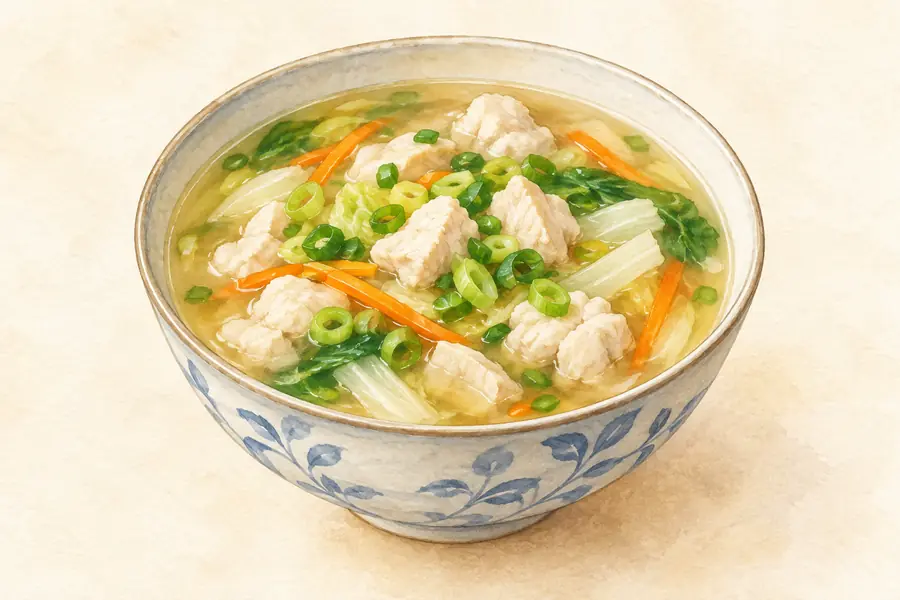
Keelung seafood thick soup (海鮮羹) is a lightly starch-thickened broth in which squid, cuttlefish or prawns are cooked to order, one of the bowl foods a harbour city built its reputation on.
How it is made
In Taiwan, geng is a soup thickened with starch — potato starch or sweet-potato starch — rather than a roux, and the starch goes in as a slurry at the end so the broth stays glossy instead of gluey.
The seafood is added raw and poached in the broth, which is why the bowls come out fast and the squid stays tender. Keelung cooks are particular about the thickener: the same stalls that thicken a soup with potato starch use sweet-potato starch to coat pork for meat balls.
Flavour & texture
The broth is the point: sweet with seafood, lightly viscous and drinkable to the last spoonful. Squid gives a firm snap, cuttlefish a softer chew, and prawns a clean sweetness that the starch carries rather than masks.
Finishing is done at the table. Coriander and white pepper go on top, and black vinegar or chilli oil are there for you to add. Taste it plain first — the vinegar changes the bowl completely.
Local roots & traditions
Because Keelung sits on the coast, its snack street is built on seafood, and much of it ends up in thick soup: cuttlefish, squid, prawn-and-pork and braised eel. The prawn-and-pork and braised-eel versions are the ones locals say are hardest to find elsewhere.
The market also sells misua thick soup with intestine and cuttlefish, and pork-rib thick soup made with black-pig ribs coated in sweet-potato starch. A bowl of soup with a plate of noodles is the standard way to eat here.
Ingredients & dietary needs
Squid, cuttlefish or prawns, starch, stock, coriander and white pepper. Some versions are made with tendon, and the misua version commonly includes pork intestine, so ask before assuming a bowl is offal-free.
This is shellfish, so shellfish allergy is the main concern. The broth is usually seafood or meat stock, and the thickener is starch rather than flour — good news if you avoid wheat. Nothing here is vegetarian.
How to order seafood thick soup
Name the seafood you want rather than the generic term: 花枝羹 for cuttlefish, 魷魚羹 for squid, 蝦仁羹 for prawns. If you want the misua version, ask for 麵線羹.
Ask whether the bowl includes intestine (大腸) or tendon (筋) if either bothers you, and whether you want it as 羹 or as a thinner 湯. Ask for 不要香菜 if you do not want coriander.
How to eat it & plan a meal
Eat it immediately, while the squid is still tender; it firms up as the bowl sits. Add pepper and a few drops of black vinegar only after the first spoonful.
Order a plate of 大麵炒 or a bowl of rice alongside — the soup alone is a snack, not a meal. One soup and one noodle dish is a light meal for one person, and it is how most locals order.
More dishes to compare
Explore related local specialties and compare their names, preparation notes and ordering guidance.
Seafood Congee 海鮮粥 →
Penghu seafood congee cooks rice down with the seafood until it thickens naturally; Keelung thick soup keeps the broth clear-flavoured and thickens it with starch. Same ingredients, two different textures.
Questions before you order
What exactly is a geng?
It is a soup thickened with starch — usually potato or sweet-potato starch — rather than with a flour roux. In Keelung it is a whole family of bowls: cuttlefish, squid, prawn, pork-rib and braised eel are all served this way.
Are there versions with offal?
Yes. Misua thick soup commonly contains pork intestine, and some stalls sell a tendon version of meat thick soup. Ask for 不要大腸 if you want it left out, or choose a plain squid or cuttlefish bowl.
Sources & reading
The supplied food list supports this name and regional association. The culinary terms below are explained as menu vocabulary; a local recipe, origin story and venue availability have not been independently verified.