

Luoshan Sauced Sticky Rice 罗山米糕
Luoshan Sauced Sticky Rice is featured among the local specialties of Taiwan.
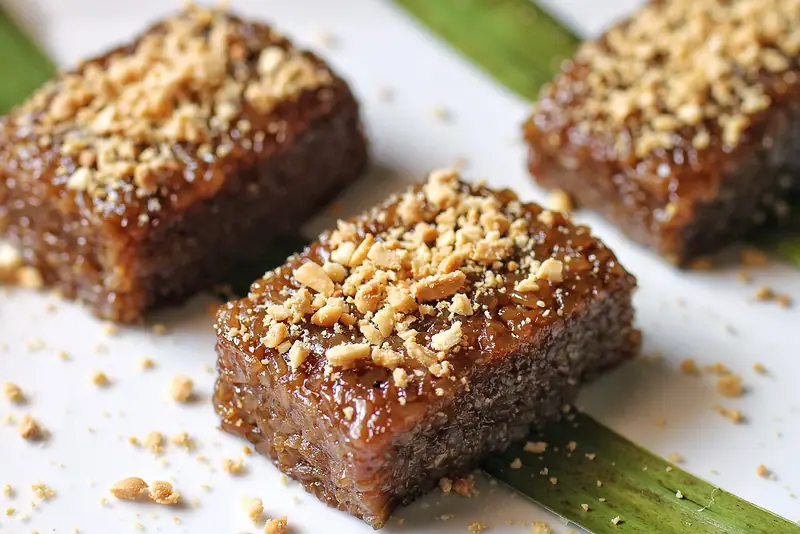
Luoshan Sauced Sticky Rice (罗山米糕) is the Chiayi reading of mi gao: sticky rice steamed first and sauced when served, in the city once called Zhuluoshan.
How it is made
Mi gao covers rice foods made by steaming, usually from sticky rice or from rice ground into flour, which is why the article describes it as easy to make, easy to keep and eaten in many ways. The Taiwanese bowl version differs from 油飯 at the point of service: oil rice is stir-fried with oil and sauce after the rice is cooked, while mi gao is steamed and only then dressed.
What it tastes like
The base is glutinous rice, dense and slightly chewy under a savoury sauce. The sauce carries the flavour: the Tainan style described in the reference is rice topped with braised gravy plus fish floss and pickled radish, or with minced pork, peanuts and fish floss. For Chiayi the article records a sharper finish — garlic paste added at the table, with bonito stock on the side.
Why 羅山 means Chiayi
Chiayi City stands in the heart of the Chianan Plain in southern Taiwan and is the centre of the Chiayi metropolitan area. Its older name was 諸羅山, a transliteration of the Hoanya village name recorded in Dutch documents as Tirosen and related spellings; the Qing county seat moved there in 1704, and the name was changed to 嘉義 in 1787.
羅山 is the short form of that former name, which is what fixes the dish to this city rather than to a generic Taiwanese rice bowl. The county around the city is separately famous for its own foods, and the same reference article lists Chiayi County's goose from Minxiong among its local specialities.
Ingredients and dietary questions
Expect glutinous rice, a braised pork-based sauce and toppings that differ by shop — fish floss, pickled radish, peanuts, or a version without pork. Fish floss and minced pork are common enough that a traveller avoiding pork, fish or soy should ask what the shop puts on the bowl and whether the sauce is meat-based, rather than assuming a vegetarian default.
Ordering it
Say 罗山米糕 or simply 米糕. If the shop serves it Chiayi-style, expect garlic paste to be offered or already added; 不要蒜 means without garlic. Asking for 柴魚湯, bonito stock soup, matches the way the article describes the pairing, though not every shop will have it.
How it is eaten
The portion is deliberately small: the reference article explains that a mi gao bowl is a snack in the Taiwanese sense of eating something well made rather than eating to fullness, which is also why so many Taiwanese rice snacks come in shallow bowls. It is an afternoon food as much as a meal, and the sauce is meant to soak only the top of the rice.
More dishes to compare
Explore related local specialties and compare their names, preparation notes and ordering guidance.
Qingshui Glutinous Rice with Braised Pork 清水米糕 →
Qingshui Glutinous Rice with Braised Pork (清水米糕) is named for Qingshui in Taichung, the way 羅山 points back to Chiayi's old name. Both are bowls of steamed sticky rice rather than stir-fried oil rice, and in both the town name carries the identity: what changes between them is the sauce, the toppings and the local habit of adding garlic or not. The reference material documents the Tainan and Chiayi styles in detail and leaves the finer shop-level differences open.
Questions before you order
Is mi gao the same as oil rice?
No. Oil rice is stir-fried with oil and sauce after cooking, while mi gao is steamed and then dressed with sauce when it is served.
Why is this listed as a Chiayi dish?
The 羅山 in the name corresponds to 諸羅山, the old name of Chiayi City, and the reference article records garlic paste and bonito stock as the Chiayi way of serving mi gao.
Source introduction: Wikipedia contributors: 米糕 · CC BY-SA 4.0 (https://creativecommons.org/licenses/by-sa/4.0/). English guide adapted from the cited material, with additional preparation and ordering guidance.
Source introduction: Wikipedia contributors: 嘉義市 · CC BY-SA 4.0 (https://creativecommons.org/licenses/by-sa/4.0/). English guide adapted from the cited material, with additional preparation and ordering guidance.
Source introduction: Wikipedia contributors: 台南米糕 · CC BY-SA 4.0 (https://creativecommons.org/licenses/by-sa/4.0/). English guide adapted from the cited material, with additional preparation and ordering guidance.
Sources & reading
The supplied food list supports this name and regional association. The culinary terms below are explained as menu vocabulary; a local recipe, origin story and venue availability have not been independently verified.
Image credits & notes (1)
- Reference photo of a similar dish · 同类菜品参考照片A similar preparation is pictured; the local version may differ. 同类菜品参考照片,当地做法可能不同。Photo: Herbertkikoy · CC BY-SA 4.0Resized for the web; the photo itself has not been edited. Thumbnails may show a cropped view.
