

Shimen Live Fish Banquet 石门活鱼
Shimen Live Fish Banquet is featured among the local specialties of Taiwan.
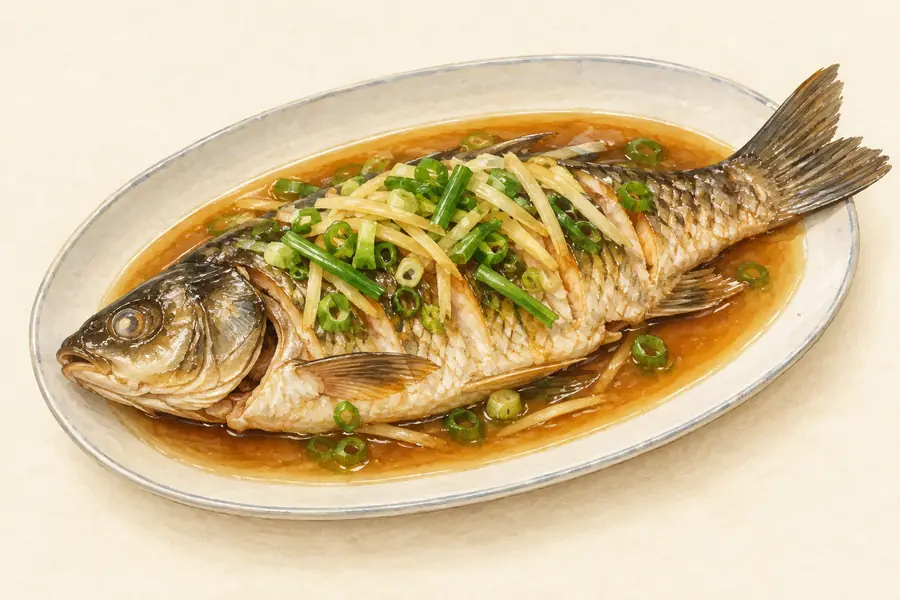
Shimen Live Fish Banquet (石门活鱼) is the freshwater fish cooking of the restaurants around Shiyifen (十一分) in Longtan District (龙潭区), Taoyuan (桃园市), which built their name on fish taken from Shimen Reservoir (石门水库).
Where it comes from
Shiyifen was a little-known village until the reservoir was built, when some 7,000 construction workers drew restaurants to the area. After the reservoir opened in 1964, drowned bamboo and debris on its bed made netting hard, so bighead carp, carp and grass carp could hide there, and the clean water gave them fresh-tasting flesh without a muddy flavour. The first restaurant to feature reservoir fish was Nanyuan (南园) in Shiyifen. In 1974 the army veteran Chen Huiqing (陈惠庆) opened Shiyuan (石园) and brought Cantonese, Jiangsu-Zhejiang and Sichuan cooking to the fish.
At its height about 200 live-fish restaurants lined Wenhua Road (文化路), north of the dam, and the roads around Provincial Highway 3B (台三乙线). A Taoyuan Shimen live-fish tourism festival has been held since 2004.
Ingredients
The reservoir's main species are grass carp, black carp, common carp, catfish, crucian carp and silver carp. According to Chen Chunqian (陈春钱), a local representative who runs a Shimen live-fish restaurant, grass carp is firm, black carp is fattier and more tender, and carp has little flesh and many bones. Reservoir fish are limited and seasonal, and the catch has shrunk as the environment has changed. Most restaurants now buy fish from local fish farms or from central and southern Taiwan and keep it in ponds of reservoir canal water for about two weeks to clear the muddy taste. Fish kept this way are known as 'half-reservoir fish' (半水库鱼).
How it is made
Restaurants began with one fish cooked three ways (活鱼三吃), and the list has grown since, but the core methods remain sweet-and-sour, chilli bean paste, crisp fried soybean crumbs (豆酥), red-braising and steaming. For the sweet-and-sour signature, large pieces are scored crosswise, deep-fried, turned out into a ball shape, coated in brown or white sugar sauce and served with silver-thread rolls (银丝卷). Connoisseurs order it steamed as a test: a muddy taste means it is not true Shimen fish. None of the restaurants serve it raw.
Sources & reading
Written from the linked sources and fact-checked against them on 2026-09-25. Recipes and servings vary between kitchens.