

Zhongpu Clay Jar Roast Chicken 中埔甕缸鸡
Zhongpu Clay Jar Roast Chicken is featured among the local specialties of Taiwan.
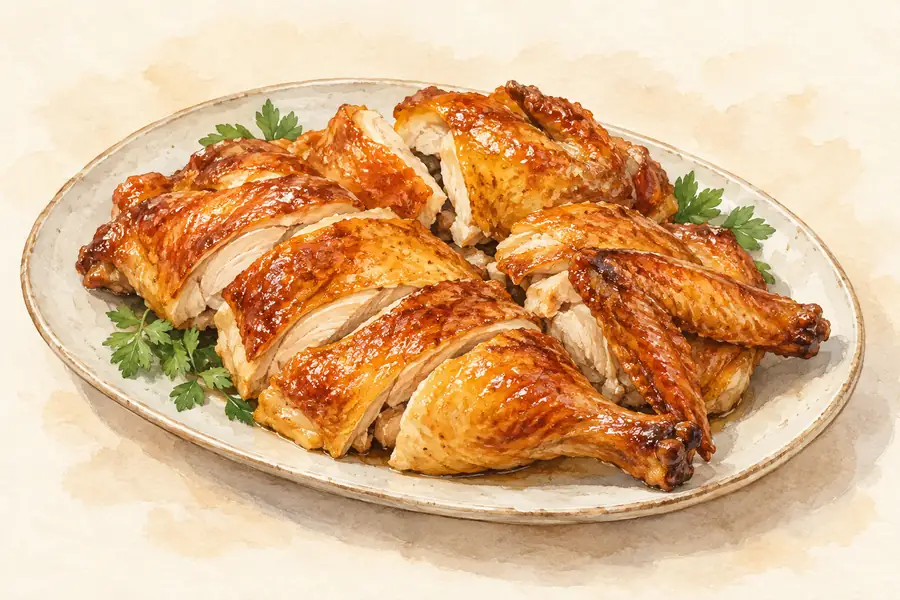
Zhongpu Clay Jar Roast Chicken (中埔甕缸鸡) is a whole chicken roasted in a clay jar or an iron drum, a Taiwanese dry-heat method in which a marinated bird hangs over charcoal and is pulled apart at the table.
How the bird is roasted
The name describes the equipment as much as the dish. A whole marinated chicken is suspended inside a tall cylindrical drum or a clay jar, the top is covered, and charcoal burns underneath so the bird roasts in dry heat and its own steam. Nothing touches the fire, so the skin dries and crisps while the meat stays juicy. The finished bird comes to the table whole and is broken down by hand.
Taste and texture
Because the chicken hangs free of the flame, the skin is the first thing diners notice, and the usual dips are pepper salt and the seasoned chicken oil collected during roasting. The seasoning is light and slightly smoky, so the flavour of the bird itself stays in front; nothing is battered or deep-fried.
Where the roast comes from
The roast is a Taiwanese one, and the same bird is sold under several names: 桶仔雞, 甕仔雞, 甕缸雞, 甕窯雞 and 窯烤雞. Shops tend to sit at the edge of towns and in the hills, with sacks of charcoal or firewood stacked outside and clay jars or brick kilns lined up along the front. The same roast also appears at roadside stands and in markets.
What goes into it
A whole chicken is the base, and it is marinated before roasting, so rice wine, soy, garlic or herbs may already be in the bird. If you avoid alcohol, ask whether the marinade contains rice wine before ordering. The pepper salt and chicken oil served alongside are separate, so ask for them on the side if you want to control the salt.
How to order it
These chickens are sold by the bird rather than by the portion, so order one for a table to share and ask for its weight first. Ask whether the marinade contains rice wine, and ask whether the kitchen breaks the bird down for you or leaves it for the table. Because the roast takes time, a busy shop may ask you to order ahead.
At the table
The chicken arrives whole and is usually torn apart at the table with cotton gloves, so the first minutes are part of the meal. Eat the skin while it is still crisp, then work through the leg and breast with a little pepper salt or the collected chicken oil. If the bird is kept warm over a burner, ask for the heat to be lowered so the meat does not dry out.
More dishes to compare
Explore related local specialties and compare their names, preparation notes and ordering guidance.
Changhua ba-wan 彰化肉圓 →
Changhua ba-wan is the useful counterpoint to a clay-jar chicken. A ba-wan is a steamed or gently fried wrapper around a pork filling, served with a sweet-savoury sauce and eaten in a few bites at a street stall. A jar-roasted chicken is a whole bird carved at the table over a much longer meal, so the two sit at opposite ends of the Taiwanese menu.
Questions before you order
Is the chicken cooked inside the jar?
It roasts inside the jar or drum but does not touch the fire. Charcoal burns underneath while the bird hangs above it, and the covered top traps the heat.
What is served with the chicken?
Pepper salt and the chicken oil that drips out during roasting are the customary dips. Ask about rice wine in the marinade if you avoid alcohol.
Source introduction: Wikipedia contributors: 桶仔雞 · CC BY-SA 4.0 (Wikipedia text, attribution required). English guide adapted from the cited material, with additional preparation and ordering guidance.
Sources & reading
The supplied food list supports this name and regional association. The culinary terms below are explained as menu vocabulary; a local recipe, origin story and venue availability have not been independently verified.