

Tibetan Steamed Dumplings 藏式包子
Tibetan steamed dumplings (藏式包子, also described as 藏包 or 夏馍馍) are pleated steamed parcels usually filled with finely chopped yak meat. Their juicy filling, restrained seasoning, and usual pairing with bone broth and Tibetan chilli make them a useful introduction to everyday Tibetan cooking rather than a fixed restaurant speciality.
Tap any red Chinese text to hear it in Mandarin.
What you are ordering
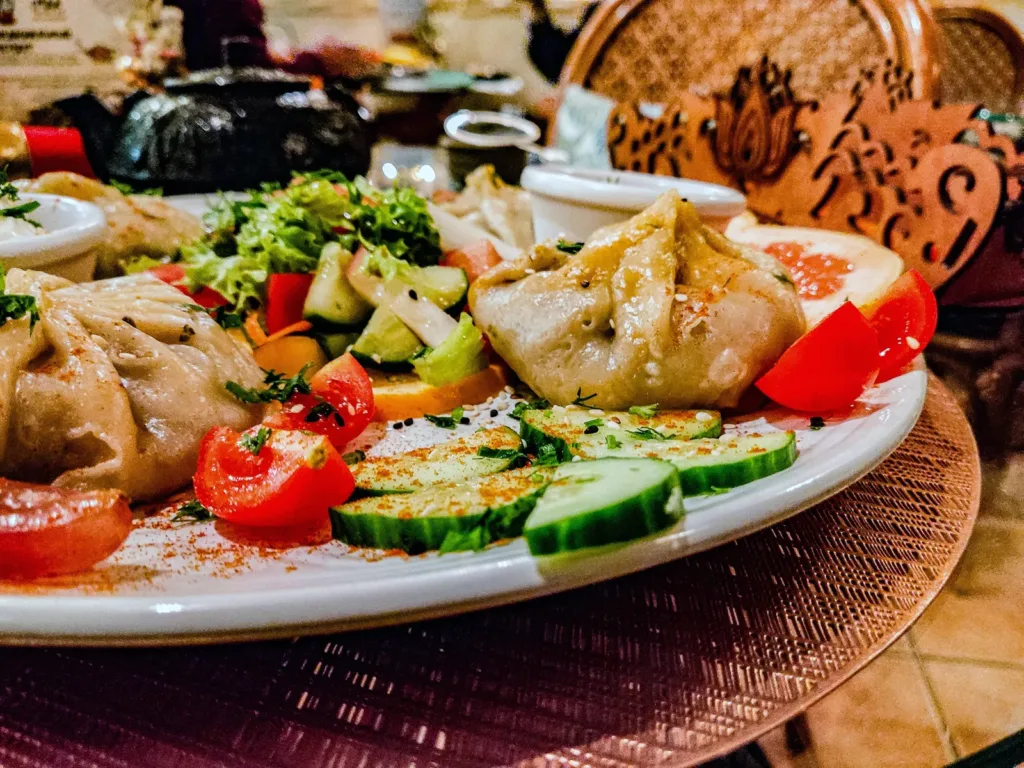
This is a Tibetan food tradition, not a single branded dish or guaranteed recipe. One account from a Lhasa chef uses front-leg yak meat with scallion and onion, keeping the seasoning simple so the meat remains the focus. Another description has the meat finely chopped while water is added during chopping, then seasoned with salt, Sichuan pepper, scallion, and garlic. The wrapper is gathered into a bottle- or vase-like shape with pronounced pleats before steaming.
The wrapper and filling can vary between kitchens. A Shannan municipal tourism source describes an older style using highland-barley flour with beef or mutton, alongside a contemporary version using a wheat-flour wrapper and yak meat. It also records dairy-curd, potato, and wild-green fillings as regional variations. Treat these as real variants across Tibetan cooking, not as a promise that every Lhasa menu offers them. The name “momo” is also used broadly for Tibetan dumplings, including meat, vegetable, steamed, fried, and soup versions; the Lhasa-style 藏式包子 described here is the steamed, bun-like preparation.
How to eat it
A common serving is a plate of hot dumplings with a pot of bone broth and Tibetan chilli for dipping. Take a small first bite: the meat juices and steam can be very hot. The broth-and-chilli pairing is part of the experience, but it is not a universal set menu; ask what comes with the order.
The standard yak-meat version is not vegetarian. Dairy-curd and potato versions may exist, but “vegetarian” does not mean dairy-free, and a dumpling’s appearance cannot establish its ingredients. If you have an allergy or dietary restriction, ask in Chinese whether the filling is yak, beef, mutton, or dairy, whether the wrapper contains wheat, and whether the broth or dipping sauce contains ingredients you avoid. Recipes and servings vary between kitchens.
Practical tips
Ask a Tibetan restaurant or food stall for 藏式包子 Zàngshì Bāozi or 藏包 Zàng Bāo; if a menu uses 夏馍馍 Xià Mómo, confirm the filling before ordering.
Where to eat it
You can find Tibetan Steamed Dumplings all over Tibet (Xizang), so there is no need to seek out one particular restaurant. To find one near you, search for “藏式包子” in Meituan (美团) or Amap (高德地图) and check recent reviews, distance and opening hours.
Sources & reading
Image credits & notes (1)
- Tibetan momo (steamed dumplings) served at Kashmir Café in Saint Petersburg; a regional illustrative example for Lhasa’s Tibetan steamed-dumpling tradition. Photo: VoltmetroPhoto: CC BY-SA 3.0