

Yak Meat Stewed with Radish 萝卜炖牦牛肉
Yak Meat Stewed with Radish is a simple Tibetan-style shared stew of yak beef and white radish (daikon). In Lhasa it is best approached as a regional, home-style dish rather than a recipe with one fixed restaurant or a claim of Lhasa-only invention: the meat, broth and seasonings can change from kitchen to kitchen.
Tap any red Chinese text to hear it in Mandarin.
What the dish is
The Chinese name is 萝卜炖牦牛肉 (luóbo dùn máoniúròu). It describes the ingredients and method directly: radish, yak meat and a covered simmer.
The dish belongs to the wider food culture of Tibet. A 2025 report from the Xizang government website describes yak-beef stews and radish-and-yak preparations in family meals, while also describing related dishes such as potato stewed with yak beef and patu, a porridge-like dish of dough, radish and yak-beef pieces. These are useful regional comparisons, not evidence that every Lhasa kitchen follows one canonical recipe.
How it is cooked
A common approach is to simmer the yak beef in water with ginger and other aromatics first, then add thick pieces of daikon when the meat is close to tender. The radish then softens while retaining some shape instead of dissolving into the broth. One published Tibetan yak-stew recipe uses ginger, garlic, Sichuan pepper, dried chilli, cardamom and yak butter, adds the daikon after the initial braise, and notes that high-altitude braises can take longer; these are documented recipe details, not a mandatory ingredient list for every Lhasa serving.
Expect real variation. Some bowls are a clear, lightly seasoned broth; others are richer or more heavily spiced. Possible additions include scallion, salt, pepper, chilli, soy, cooking wine or butter. Ask which version the kitchen serves, especially if you need to avoid alcohol, chilli or a particular sauce. “Yak” should also be confirmed: the SBS recipe notes that beef or cross-bred yak may be used as a more affordable substitute in Tibetan families.
How to order and eat it
Keep the Chinese name visible on your phone or write 萝卜炖牦牛肉 Luóbo Dùn Máoniúròu. Ask whether the order is a single bowl or a sharing pot, and whether the broth comes with the meat. Useful questions are 是不是牦牛肉? Shì bú shì máoniúròu? (“Is this yak meat?”), 有没有料酒或酱油? Yǒu méiyǒu liàojiǔ huò jiàngyóu? (“Does it contain cooking wine or soy sauce?”), and, if needed, 不要辣 Bú yào là (“No chilli”). Do not treat the radish as making the dish vegetarian: the stock and meat are central, and sauces or shared cooking equipment may matter for allergies or strict dietary rules.
The radish is soft and lightly sweet after the braise; lean yak meat is usually chosen for its firm, substantial bite. Try the broth before adding extra salt. Rice, noodles or a flatbread can make the bowl more filling, but the broth is the point of ordering this dish. If the restaurant offers both a radish stew and a plain yak-meat soup, comparing them is a practical way to taste what the root vegetable contributes.
Where to eat it
You can find Yak Meat Stewed with Radish all over Tibet (Xizang), so there is no need to seek out one particular restaurant. To find one near you, search for “萝卜炖牦牛肉” in Meituan (美团) or Amap (高德地图) and check recent reviews, distance and opening hours.
More dishes to compare
Explore related local specialties and compare their names, preparation notes and ordering guidance.
Mao Niu Rou Tang 牦牛肉汤 →
Mao Niu Rou Tang (牦牛肉汤) is the plain broth version of the same cooking, built on yak beef and water with little else. Ordering the two makes the radish the variable, and it is easy to taste how much sweetness and body one root vegetable adds to an otherwise identical pot.
Sources & reading
Image credits & notes (1)
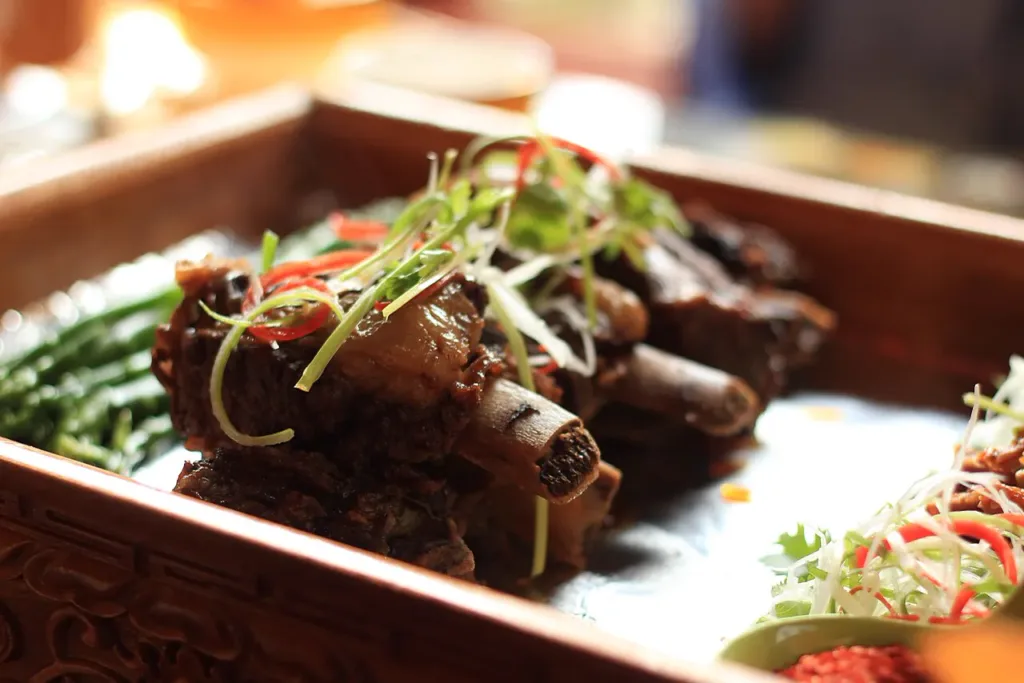
- A Tibetan yak-meat dish, used as a regional food reference; the file does not establish that it is Lhasa's radish stew. Photo: yuhanlikefilm (Pixabay contributor; Commons file page uploader Pikkuihminen)Photo: CC0 1.0