

Medog Stone Pot Fish 墨脱石锅鱼
Medog Stone Pot Fish is featured among the local specialties of Tibet (Xizang).
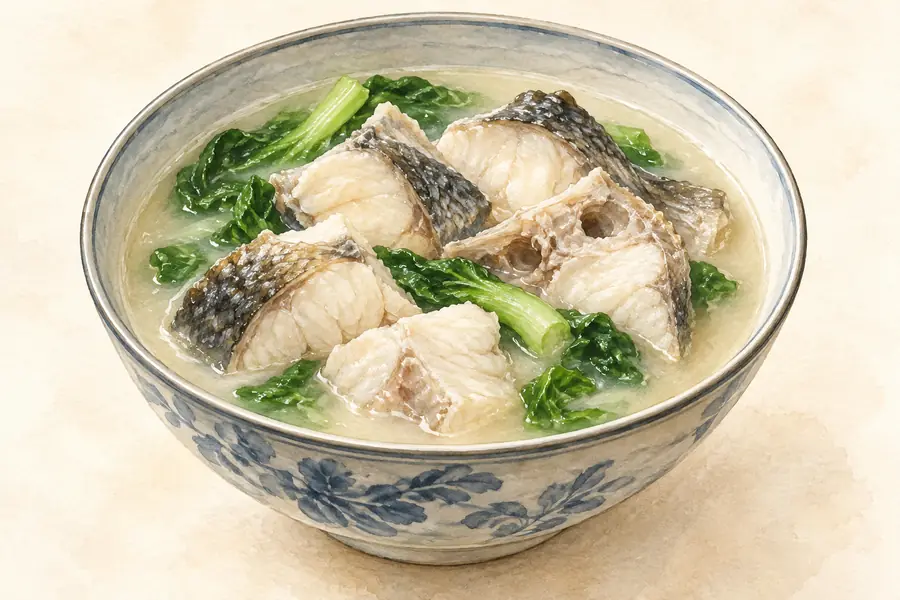
Medog Stone Pot Fish (墨脱石锅鱼) is fish cooked in a Mêdog stone pot: 墨脱 names the place, 石锅 is a pot carved from soft stone and 鱼 is fish, so the name is built on a cooking vessel.
What a stone pot does
Stone heats slowly and holds heat for a long time, so a pot carved from it brings a simmer up gently and then keeps it even. For fish that is exactly what you want: the flesh sets without the violent bubbling that breaks it apart.
The pot is usually heated first, then the broth or the fish goes in. Cooking in it takes longer than in metal, and the reward is a broth that never boils hard and a piece of fish that stays whole from the pot to the bowl.
Fish judged on freshness
A dish this plain is judged on the fish rather than on the sauce. Fresh river fish tastes sweet and clean; a fish that has been sitting tastes of mud, and no amount of ginger, chilli or aromatics will hide it.
The broth is usually light so that it carries the fish instead of covering it, and it is drunk at the end of the meal. Heavy seasoning in a stone pot is a warning sign rather than a style.
A pot that is also a place
Stone pots come from places where a suitable soft stone is quarried, and they are valued for the way they cook rather than for how they look. Naming the place in front of the pot says where the vessel came from as much as where the dish is eaten.
That makes this a dish about a tool and an ingredient rather than a signature recipe. The same fish in a metal pot will be cooked faster and less evenly; the difference is real, even if it is a difference of texture rather than flavour.
Fish and what goes with it
The name promises a stone pot and fish. Which fish, whether it is freshwater or farmed, and what else goes into the broth are all kitchen decisions, and the price usually follows the fish.
Ask 什么鱼 for the species, 新鲜不新鲜 for how recently it arrived, and 辣不辣 for the broth. If you are not comfortable eating a whole fish from the bone, ask 可以切块吗 before ordering.
Before the pot is lit
Ask 一条还是半条 for whole or half, 按斤还是按份 for whether the price follows weight or the portion, and 配菜有哪些 for the vegetables that come with it. Fish ordered by weight is the most common source of a surprise bill.
If the pot is shared, ask 汤可以加吗 for whether the broth can be topped up, since the second round of broth is usually the best part of the meal.
From pot to bowl
The pot comes to the table and the fish is served out of it, often with the broth poured over rice or drunk in a separate bowl. Take the flesh off the bone with a spoon rather than chopsticks, and keep an empty bowl for the bones.
Eat the fish first and the vegetables after, when the broth has taken on more flavour. If the pot is still hot at the end, ask for the remaining broth to be taken away and served in bowls rather than left to reduce.
More dishes to compare
Explore related local specialties and compare their names, preparation notes and ordering guidance.
Ba River Fish 巴河鱼 →
Ba River Fish (巴河鱼) is named for the water it comes from rather than for the pot it is cooked in, so the two make a natural pair: one name points at the vessel, the other at the stream, and both end up being a test of freshness.
Questions before you order
Does the stone pot change the taste?
It changes the cooking rather than flavouring the food: stone heats and cools slowly, so the simmer is gentler and the fish holds together better.
Is 墨脱石锅鱼 spicy?
Often it is mild, because the broth is meant to carry the fish. Ask 辣不辣 for heat and 有没有清汤 if you want it plain.
Sources & reading
The supplied food list supports this name and regional association. The culinary terms below are explained as menu vocabulary; a local recipe, origin story and venue availability have not been independently verified.