

Hand-Grabbed Mutton 手抓羊肉
Hand-Grabbed Mutton is featured among the local specialties of Tibet (Xizang).
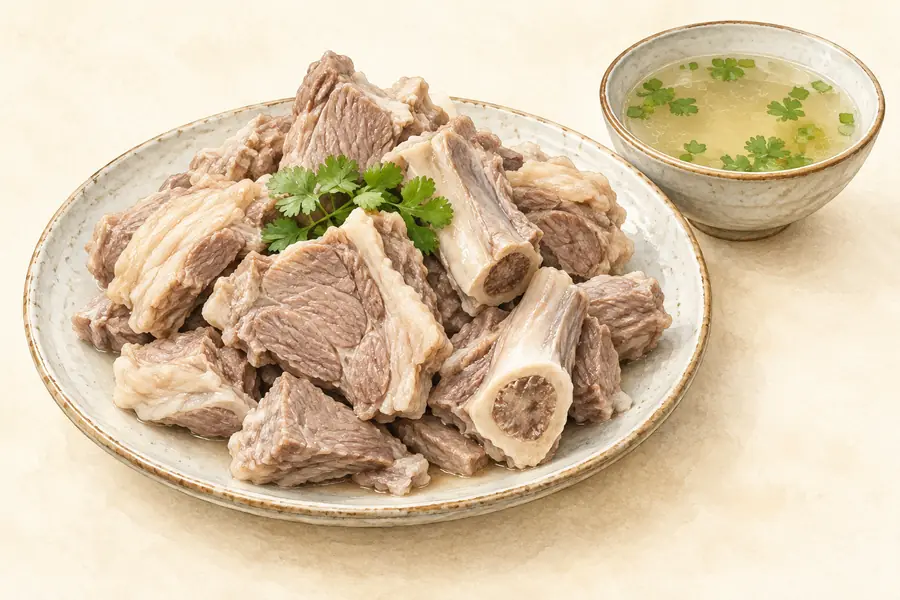
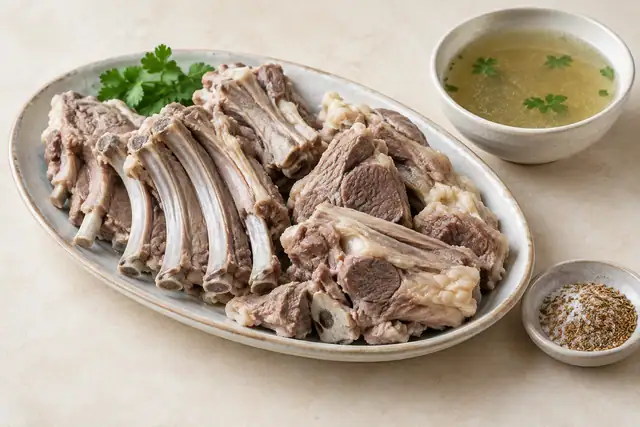
Hand-Grabbed Mutton (手抓羊肉) is mutton boiled in large pieces in plain water, as herders cook it on the northern Tibetan grasslands of Nagqu (那曲). Each diner cuts the meat from the piece with a small knife of their own, and it is eaten hot or cold.
How it is made
Tang Zhaoming (唐召明), who reported from northern Tibet for Xinhua from the 1980s, describes the herders' method in a 2022 column for China Tibet Online (中国西藏网): fresh mutton or beef is taken apart into big pieces and boiled in clear water, and it is usually not cooked until soft.
It is a food of the slaughter season. In autumn and winter, when the sheep and cattle are at their fattest, herders in northern Tibet eat mainly meat; in summer, the yak-milking season, they eat more dairy food.
How it is eaten
Tang's photograph from 1989 shows a basin of hand-grabbed mutton set behind "tui" (褪), a festive cake of cheese curds, butter and silverweed root (蕨麻), with a Tibetan knife stuck in it. The same column describes tsampa (糌粑), flour ground from roasted highland barley, which herders knead by hand with tea and butter into small balls and eat with dried or boiled meat and a little chilli.
Where it comes from
An overview of Tibetan cooking published by China Tibet News (中国西藏新闻网) sorts it into four styles and places Nagqu, with Ngari (阿里), in the herding-country style it calls Qiang cuisine (羌菜), which keeps to original flavours and a narrow range of ingredients. The same overview names hand-grabbed mutton among the dishes of the farming and part-farming districts of Lhasa, Shigatse and Shannan, so the dish is not confined to Nagqu.
Sources & reading
Written from the linked sources and fact-checked against them on 2026-09-25. Recipes and servings vary between kitchens.