

Tibetan Yogurt 酸奶
Tibetan yogurt (酸奶, suannai) is a thick, tangy Lhasa dairy specialty, traditionally made from boiled and cooled yak milk with a little previous yogurt as starter; sugar, fruit, honey, or other toppings create less sour modern versions. Its link to Shoton, the “yogurt banquet” festival, makes it a useful food to try alongside Lhasa’s Tibetan food culture.
What you are tasting
“Tibetan yogurt” is not one fixed commercial recipe. Traditional sources describe yak milk as the base, while Lhasa recipes and presentation vary by shop, stall, and household. Ask whether the bowl is made with yak or cow milk and whether sugar or flavourings have already been mixed in. Because it is dairy, it is not suitable for people avoiding milk; ask about added ingredients if you have allergies or follow a strict diet.
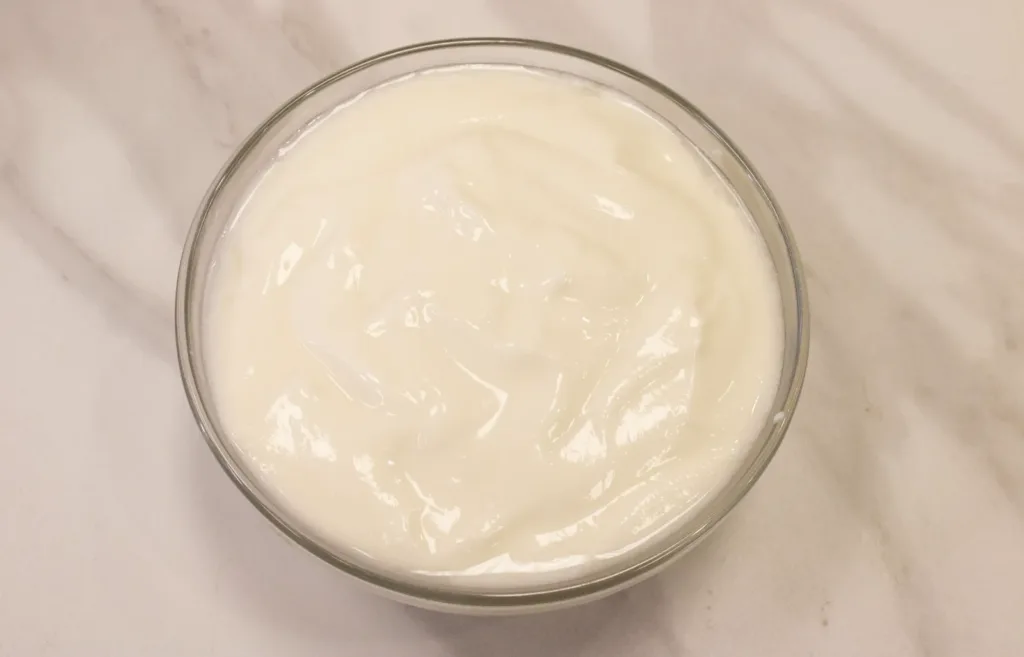
The traditional version is a useful contrast with sweetened supermarket yogurt. It is thick, plainly milky, and noticeably sour. The point is not to find a single “correct” level of sourness: the milk, starter, temperature, setting time, and the maker’s habits all affect the result.
How it is made
At a Lhasa yogurt shop observed by Tibet Business Daily, staff boiled fresh milk, stirred in some finished yogurt as a starter, poured it into pails, covered them with several layers of quilts overnight, and ladled the set yogurt into bowls the next morning. A street maker on Beijing Middle Road used fresh morning milk, kept the mixture warm but out of direct sun, and served it in bamboo tubes with sugar mixed through.
A separate account from a pastoral setting describes filtering the milk several times, boiling it, allowing it to cool, adding reserved fermented yogurt, and covering the containers with thick quilts. That account reports a setting time of two or three days and notes that a more sour yogurt is preferred there.
Temperature control is part of the craft. A Lhasa report says makers judge the boiling temperature by experience: too much heat can push the yogurt towards a sharper sourness, while a lower temperature can leave more sweetness. It describes a good handmade bowl as having a pale milk skin, a smooth white body, and a clean, refreshing sourness.
Flavour, toppings, and variations
Unflavoured traditional yogurt can be startlingly sour to first-time visitors. White sugar sprinkled on top may sit on the thick surface instead of dissolving, giving a small crunch when you eat it. In a bamboo-tube version, sugar is mixed in fully, making the sweet-and-sour flavour easier for newcomers.
Lhasa shops also make less austere versions. Reports describe yogurt mixed with droma (人参果), fruit, highland barley, honey, rose, or ice cream, and used in yogurt cake. These are shop and household variations rather than a single traditional formula. If you need a particular diet, ask about the milk, sweetener, fruit, and any prepared toppings instead of judging from the colour of the bowl.
Why it matters in Lhasa
The name Shoton is commonly explained as “yogurt banquet” in Tibetan. During the festival, yogurt is eaten in shops, homes, and parks; reporting also links the food with the festival’s visits to Drepung Monastery for the Buddha unveiling and Norbulingka for Tibetan opera. Those are religious and cultural settings, not staged food backdrops. Follow the current visitor rules, keep clear of worship, and ask before photographing people or religious activity.
Where to eat it
You can find Tibetan Yogurt all over Tibet (Xizang), so there is no need to seek out one particular restaurant. To find one near you, search for “酸奶” in Meituan (美团) or Amap (高德地图) and check recent reviews, distance and opening hours.
Sources & reading
Image credits & notes (1)
- Plain yogurt in a bowl, used as a generic visual for the thick, white texture of Tibetan yogurt; the file is not identified as a Lhasa or Tibetan photograph. Photo: Alabama ExtensionPhoto: CC0 1.0