

Xiabujing Tibetan Dish 夏布精
Xiabujing Tibetan Dish is featured among the local specialties of Tibet (Xizang).
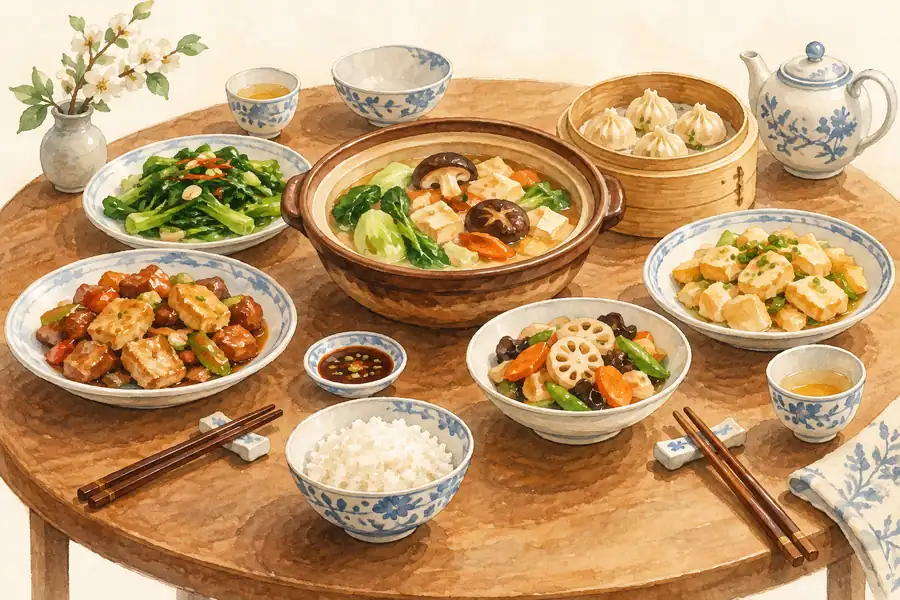
Xiabujing Tibetan Dish (夏布精) is an entry listed for Tibet (Xizang) among regional dishes; the characters do not spell out an ingredient or a method, so the name has to be asked about rather than read.
Why the name does not explain the dish
Most dish names give something away: an ingredient, a cut or a cooking verb. This one does not, and that changes how a visitor should handle it. The characters are kept as a whole local name precisely because a word-by-word rendering would suggest ingredients the label never mentions. Practically, it means the cooking method is unknown until someone in the kitchen describes it, and any translation on a menu is likely to be a guess.
What to check when the plate arrives
With an opaque name, tasting notes are better built on site than predicted in advance. Look first at how the plate is built: one shared dish, several small plates, or something served in a pot. Then judge seasoning, temperature and texture the way you would any unfamiliar dish, and note whether the dominant taste is savoury, sour or fatty. That observation is more reliable than any general description attached to the name.
A province-level entry
This is a province-level dish rather than a county one, and it sits with other banquet-style dishes, so it stands for the wider region rather than for one town. Because the name carries neither a place word nor an ingredient, the dish is defined by its category rather than by a local recipe, and no county association should be assumed.
Ingredients and dietary checks
Nothing about the name tells you what is in the dish, so this is one case where the questions come before the order rather than after. Ask 里面有什么 (what is in it), 有肉吗 (does it contain meat) and 有奶制品吗 (does it contain dairy). Anyone with a serious allergy should treat an unfamiliar banquet dish as a conversation with the kitchen rather than a menu decision, since shared cooking equipment limits what can be promised.
How to order an unknown dish
Show the characters 夏布精 and ask 这是什么 (what is this), 怎么做 (how is it made) and 一份多少 (how big is a portion). Banquet-style dishes are often sized for several people, so ask 够几个人吃 (how many people is it for) before adding it to an order. If you are eating alone, ask 有小份吗 (is there a small portion) rather than committing to a table-sized plate.
Fitting it into a shared meal
Dishes in this family are built to sit in the middle of a table, so order them alongside rice, a vegetable and something sharp rather than as a single main course. Serve each person a little rather than filling plates, and taste before adding condiments, since banquet cooking usually arrives already seasoned. If the dish is unfamiliar to everyone at the table, one portion shared is a better first move than two.
More dishes to compare
Explore related local specialties and compare their names, preparation notes and ordering guidance.
Radish Hot Pot 萝卜拉锅 →
Radish Hot Pot (萝卜拉锅) is the neighbouring entry in the same regional-dining group, and its name does mention an ingredient where 夏布精 does not. Reading them together shows how uneven these local names can be, since one gives a diner a foothold and the other makes asking the only reliable route.
Questions before you order
Can I rely on the English translation on the menu?
Treat it as a hint rather than a definition. A name that does not disclose an ingredient cannot be translated accurately, so ask 里面有什么 (what is in it) and compare the answer with what arrives.
Is it a single dish or a set of dishes?
The listing does not say. Dishes in this group often arrive as one shared plate or as several small ones, so ask 是一道菜还是几道 (one dish or several) before ordering for a table.
Sources & reading
The supplied food list supports this name and regional association. The culinary terms below are explained as menu vocabulary; a local recipe, origin story and venue availability have not been independently verified.