

Tibetan-style curry potatoes 藏式咖喱土豆
In Lhasa, Tibetan-style curry potatoes is a flexible potato-and-curry dish rather than one fixed recipe. Look for it as 咖喱土豆拌面 (curry potatoes mixed with noodles) or 咖喱土豆牛肉饭 (curry potatoes and beef with rice): soft, starchy potatoes carry a fragrant sauce, and the order may include yak or other meat depending on the kitchen.
Tap any red Chinese text to hear it in Mandarin.
What the name means in Lhasa
The Chinese name 藏式咖喱土豆 Zàngshì Gālí Tǔdòu is useful when you want to ask about the dish, but it does not guarantee a single presentation. Lhasa reporting describes curry-potato noodles on a long-running tea-house menu, while another account describes large potato pieces simmered in curry gravy and spooned over rice with yak beef. Treat “curry potatoes” as a family of orders and check the last words on the menu: 拌面 Bànmiàn means mixed noodles, 盖饭 Gàifàn means rice topped with a dish, and 牛肉 Niúròu means beef has been added.
This is a local food experience, not a named restaurant recommendation. Reported tea-house examples include 鲁仓茶馆 in Lhasa’s old-city food scene, but menus, hours and ingredients can change. Ask the tea house or restaurant what is available that day rather than assuming every Tibetan restaurant serves this item.
Ingredients and preparation
A regional Tibetan government food guide describes a related rice accompaniment under the name 香寨 Xiāngzhài. Its method is specific but should be read as a regional example, not as the one official Lhasa recipe: potatoes are boiled until about 80 percent cooked, drained, peeled and cut into chunks. Onion is lightly fried and pounded, while curry powder is mixed with cold water into a paste and fried into an oil-based curry. Beef or lamb is cooked in yak butter, simmered with water, then combined with the potatoes, curry, salt, ginger, fennel, cloves, pepper and Tibetan cardamom until tender.
The Lhasa version reported by Xinhua uses large potato pieces slowly cooked in a thick curry broth until soft and sandy, then serves the sauce over rice. The same report places yak-beef curry rice alongside sweet tea as a filling meal. Broader Tibetan food reporting also describes potato and yak-beef stew as an everyday pairing, but that account is not evidence of a curry recipe. A Lhasa tea-house report instead records 咖喱土豆拌面 Gālí Tǔdòu Bànmiàn, showing how the same potato-and-curry idea can move from rice to noodles. These accounts support a useful expectation—potatoes are the soft, substantial element and the curry is the carrier of aroma and moisture—without pretending that every kitchen follows the same spice list.
Flavour, texture and dietary questions
Expect a soft, floury potato bite when the pieces have been simmered, with a richer, looser texture if the curry is mixed through noodles or poured over rice. Some versions use meat; the potato name alone does not make a dish vegetarian. The regional preparation above includes yak butter and may use beef or lamb, and a noodle order may contain wheat.
Before ordering, ask:
- 这道是素的吗?有牛肉、羊肉或肉汤吗? Zhè dào shì sù de ma? Yǒu niúròu, yángròu huò ròutāng ma? — Is it vegetarian? Does it contain beef, lamb or meat stock?
- 用酥油吗? Yòng sūyóu ma? — Does it use yak butter or another dairy fat?
- 辣不辣? Là bú là? — Is it spicy?
- 是拌面、盖饭,还是单点土豆? Shì bànmiàn, gàifàn, háishì dān diǎn tǔdòu? — Is it mixed noodles, rice with topping, or potatoes ordered on their own?
If you have a dairy, meat, wheat or spice restriction, ask about the actual batch and possible shared cooking equipment. Yellow curry colour is not a reliable dietary label, and a request for less chilli may not change a sauce prepared in advance.
Where to eat it
You can find Tibetan-style curry potatoes all over Tibet (Xizang), so there is no need to seek out one particular restaurant. To find one near you, search for “藏式咖喱土豆” in Meituan (美团) or Amap (高德地图) and check recent reviews, distance and opening hours.
More dishes to compare
Explore related local specialties and compare their names, preparation notes and ordering guidance.
Butter-roasted mushrooms 色夏玛扎(酥油烤蘑菇) →
Mushroom caps are cooked with butter and salt, with some versions adding a little barley flour. Gentle roasting or pan cooking concentrates the mushrooms' juices without relying on a heavy sauce. The caps are tender and juicy, with browned edges where they contact the heat. Butter contributes richness while the mushroom aroma remains prominent.
Crystal potato noodles 水晶土豆粉 →
Potato starch is worked into noodles, cooked and served either in broth or with a separate dressing. The starch becomes translucent during cooking, explaining the crystal description. The noodles are smooth, slippery and elastic, with little flavor of their own; broth, chili or other condiments determine the final taste.
Sources & reading
Recipes and servings vary between kitchens.
- Alog: From emergency food to highland dishes
- Cuona County Tourism Development Committee, Tibetan specialty foods
- Tibetan time-honoured brands and food craft
- Tibetan food brands and local tourism
- Food memories of everyday meals on the Tibetan plateau
- Do's and Don'ts When Traveling in China
- Visa for China
- 2026 Shigatse tourism programme
Image credits & notes (1)
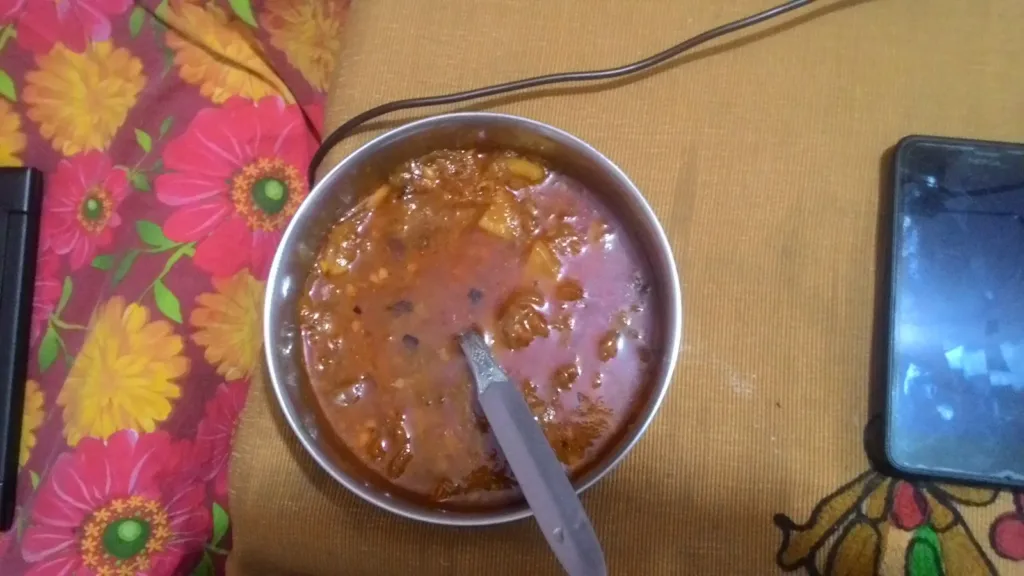
- An Indian potato curry (Aalo-Payaaz ki Simple Sabzi) in a bowl, shown as a regional visual example rather than a fixed Lhasa or Tibetan presentation. Photo: Satyaveer65Photo: CC BY-SA 4.0