

Tibetan pickled-greens soup 藏式酸菜汤
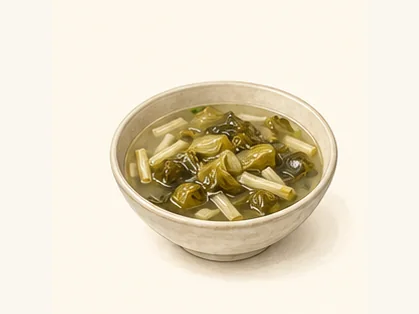
Tibetan pickled-greens soup is a sour, vegetable-led Tibetan preparation: preserved greens are simmered until tender, and the broth may be light or enriched according to the kitchen. It is a useful Lhasa food to seek when you want something sharper and lighter than a meal built around meat, butter or grain.
Tap any red Chinese text to hear it in Mandarin.
What it is
The Chinese name to show when asking is 藏式酸菜汤 (Zàngshì suāncài tāng). The dish is listed among the specialty foods on a Ministry of Culture and Tourism countryside route centred on Lhasa and its surrounding districts. That establishes a regional connection, not a claim that Lhasa has one standard recipe or that every restaurant serves it.
“Pickled greens” describes the sour vegetable component rather than one guaranteed species. A published account from Tibet describes cooking ordinary vegetable leaves until nearly done, cooling them, then keeping them in a jar or wooden barrel with water in a cool place for about a week. Treat that as a description of one local preparation, not a universal formula: the account is a traveller-published food note, and it does not establish a single required vegetable, fermentation time or seasoning for every Lhasa kitchen.
Flavour, texture and variations
When served as soup, the preserved greens are simmered so their acidity seasons the liquid and their leaves soften. Expect a clean sour vegetable note rather than a fixed level of heat. The broth may be made with vegetables alone, or with meat, fat or other vegetables. A government Tibetan-food guide from eastern Tibet describes sour radish being pickled to accompany or cook with meat, and lists several meat-based soups separately; that is useful context for why a sour-green soup should never be assumed vegetarian, but it is not a recipe for every bowl in Lhasa.
Ask two questions before ordering: 有肉吗? (Yǒu ròu ma?, “Does it contain meat?”) and 用什么菜? (Yòng shénme cài?, “Which greens do you use?”). If you avoid meat, ask about the broth as well as the greens; fat, stock and cooking vessels can matter. If you are sensitive to fermented or sour foods, taste a little first and do not add extra vinegar until the cook has advised you—the greens may already supply the acidity.
How to eat it in Lhasa
A small bowl works as a sour counterpoint to a grain dish or a richer Tibetan meal.
Practical tips
Eating this dish in Lhasa is separate from the legal arrangements for entering Tibet. A January 2026 notice from a regional tourism authority says that applications by travel agencies for foreign tourist groups must include an Entry Confirmation Letter (进藏确认函) alongside the agency’s licensing and itinerary documents. Use that as a current group-tour documentation signal, not as a complete rule for every nationality or route. Before booking, ask an authorised Tibet travel organiser to confirm the applicable permit or confirmation-letter process and receiving arrangements for your passport and itinerary. Nothing on this food page should be read as permission for independent travel.
Where to eat it
You can find Tibetan pickled-greens soup all over Tibet (Xizang), so there is no need to seek out one particular restaurant. To find one near you, search for “藏式酸菜汤” in Meituan (美团) or Amap (高德地图) and check recent reviews, distance and opening hours.
More dishes to compare
Explore related local specialties and compare their names, preparation notes and ordering guidance.
Lulang stone-pot chicken 鲁朗石锅鸡 →
Chicken is simmered in a stone pot with broth and aromatics, often joined by vegetables or mushrooms. The heavy vessel retains heat and keeps the shared soup hot during the meal. Tender chicken and a savory broth lead, while mushrooms can add earthy fragrance and springy texture. The pot remains hot long after arriving.
Makye Ame vegetable rolls 玛吉阿米素菜卷 →
A thin wrapper encloses a cooked vegetable mixture and is formed into rolls for the kitchen's chosen finishing method. Sauces and supporting ingredients differ between restaurants. The texture depends on whether the roll is served soft or crisp, while the filling should keep identifiable vegetable flavors.
Sources & reading
Recipes and servings vary between kitchens.