

Yangzhou fried rice 扬州炒饭
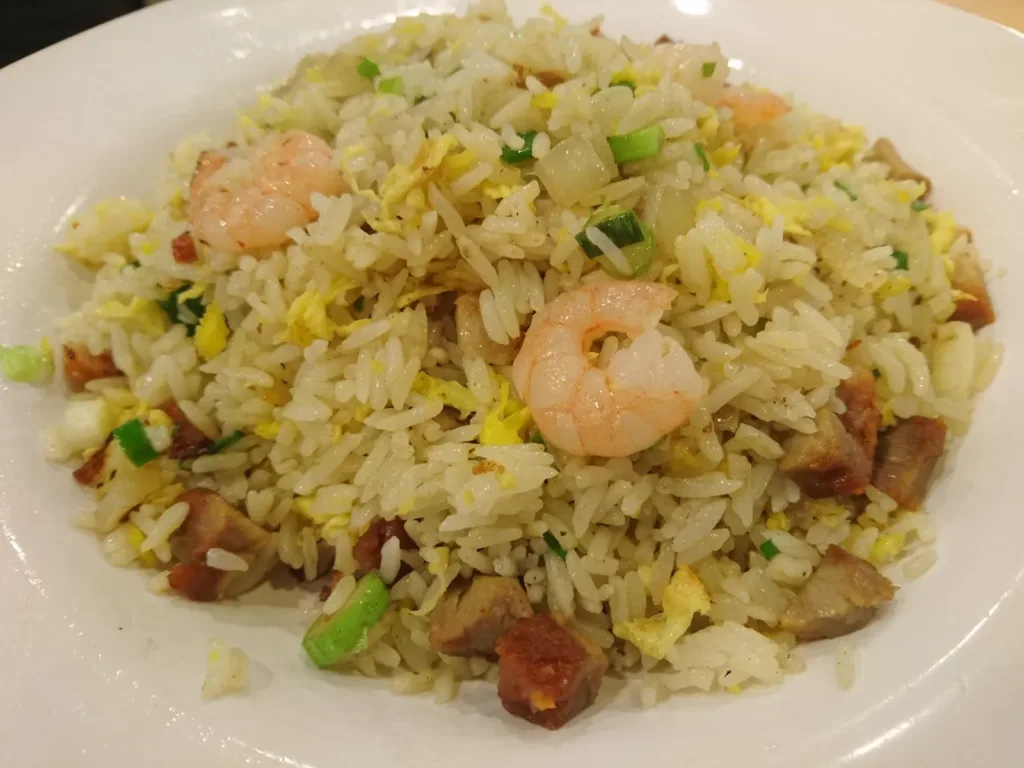
Yangzhou fried rice (扬州炒饭, Yangzhou chaofan) is a Yangzhou-associated fried-rice dish built around distinct grains, egg, and small savoury additions. Its local character lies in controlling texture and choosing finely cut, changing garnishes—not in one recipe served identically everywhere.
Tap any red Chinese text to hear it in Mandarin.
What makes it a Yangzhou dish?
The dish belongs to the Huaiyang culinary tradition, where careful cutting and measured cooking matter. A 2025 Yangzhou municipal food event described its ingredients as following a seasonal principle, with meat and vegetables changing through the year. The same report mentions forms called jin bao yin (“gold wrapped in silver”) and sui jin fan (“broken-gold rice”), so a local plate may not match a restaurant abroad that uses the same English name.
A 2015 benchmark associated with Yangzhou set out rice and fresh egg as the base and named sea cucumber, chicken thigh, ham, scallop, shrimp, shiitake, bamboo shoot, and peas among its example additions. Contemporary reporting also made clear that the benchmark was meant to preserve a recognisable style without erasing variations. Treat that list as a reference style, not a promise about an ordinary order.
How it is made
The kitchen problem is moisture. Rice needs to be cooked through but firm enough to separate in the wok. Egg and finely cut ingredients are prepared and fried in stages, then combined without turning the plate wet. A chef-led English recipe makes the same practical point: rice that is too soggy clumps, while a hot wok and evenly sized ingredients help keep the texture clean. That recipe is one kitchen’s method, not a universal Yangzhou formula.
The result to look for is rice with distinct grains rather than a soft mass, with egg and small savoury bites distributed through it. The historical Yangzhou benchmark describes the target as clear, separate grains with a savoury, fragrant, soft-but-firm and refreshing mouthfeel.
How to order it
Show 扬州炒饭 Yángzhōu chǎofàn when ordering. If you need to avoid an ingredient, ask 这份扬州炒饭有哪些配料? Zhè fèn Yángzhōu chǎofàn yǒu nǎxiē pèiliào? (“What ingredients are in this Yangzhou fried rice?”). Depending on the kitchen, the additions may include shrimp, ham or other cooked meat, chicken, vegetables, or seafood. The name alone does not guarantee a vegetarian dish or an allergen-free one.
It works well as a shared rice dish when a meal includes several Huaiyang preparations. If a menu offers 金裹银 Jīn guǒ yín or 碎金饭 Suìjīn fàn, ask what the house means by that name: these are Yangzhou-associated forms, not a promise of one identical recipe at every restaurant.
Where to eat it
You can find Yangzhou fried rice all over Jiangsu, so there is no need to seek out one particular restaurant. To find one near you, search for “扬州炒饭” in Meituan (美团) or Amap (高德地图) and check recent reviews, distance and opening hours.
More dishes to compare
Explore related local specialties and compare their names, preparation notes and ordering guidance.
Suzhou rice-flour sweets 苏式糕团 →
Rice and glutinous-rice flours are worked into a range of steamed cakes, dumplings and filled sweets. Bean paste, sesame and seasonal ingredients create different products rather than one standard recipe. Textures range from soft and crumbly to elastic and sticky, so appearance alone does not predict the bite. Most are gently sweet and suited to tea.
Linzi steamed rice cake 林梓潮糕 →
Rice flour is mixed with sweetening and optional additions, placed in a mold and steamed into a cake. The flour is handled to create a fine crumb rather than a stretchy, pounded texture. Linzi chaogao is soft and gently sweet, with a moist steamed interior. Nuts, fruit or other inclusions can give individual versions a different bite.
Sources & reading
Recipes and servings vary between kitchens.
Image credits & notes (1)
- A serving of Yangzhou (Yeung Chow) fried rice at a Hong Kong fast-food shop, photographed in January 2016; an out-of-city visual example rather than a current Yangzhou restaurant recommendation. Photo: CeesevenPhoto: Creative Commons Attribution-ShareAlike