

Corn Grits Porridge 包谷砂稀饭
Corn Grits Porridge is featured among the local specialties of Yunnan.
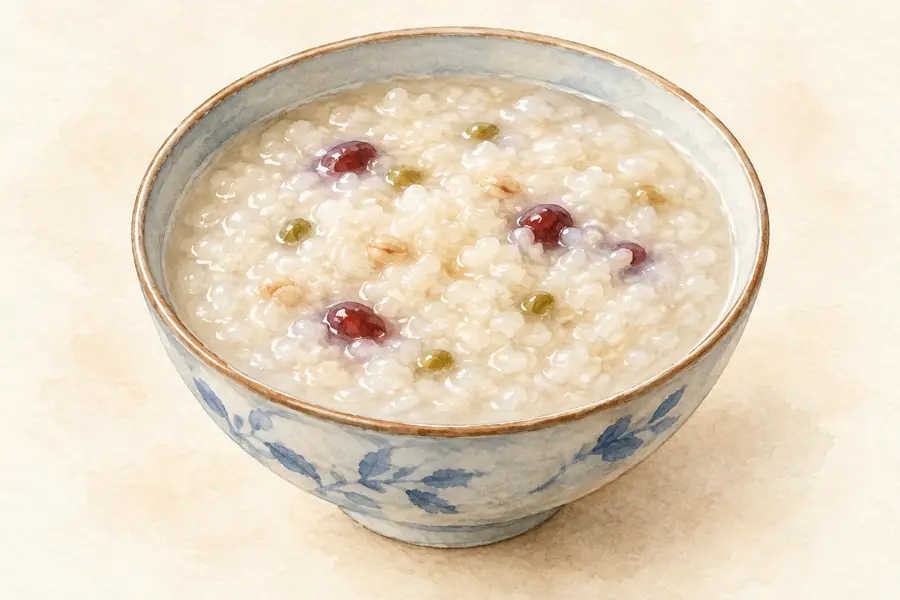
Corn Grits Porridge (包谷砂稀饭) is a Yunnan grain dish whose name lists its parts: 包谷 is maize, 砂 refers to coarse grits and 稀饭 is a thin cooked porridge.
Cracked grain, long simmer
Maize is dried and cracked into coarse grits, then simmered in water for a long time until the grains soften and the liquid thickens slightly. Grits hold their shape better than flour would, so the porridge keeps some texture instead of turning into a smooth paste. Some kitchens add beans, vegetables or a little meat, but the grain and water come first.
Coarse grits also need more water and more time than a finely ground meal. The pot is usually started early and stirred so the grain does not settle and catch on the base, and a rushed version tastes raw at the centre of the grit.
Mild, grainy and thin
The bowl is mild and slightly sweet from the corn, with a grainy texture and a soft body rather than a creamy one. It is usually unsweetened and eaten as a staple, so the flavour is quiet and takes on whatever accompanies it. Because it is thin, it can be drunk from the bowl rather than only spooned.
Grain cookery on a local list
The catalogue files 包谷砂稀饭 under Yunnan, and the neighbouring 手抓饭 shows the range of the same regional list from a thin grain porridge to a shared rice tray. The province marks where the dish is catalogued rather than one kitchen's recipe, and the coarseness of the grits varies. Ask whether the bowl is plain or has beans and vegetables added.
Maize and water
Coarse maize grits and water are the base, with beans, vegetables, a little meat or sugar added in some versions. Maize itself contains no gluten, but a kitchen that adds wheat-based seasoning or serves the porridge with bread changes that. Ask what was added if you are avoiding a specific grain or meat.
Plain or enriched
Ask 甜的还是咸的 (sweet or savoury) and 有肉吗 (is there meat) before ordering, because the plain version and the enriched version are different bowls. Ask whether it is served as a staple beside other dishes or as a breakfast on its own. It is a light dish, so add something with more substance if it is your whole meal.
Hot, and it thickens
The porridge arrives in a bowl, thin enough to drink from the side, and is eaten with a spoon or taken straight from the bowl. It is served hot and thickens as it stands, so eat it before it sets. In a larger meal it works as the plain counterweight to saltier dishes.
Because it is thin, it is often served with something dry alongside, such as flatbread or a pickled dish, to give the meal a contrast in texture as well as in seasoning.
More dishes to compare
Explore related local specialties and compare their names, preparation notes and ordering guidance.
Hand-Eaten Rice Feast 手抓饭 →
Hand-Eaten Rice Feast (手抓饭) is the neighbouring Yunnan entry and the opposite end of grain cookery: rice is mounded on a tray with grilled and pickled accompaniments and eaten by hand as a full meal. 包谷砂稀饭 is a thin, plain pot of cracked maize, so the pair shows how far one region's staple grain dishes can sit apart.
Questions before you order
Is 包谷砂稀饭 sweet or savoury?
Usually savoury and unsweetened, though some kitchens add sugar. Ask 甜的还是咸的 and 有肉吗 before ordering to be sure which version is served.
Does it contain wheat?
Maize contains no gluten, so the grain itself is fine for wheat avoidance. Ask about added seasoning or accompanying bread, which may introduce wheat.
Sources & reading
The supplied food list supports this name and regional association. The culinary terms below are explained as menu vocabulary; a local recipe, origin story and venue availability have not been independently verified.