

Stir-Fried Rice Cake Noodles 炒饵丝
Stir-fried ersi is a Yunnan rice-cake dish: thin strands cut from pressed erkuai are tossed in a hot wok with oil, seasoning and changing combinations of vegetables or meat. Kunming is a practical place to look for it, but the dish belongs to a wider Yunnan rice-food tradition rather than being a Kunming-only invention.
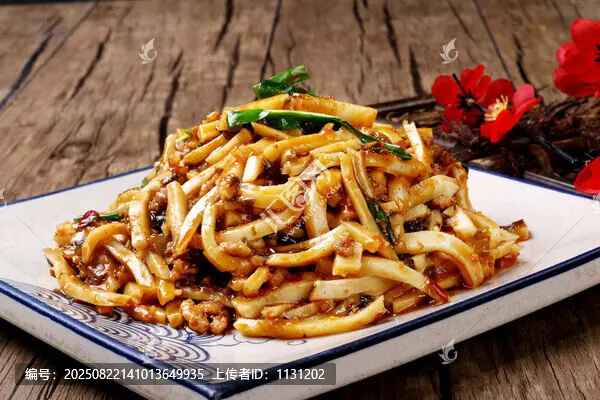
Image notes
Resized for the web; the photo itself has not been edited.
Tap any red Chinese text to hear it in Mandarin.
What you are ordering
Stir-Fried Rice Cake Noodles (炒饵丝, chǎo ěr sī) are thin strands cut from erkuai, Yunnan’s pressed rice cake, and then cooked in a wok. The name is literal: chao means stir-fried, while ersi refers to the strands. Kunming’s local-food listing includes the dish, but the ingredient and its other preparations are found across Yunnan.
Erkuai is not an ordinary wheat noodle or a typical extruded rice noodle. It begins with cooked rice that is worked into a dense mass, then kneaded or pressed into a cake. That cake can be cut into strands called ersi. Saveur describes Yunnan rice being steamed, ground or pounded, kneaded and pressed; a Guokr food explainer likewise describes soaking, steaming and pounding before shaping. A Kunming producer’s food-safety standard also records rice or red rice, soaking, steaming, pressing and shaping for local erkuai/ersi products.
Why the wok changes it
The strands are already cooked before they reach the pan, so the wok’s job is to heat them through, coat them with seasoning and keep their surface springy. Expect a tender, slightly tacky bite with a mild rice sweetness underneath a savoury, lightly oily finish. A fried plate is best eaten hot: as it cools, the starch makes the strands cling together.
There is no single mandatory topping. Across Yunnan, cooks stir-fry erkuai or ersi with combinations such as pork and scallions or mixed vegetables. Pickled greens, chives, sprouts, egg, cured meat and chilli may appear, but availability and proportions belong to the individual kitchen.
Kunming also has a related small-pot tradition called 卤饵丝 Lǔ Ěrsī. The Kunming Municipal CPPCC describes that dish as ersi or sliced erkuai cooked in a small pot with a seasoned sauce, peas, pea shoots, chives and crispy pork. It is useful context for local flavours, but it is not a synonym for wok-fried 炒饵丝 Chǎo Ěrsī: the cooking method and sauce are different.
How to order and check ingredients
Keep 炒饵丝 Chǎo Ěrsī on your phone or write it on a note. Before the wok is heated, ask:
- 辣不辣? (là bu là?) — Is it spicy?
- 有肉吗? (yǒu ròu ma?) — Does it contain meat?
- 有鸡蛋吗? (yǒu jīdàn ma?) — Does it contain egg?
- 少油,少放辣。 (shǎo yóu, shǎo fàng là) — Less oil, less chilli.
“Vegetarian” is not guaranteed by the rice base. Ask about meat, egg, stock, cured meat and the sauce, and mention any allergy before cooking. If you avoid a particular grain or seasoning, ask what is in both the strands and the wok; the dish name alone is not an ingredient list. The local producer standard shows that packaged erkuai/ersi products can have optional adjuncts, while a restaurant’s seasoning is a separate choice.
Practical tips
Look for 炒饵丝 Chǎo Ěrsī on the menu of a small noodle shop, breakfast place or local-food stall, and confirm that the shop serves it that day. The wider Yunnan tradition includes fried, boiled, steamed and soupy ersi, so a menu offering 卤饵丝 Lǔ Ěrsī, 蒸饵丝 Zhēng Ěrsī or 饵丝汤 Ěrsī Tāng is offering a related preparation, not necessarily the fried dish you asked for.
Where to eat it
You can find Stir-Fried Rice Cake Noodles all over Yunnan, so there is no need to seek out one particular restaurant. To find one near you, search for “炒饵丝” in Meituan (美团) or Amap (高德地图) and check recent reviews, distance and opening hours.
More dishes to compare
Explore related local specialties and compare their names, preparation notes and ordering guidance.
Qujing steamed ersi noodles 曲靖蒸饵丝 →
Qujing steamed ersi noodles (曲靖蒸饵丝) treat the strands with steam, so they arrive soft, moist and lightly dressed, with the toppings added at the end. 炒饵丝 sends the same strands through a hot wok with oil and seasoning, which firms the surface and concentrates the savour. Same base, two textures.