

Cold Rice Noodles 凉米线
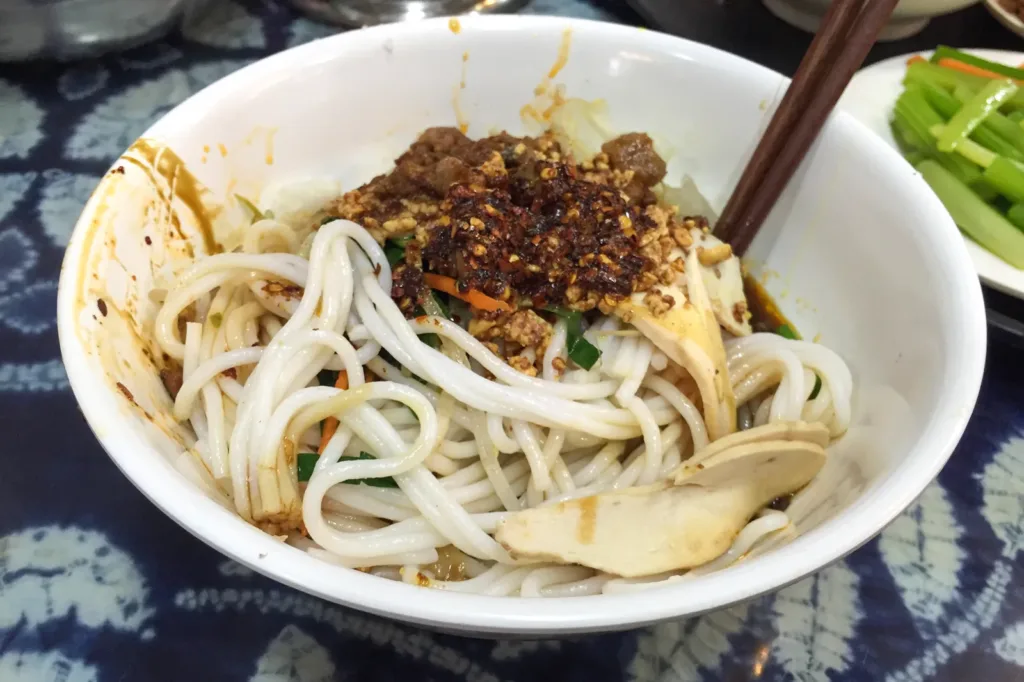
Cold Rice Noodles (凉米线, liang mixian) are rice noodles served cool or at room temperature and dressed with an acidic, spicy-savoury mixture. In Kunming, look for the colourful shijin style; the dish also has a strong Yuxi identity, so the regional version is not a single fixed recipe.
Tap any red Chinese text to hear it in Mandarin.
What this bowl is
凉米线 means “cool rice noodles”, but “cool” does not normally mean straight from a refrigerator. A documented Yunnan account describes the noodles as room temperature or only lightly cooled, with toppings that may be hot or cold. The result is a light, mixed bowl rather than a noodle soup: the noodles are drained, then coated with sauce, vegetables and whatever topping that kitchen uses.
The dish is part of Yunnan’s wider rice-noodle culture. In Kunming, rice noodles can be breakfast, lunch, dinner or a late snack, and local cooking includes cool, hot, braised, stir-fried and boiled forms. The city’s own food list includes Cold Rice Noodles among 19 Kunming specialities, but that listing does not turn the dish into a single Kunming recipe.
Kunming and Yuxi versions
The regional identity is worth keeping clear. A 2025 Yuxi government list names Yuxi Cold Rice Noodles (玉溪凉米线) as one of the city’s “ten famous snacks”, describing noodles of moderate thickness and firmness with a gently spicy, slightly sweet and appetising profile. Yuxi is south of Kunming, and the dish is strongly associated with both places in Yunnan food writing.
The Ministry of Culture and Tourism’s report on a Yuxi rice-noodle festival places rice noodles alongside local sauces and traditional vinegar, a useful reminder that the dressing belongs to a wider regional food culture rather than one standard recipe.
A Kunming-style bowl is often called shijin (什锦), meaning an assortment of colourful toppings. One documented Kunming version uses peeled quail egg, cold pork, a spicy pork topping, crisp fried lard, wood-ear mushrooms, Chinese chives, carrot and sprouts, finished with premixed sauce and chilli oil. That is a useful picture of the city’s mixed-topping style, not a fixed ingredient list: a different shop may use chicken, tofu skin, cucumber, pickles, herbs or another topping.
How the noodles and dressing work
Yunnan rice noodles are made from rice, not wheat. The traditional 酸浆米线 (suanjiang mixian) starts with a fermented rice batter; it is thicker, smooth and springy, with a faint sourness and a rice aroma. Fresh sour-slurry noodles are perishable, which is one reason texture can vary between a local fresh bowl and a dried-noodle adaptation. The legacy guide also distinguishes this fermented style from 干浆米线 Gānjiāng Mǐxiàn, made without the souring stage.
For 凉米线, the noodles are cooked or blanched, rinsed and drained before the dressing goes on. Vinegar or pickled vegetables supply acidity; soy sauce, sweet soy sauce, sesame or chilli oil add savoury depth and fat. Garlic, ginger, herbs, chives, bean sprouts, wood-ear mushroom and shredded meat are common possibilities in documented versions. The balance is usually sharper and fresher than a hot small-pot bowl, but the amount of vinegar, sugar and chilli belongs to the shop rather than to one universal formula.
How to order it
Keep the Chinese name ready: 凉米线 Liáng Mǐxiàn. Ask these short questions before the bowl is mixed:
- 是凉的吗? (Shì liáng de ma?) — Is it cool or room temperature?
- 有肉吗? (Yǒu ròu ma?) — Does it contain meat?
- 有花生吗? (Yǒu huāshēng ma?) — Does it contain peanuts?
- 辣不辣? (Là bù là?) — Is it spicy?
- 酸一点。 (Suān yìdiǎn.) — A little more sour, please.
- 可以不要肉吗? (Kěyǐ bú yào ròu ma?) — Could you leave out the meat?
The noodles themselves are rice-based, but a topping or sauce may contain pork, chicken, peanuts, sesame, soy, chilli or other ingredients. Do not infer that a colourful bowl is vegetarian or allergen-free; ask before it is mixed. The old guide notes that the same noodle family can also be served hot as 小锅米线 Xiǎoguō Mǐxiàn, but that is a different order and a different cooking method.
Eat it soon after serving. Vinegar and oil continue to soak into the noodles, so a bowl left standing becomes tighter and more intensely dressed. It works well as a light lunch or afternoon snack.
Where to eat it
You can find Cold Rice Noodles all over Yunnan, so there is no need to seek out one particular restaurant. To find one near you, search for “凉米线” in Meituan (美团) or Amap (高德地图) and check recent reviews, distance and opening hours.
More dishes to compare
Explore related local specialties and compare their names, preparation notes and ordering guidance.
Yu Xi Liang Mi Xian 玉溪凉米线 →
玉溪凉米线 is the same idea one prefecture over, and the province's speciality list names 凉米线 under 玉溪 rather than 昆明. Both bowls are drained rice noodles served cool and dressed rather than boiled in stock, so the difference is in the local habit of the dressing and the noodle the shop buys, not in the technique. If you are travelling between the two cities, order both and compare how much vinegar and chilli each kitchen builds in.
Sources & reading
Image credits & notes (1)
- A bowl of cold rice noodles in downtown Kunming, photographed on 13 February 2018. Photo: N509FZPhoto: CC BY-SA 4.0