

Menglian Beef Sapie 孟连牛撒撇
Menglian Beef Sapie is featured among the local specialties of Yunnan.
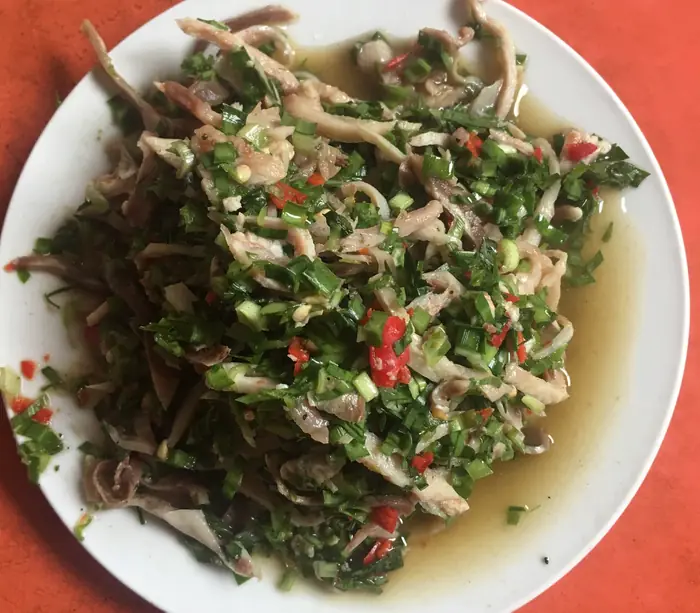
Image notes
Resized for the web; the photo itself has not been edited.
Menglian Beef Sapie (孟连牛撒撇) is a Yunnan entry whose name combines a place and a transliterated term: 孟连 names the place, 牛 is beef and 撒撇 is a Dai-language name rather than a description.
Built around the dressing
The structure is what matters: a seasoned liquid or paste is prepared first, and the meat and vegetables are eaten through it rather than simmered in it. Depending on the house, the beef may be sliced thin and dressed, or cooked and then tossed in the same mixture, and the accompanying herbs are usually added raw for crunch. Because the dressing is the centre of the dish, its balance decides everything else.
Sour, herbal and sometimes bitter
Expect a bright, herbal sourness with a strong aroma from fresh herbs, and a texture that mixes tender meat with crisp raw leaves. Some versions deliberately carry a bitter note, which is a feature rather than a fault and takes getting used to. The heat level is usually adjustable, so taste before adding chilli or extra seasoning.
A Dai-language name
孟连牛撒撇 belongs to Yunnan, and its name shows how the dish is known: 撒撇 is a transliteration, not a Chinese description of the cooking. That is a signal to ask rather than to infer, because the same term is used for several preparations. Treat the place as where the dish is known and confirm the details with the kitchen.
Meat, herbs, dressing
Beef, fresh herbs and a sour dressing are the typical frame, with chilli, garlic, citrus or fermented seasoning added to the liquid. Because herbs and dressing are usually raw, the dish is assembled rather than cooked through, and a busy kitchen cannot promise separation from other ingredients. Ask about peanuts, sesame, shellfish and wheat in the dressing, and ask what the sourness comes from.
Confirm before you eat
The first question is whether the meat is raw or cooked, since the answer changes both the risk and the taste; ask 是生的还是熟的 (raw or cooked) and do not assume. Then ask 苦不苦 (is it bitter), 辣不辣 (is it spicy) and what the dressing contains. Guests who prefer fully cooked meat should ask for a cooked version or choose another dish.
Dip, do not pour
The meat and herbs usually arrive with the dressing in a separate bowl, so each piece is dipped or tossed just before it is eaten. Take small amounts at a time, because raw herbs wilt once they sit in liquid. If the dressing is intense, ask for a little rice alongside rather than adding water to the bowl.
More dishes to compare
Explore related local specialties and compare their names, preparation notes and ordering guidance.
Jianshui steam-pot chicken 建水汽锅鸡 →
Jianshui steam-pot chicken (建水汽锅鸡) is the Yunnan neighbour that works in the opposite direction: chicken cooks slowly in steam inside a pottery vessel, producing a clear, gentle broth with nothing added afterwards. 孟连牛撒撇 is assembled rather than cooked through, with the seasoning and herbs carrying the dish, so the pair illustrates how differently the same regional menu handles meat.
Questions before you order
Is 孟连牛撒撇 served raw?
It varies between houses and the record does not settle it. Ask 是生的还是熟的 (raw or cooked) before ordering, and choose a cooked version if you prefer to avoid raw meat.
What does 撒撇 mean?
It is a transliteration of a Dai term rather than a Chinese description, so the name does not list ingredients. Ask what the dressing is built from and whether the version here is bitter.
Sources & reading
The supplied food list supports this name and regional association. The culinary terms below are explained as menu vocabulary; a local recipe, origin story and venue availability have not been independently verified.