

Nujiang River Fish 怒江鱼
Nujiang River Fish is featured among the local specialties of Yunnan.
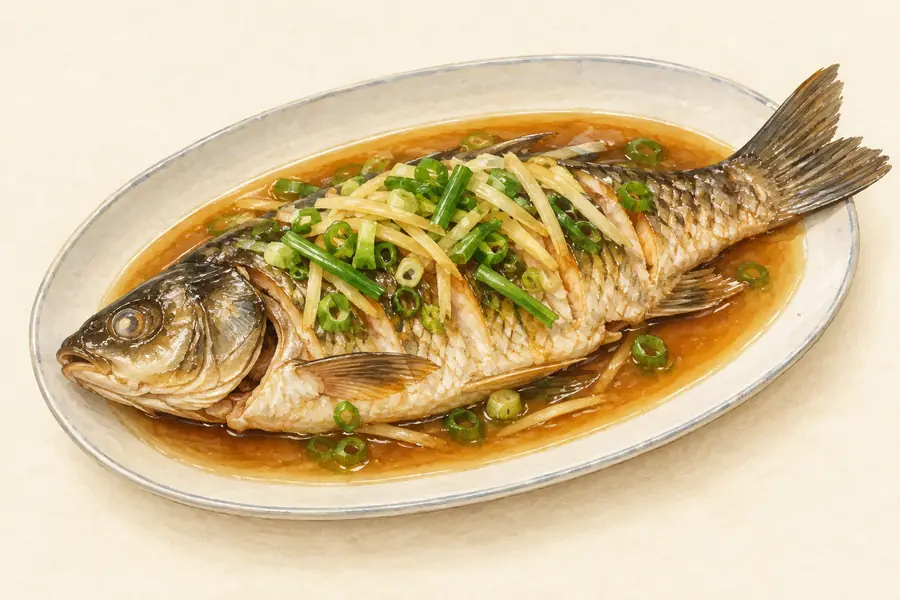
Nujiang River Fish (怒江鱼) is a fish dish catalogued for Nujiang Lisu Autonomous Prefecture, Yunnan: 怒江 names the river and 鱼 the fish, so the label points to a waterway rather than to a species.
How river fish is cooked
Freshwater fish is usually cleaned and then cooked whole or in large pieces, because the bones make fine slicing impractical for many species. Kitchens in the region may simmer it in a broth, braise it with aromatics, or cook it in a covered pot so that the flesh steams through without breaking up. Whichever route is used, the cooking is usually short: river fish turns dry and flaky if it is held at a hard boil. Ask 怎么做的 (how is it cooked) to find out which method the kitchen uses.
Delicate flesh, watch the bones
Expect a mild, sweet flesh that takes on whatever it is cooked with, and expect bones. Freshwater fish can carry an earthy note depending on the water it came from, which is why sour, spicy or herbal seasonings are often used alongside it rather than a heavy sauce. Because the flesh is soft, it separates easily with chopsticks and should be eaten carefully rather than in large mouthfuls, especially when a whole fish is served.
A river in the name
The record files the dish under Nujiang Lisu Autonomous Prefecture, and the name identifies the waterway rather than the species, the kitchen or the method. That makes it a label of origin: whichever fish was caught or bought locally becomes 怒江鱼 on the menu. It also means the dish cannot be pinned down to a single taste, since the catch changes with the water and the season. Ask what the fish is rather than assuming from the name.
Ingredients and dietary questions
Beyond the fish, expect aromatics, chili, herbs, and often a sour element such as vinegar, tomato or pickled vegetables, with ginger and cooking wine used to settle the flavour. Fish is a common allergen, and dishes cooked with soy sauce or bean paste bring wheat into the plate. If you avoid bones, ask for a filleted version before ordering rather than after the fish arrives; ask 有刺吗 (are there bones) and 可以做成鱼片吗 (can it be made as fillets).
Ordering the fish
Show 怒江鱼 and ask 是什么鱼 (what fish is it), 怎么卖的 (how is it priced, by weight or by portion) and 辣不辣 (how spicy). Fish sold by weight is usually chosen from a tank or an ice tray, so agree the size before it goes to the kitchen. Because a whole fish is a shared dish, check 一条够几个人吃 (how many people does one fish serve) if you are ordering for a group.
Eating it at the table
Lift the flesh from the top of the fish first, eat it hot, and then work along the backbone; the cheek and the meat near the tail are the parts most people go for. Keep the broth or sauce for rice, and take a moment between helpings if the bones make you cautious. If the dish arrives in a pot, leave the lid on between servings so that the fish stays warm without drying out.
More dishes to compare
Explore related local specialties and compare their names, preparation notes and ordering guidance.
Chengjiang Copper Pot Fish 澄江铜锅鱼 →
Chengjiang Copper Pot Fish (澄江铜锅鱼) is the neighbouring fish entry, named for a lake rather than a river and cooked in a copper pot. Set the two side by side and the pattern is the same: a place in the name identifies where the fish comes from, and the vessel or the cooking method decides what the plate tastes like, while the species stays a question for the kitchen.
Questions before you order
Which fish is used?
The name identifies a river rather than a species, so the answer depends on the day's catch or the kitchen's supplier. Ask 是什么鱼 (what fish is it) and, where fish are sold by weight, look at the tray or tank before agreeing.
Will the fish contain bones?
Freshwater fish in this part of Yunnan are usually served with the bones in, often whole. Ask 有刺吗 (are there bones) and whether the kitchen can prepare it as 鱼片 (fillets) if that matters to you.
Sources & reading
The supplied food list supports this name and regional association. The culinary terms below are explained as menu vocabulary; a local recipe, origin story and venue availability have not been independently verified.