

Flaky Steamed Buns 破酥包
Kunming’s 破酥包 is a steamed bun whose wrapper is built with lard into loose, flaky layers, with savoury pork-and-mushroom and sweet ham-and-sugar styles among documented variations. It is a Yunnan pastry tradition rather than a single fixed filling.
Tap any red Chinese text to hear it in Mandarin.
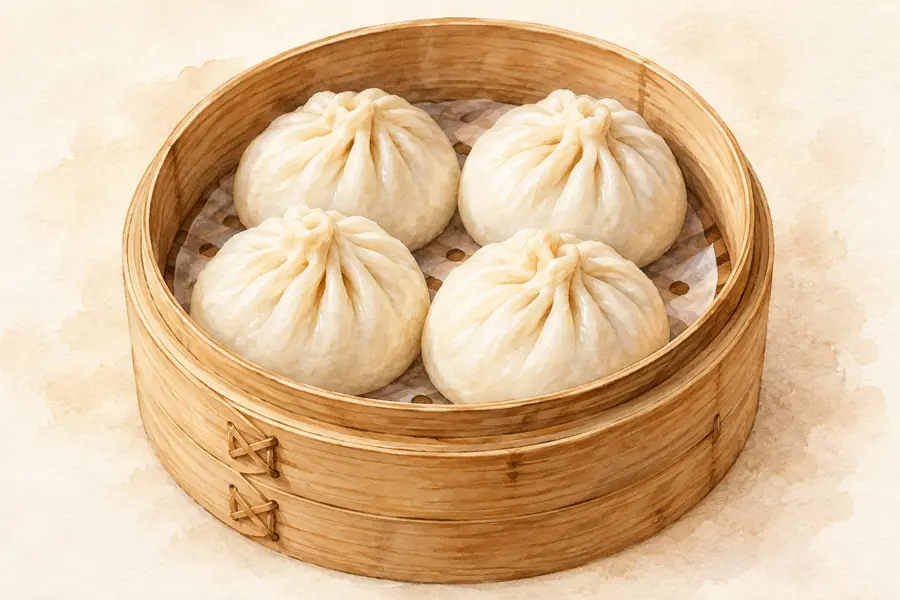
破酥包 (Posu Bao, also called 破酥包子) is a Yunnan steamed pastry associated especially with Kunming. Its defining feature is the wrapper: rather than being a plain, uniform bao skin, it contains a lard-based layer that breaks into soft, loose flakes as you bite it. The result is tender and crumbly instead of chewy, while the steaming keeps the bun moist.
What makes the wrapper flaky
Published recipe accounts describe a low-gluten wheat-flour dough that is fermented, then combined with a separate flour-and-lard layer before rolling and dividing into wrappers. The wrappers are filled with pre-cooked mixtures and finished in a steamer; one traditional recipe stresses high heat so the buns rise quickly and stay pale and full. These are documented methods, not a compulsory formula for every kitchen.
Fillings and what to ask
Both savoury and sweet fillings are part of the Kunming tradition. Classic examples include pork with shiitake mushrooms and sweetened ham; other documented versions use bamboo, shrimp, fermented mustard greens, red bean paste or black sesame. The filling list is therefore a useful guide to possibilities, not a promise that every shop makes every flavour.
The wrapper itself is commonly made with pork lard, so a sweet bun is not automatically vegetarian. Savoury examples can contain pork, ham, shrimp or soy sauce, while some sweet fillings use sesame or nuts. If you avoid meat or animal fat, or need to avoid wheat, soy, sesame or nuts, ask specifically what is in both the wrapper and filling; the appearance alone cannot answer those questions.
The Kunming story
A commonly repeated local account dates the Kunming version to 1903, when Lai Ba (赖八), a man from Yuxi, opened the Shaobailou (少白楼) bun shop near the gate of Green Lake (翠湖). The story says that repeated recipe changes produced the soft, sweet-and-savoury bun that made the shop famous. Yunnan Net presents this as a “据说” account, so it is best treated as local food history rather than as a fully independently documented single-inventor fact.
For a visitor, keep the Chinese name 破酥包 Pòsū Bāo ready when asking at a breakfast or snack counter, and ask whether the day’s batch is 甜馅 (sweet) or 咸馅 (savoury).
Where to eat it
You can find Flaky Steamed Buns all over Yunnan, so there is no need to seek out one particular restaurant. To find one near you, search for “破酥包” in Meituan (美团) or Amap (高德地图) and check recent reviews, distance and opening hours.