

Highland Barley Cake 青稞饼
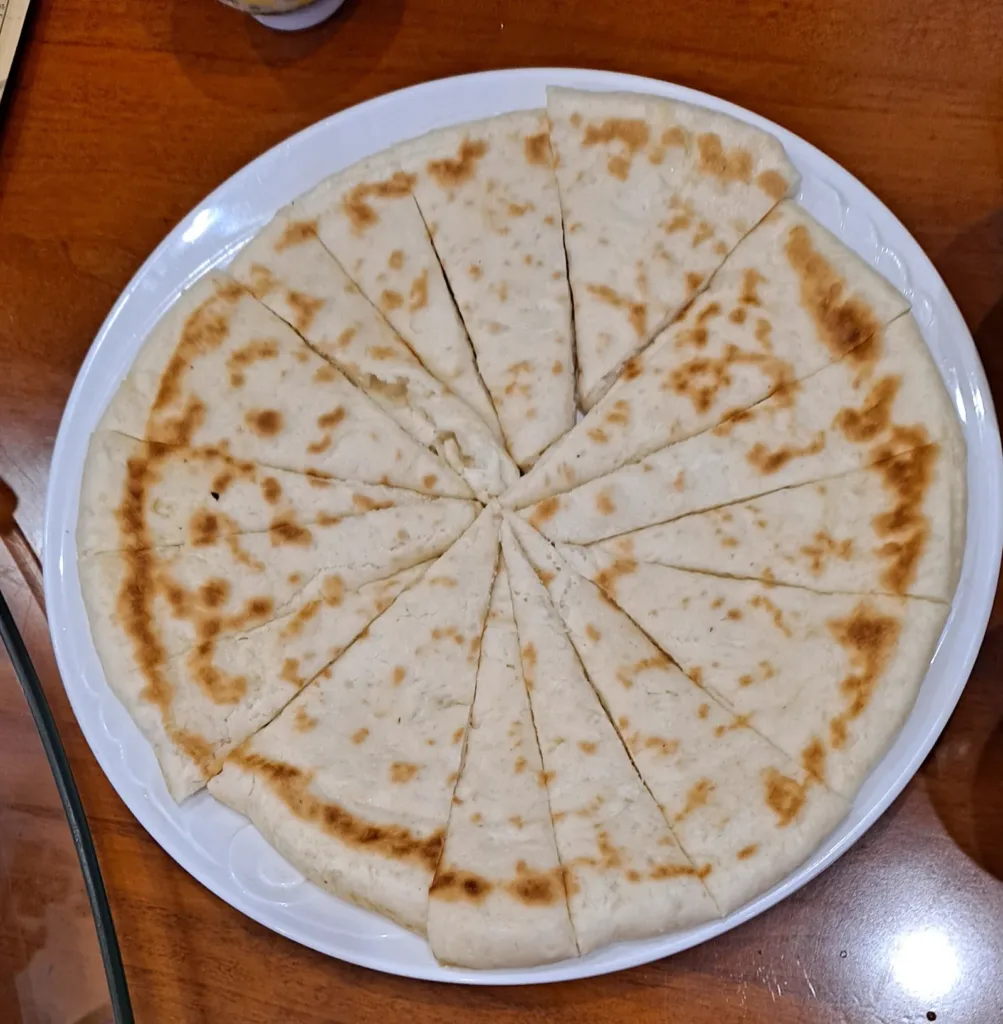
Highland Barley Cake, or 青稞饼 (qīngkē bǐng), is a baked barley-flour food found in Diqing’s Tibetan food landscape. A reported Shangri-La method uses leavened barley dough, rapeseed oil and 香豆沫, but recipes and availability vary, so treat it as a regional food to ask for rather than a city-invented fixed recipe.
Tap any red Chinese text to hear it in Mandarin.
Why it belongs in a Diqing food stop
Diqing is a Tibetan autonomous prefecture where official local descriptions place 青稞-related foods alongside butter tea, Tibetan cheese, tsampa, highland-barley liquor and yak meat. The connection is agricultural as well as cultural: a 2022 report on Yunnan barley research described long-running highland-barley cultivation in Diqing and local demonstrations of new varieties and growing techniques.
That does not make 青稞饼 a dish invented only in Shangri-La. Highland barley foods travel across Tibetan regions, and the best-supported way to describe this cake is as a regional preparation you can look for in Diqing. A government-hosted food article that gives the same basic cake method identifies its own example as a food enjoyed by Tibetan communities in Jiuzhaigou, not as a protected Diqing recipe.
What you are eating
青稞 is highland barley, milled here into flour and formed into a dough before baking. That is different from tsampa (糌粑). Tsampa is made from roasted barley flour and is commonly mixed in a bowl with butter tea and other dairy ingredients, then shaped by hand; it is not a baked cake.
The difference is easiest to notice at the table. A fresh 青稞饼 can be fragrant and lightly crisp or crumbly on the outside, while the centre may be softer or denser. The result depends on the flour, fat, leavening, baking method and how long the cake has been held, so there is no single texture that every shop must produce.
How it is made
A Shangri-La tourism article describes milling the barley, mixing the flour with a leavening agent and water, and resting the dough for about three hours. It then adds rapeseed oil and 香豆沫 before baking the dough. The older government-hosted regional account reports a closely related sequence, but its Jiuzhaigou framing is why this should be read as a documented regional example rather than a compulsory Diqing formula.
If a cake is freshly baked, look for a dry, browned surface and a barley aroma rather than relying on a promised filling or topping. Packaged versions and household or restaurant batches may be sweeter, plainer, softer or more savoury. Ask whether the batch is fresh and what has been added.
How to order it
Keep the name 青稞饼 (qīngkē bǐng) on your phone or show it when asking. In a Tibetan restaurant or local-food menu, it may be treated as a staple or snack rather than a large dish. Ask whether that day’s version contains butter, animal fat, dairy, sugar or another filling if those ingredients matter to you.
Search for “青稞饼” on Meituan (美团) or Amap / Gaode Maps (高德地图) to find nearby places serving this dish. Check menus, recent reviews, opening information and today’s availability before choosing. Search results are a way to locate a current listing, not proof that a preparation is traditional or that a shop is better than another.
Dietary notes
Highland barley is still barley. Barley is one of the grains that contains gluten, so 青稞饼 is not a gluten-free food for people with coeliac disease or other medically necessary gluten avoidance. Flour blends, fats and fillings vary, and a plain-looking cake does not prove that it is vegetarian, free of dairy or free from cross-contact. Ask the supplier about the batch and preparation area when an allergy or strict dietary restriction is involved.
More dishes to compare
Explore related local specialties and compare their names, preparation notes and ordering guidance.
Lijiang baba flatbread 丽江粑粑 →
丽江粑粑 is a layered wheat flatbread from Lijiang, rich with fat and usually griddled. 青稞饼 belongs to the Tibetan plateaus of Diqing and is built on barley rather than wheat, so the pair shows how altitude and grain, not just region, decide what a Yunnan flatbread tastes like.
Sources & reading
Image credits & notes (1)
- Sliced highland barley cake (青稞饼) photographed at Huanghada in Jiuzhaigou County, Sichuan; a regional example, not a Diqing-specific photograph. Photo: EditQPhoto: CC BY-SA 4.0