

Water Flower Greens 水性杨花
Water Flower Greens is featured among the local specialties of Lijiang and Yunnan.
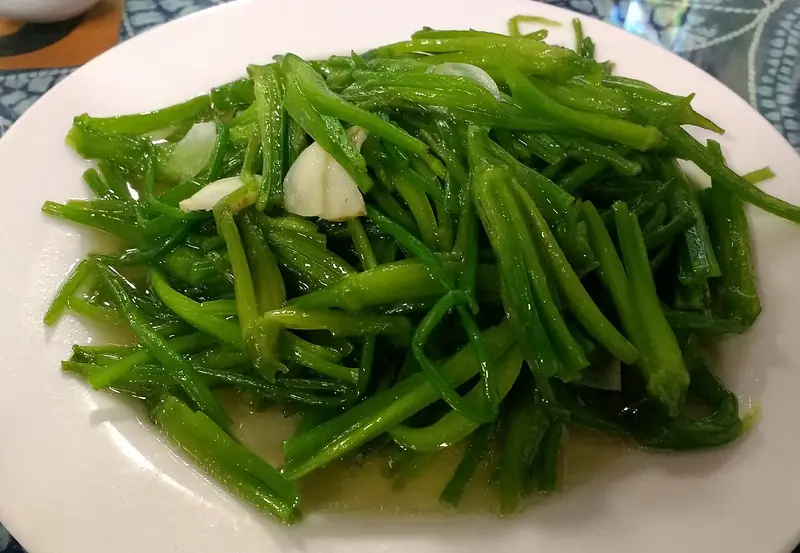

Photo adjustments
EXIF orientation normalized; resized without changing aspect ratio; converted to WebP. No subject edits.
Water Flower Greens (水性杨花) is a Lijiang name for eating 海菜花, an aquatic plant whose flowers float on the surface while its stems and leaves stay submerged in clean water.
A water plant, not a garden vegetable
The plant is harvested from lakes and slow water rather than from a field, and the local record describes residents treating it as a wild vegetable and cooking it as a dish. In the kitchen the stems are the working part: they are picked over, trimmed and rinsed thoroughly, because silt and small water snails come out of the same habitat. From there a hot, fast cook is normal — a short blanch or a quick stir-fry with oil, garlic and a little chilli — and a soup is the other common route, where the stems go in near the end so they keep their bite rather than collapsing.
Crunch and clean water
The texture is the reason people order it: the stems stay crisp and slightly slippery, with a fresh, faintly green flavour and almost no bitterness. It carries other flavours easily, which means a heavy sauce can bury it; a plain stir-fry with garlic, or a clear broth, shows what the plant actually tastes like. Cooked too long it turns limp and releases water into the pan, so a plate that arrives wet and soft is usually an overcooked one rather than a different variety.
One lake, one flower season
The wave-leaf variety is recorded as native to Yunnan and Sichuan, with Lugu Lake the centre of the population, and residents there call it 水杨花. Between May and September the small white flowers spread across the water surface, and the lake's southeastern 草海 is named in the botanical record as a stronghold of the plant. It is also described as intolerant of polluted water — it survives only in very clean conditions — so the plant has become a marker of water quality as much as a menu item.
What to ask before it is cooked
The base is the plant plus oil, garlic and often a little chilli or a splash of stock. That short list is deliberate: strongly flavoured sauces, fermented bean paste or heavy meat stocks usually hide the stems. The questions worth asking are about sourcing and freshness rather than allergens: 是海菜花吗 (is this really 海菜花), 是新鲜的还是干的 (fresh or dried), and where it came from. If the kitchen uses a shared wok with meat or shellfish, ask 单独炒吗 for a cleaner pan.
How to order Water Flower Greens
Show 水性杨花 or 海菜花 and then choose the form: 清炒 (plain stir-fry) for the crispest result or 做汤 (as a soup) for a milder one. Ask 辣不辣 for the chilli level, 少油 if you want it light, and 一份多少 if you are sharing. Because the plant is a protected species in the wild, asking 是养殖的还是野生的 (cultivated or wild) is a fair question rather than an awkward one, and a kitchen that cannot answer it is telling you something useful.
Eating it with the rest of the table
Serve it as the light dish beside something rich — a braise, a fried meat or a hotpot — because its job is to reset the palate. The stems are best in the first few minutes while they still snap, so keep the plate at your end of the table and finish it before it goes cold. A clear soup version can be drunk alongside plain rice, and if you are ordering for a group, one plate covers two or three people comfortably.
More dishes to compare
Explore related local specialties and compare their names, preparation notes and ordering guidance.
Paluda coconut dessert drink 泡鲁达 →
泡鲁达 (Paluda) is the neighbouring Yunnan entry: a sweet coconut-milk drink with soft toppings and crisp pieces of bread. One is a crisp water-plant dish served with garlic and chilli, the other a cold dessert drink. Neither name explains what arrives, so ask the kitchen rather than ordering from the characters alone.
Questions before you order
Is 水性杨花 a fish or a vegetable?
It is a plant. The name is a nickname for an edible aquatic species whose flowers float while the rest of the plant stays underwater. You are eating the stems and leaves, not an animal.
Can I always find it on a menu?
No. The wild plant is protected and depends on very clean water, and it has a short season in the warm months. Ask 是新鲜的还是干的 and 有没有货 before you plan a meal around it.
Source introduction: Wikipedia contributors: 波叶海菜花 · CC BY-SA 4.0. English guide adapted from the cited material, with additional preparation and ordering guidance.
Source introduction: Wikipedia contributors: 泸沽湖 · CC BY-SA 4.0. English guide adapted from the cited material, with additional preparation and ordering guidance.
Source introduction: Wikipedia contributors: 云南省 · CC BY-SA 4.0. English guide adapted from the cited material, with additional preparation and ordering guidance.