

Wuzhou Roast Duck 婺州烤鸭
Wuzhou Roast Duck is featured among the local specialties of Zhejiang.

Wuzhou Roast Duck (婺州烤鸭) is a roast-duck specialty listed for Jinhua, Zhejiang; the opening characters 婺州 are the place element and 烤鸭 fixes the method, duck cooked by dry heat.
How a roast duck is built
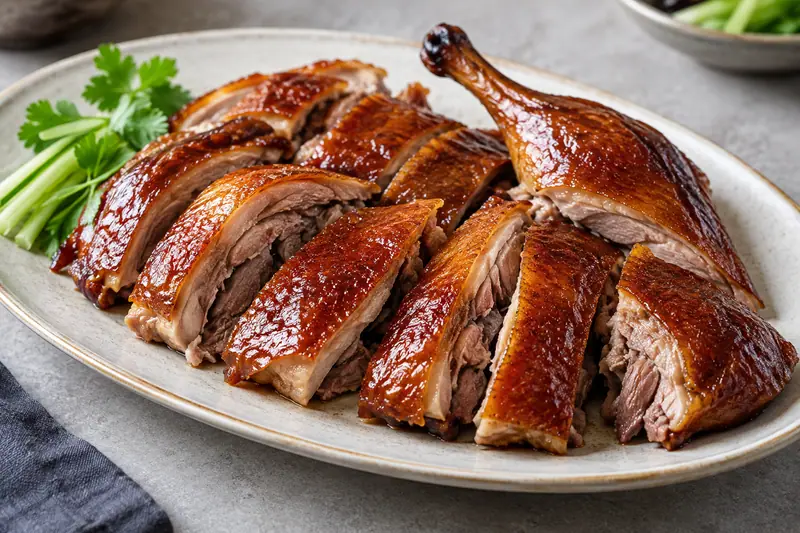
Roast duck is a dry-heat dish, and the work starts before the heat. The cleaned bird is hung or air-dried so that the surface loses moisture, then the skin is treated — glazed with a sugar or maltose solution, brushed with a seasoned wash, or rubbed with a spice mix. Drying matters because wet skin steams instead of crisping, and no glaze can rescue a damp surface. Cooking may happen in a closed oven, over an open fire, or in two stages, and the bird is normally rested before carving so that the juices settle back into the meat.
Flavour and texture
The contrast is the point of the dish: a thin, lacquered skin that cracks under the knife over meat that stays moist. Seasoning usually sits in the glaze rather than in the flesh, so it reads as faintly sweet, savoury or aromatic rather than salty. Duck is a rich bird, so slices are eaten with rice or a plain green vegetable, and something sharp — vinegar, pickles or a light soup — keeps the meal from turning heavy.
What the name marks
The name is a place followed by a cooking method. Here the place element is 婺州, which is tied to Jinhua, while 烤鸭 states plainly that the bird is roasted. That second half is worth reading carefully, because Zhejiang holds other duck entries that are dried, braised or soy-sauced rather than roasted, and they eat quite differently. The name fixes the identity only: it comes with no documented local recipe, maker or history.
Ingredients and dietary checks
The central ingredient is duck, so the dish is not vegetarian and not suitable for anyone avoiding poultry. Around it, expect a glaze that may contain sugar or maltose, a seasoning mix that may include soy sauce, and often a wheat-based accompaniment such as thin pancakes or a dipping sauce. If you are avoiding wheat, pork fat or alcohol, ask 有酱油吗 (is soy sauce used), 有猪油吗 (is lard used) and 有酒吗 (is alcohol used) rather than relying on the label.
How to order the bird
Ask first about size, because a whole duck is a table dish rather than a portion: 一只还是半只 (a whole one or a half), 适合几个人吃 (how many people is it for), and 可以切好带走吗 (can it be chopped to take away). If the bird is carved at the table, ask 有蘸料吗 (is there a dipping sauce) and 配什么 (what comes with it). One more line helps with planning: 骨架子能做汤吗 (can the frame be made into soup).
Eating it at the table
Eat the skin first, while it is still crisp, and let the rest of the slices follow with rice or steamed bread. A single duck is usually plenty for three or four people alongside two or three vegetable dishes, and the leftover frame is worth keeping for a broth. If the kitchen offers a soup course from the bones, that is the traditional way to close the meal without wasting the bird.
More dishes to compare
Explore related local specialties and compare their names, preparation notes and ordering guidance.
Jinhua ham 金华火腿 →
Jinhua ham (金华火腿) belongs to the same city but the opposite kitchen logic: the ham is cured and dried, sold as a flavouring ingredient, and used in small amounts to deepen soups and steamed dishes. Roast duck is cooked and eaten as a bird at the table, so the two are chosen for different moments rather than traded for each other.
Questions before you order
Is a whole duck too much for two people?
It depends on the bird and the rest of the order, but a whole roast duck usually suits three or four diners alongside vegetables and rice. Ask 适合几个人吃 (how many people is it for) and 一只还是半只; many kitchens will sell a half portion.
Why is the skin so crisp?
Because the surface is dried before the bird meets heat, and a dry surface browns instead of steaming. The glaze or seasoned wash applied after drying adds colour and flavour, but the drying step is what makes the crackling finish possible.
Sources & reading
The supplied food list supports this name and regional association. The culinary terms below are explained as menu vocabulary; a local recipe, origin story and venue availability have not been independently verified.