

Explore the region
Why Mount Wuyi is worth the trip
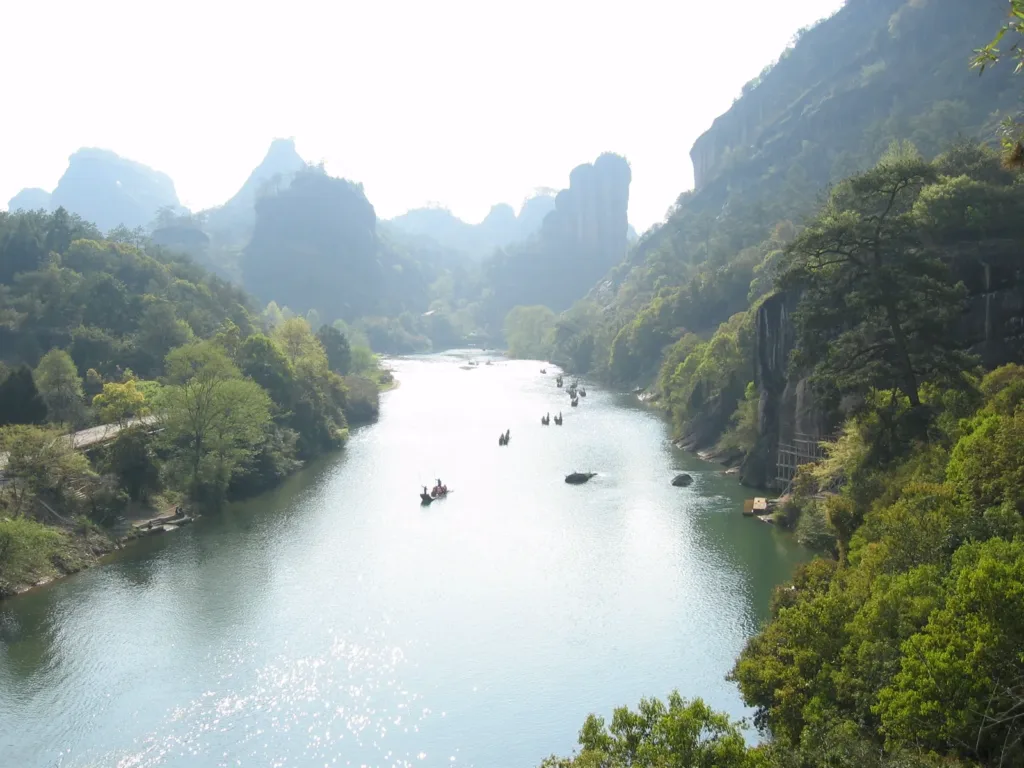
Mount Wuyi is not just a mountain viewpoint. The eastern scenic landscape is built around the lower gorge of the Nine-Bend River: clear, deep water passes between isolated red-sandstone cliffs, while the wider heritage property also protects forest, old religious sites, cliff remains and the Han-period city at Chengcun. UNESCO describes the property as four protected areas rather than one single park entrance, so a map pin labelled “Mount Wuyi” should not be treated as a complete itinerary.
The landscape also explains why Wuyi became an important intellectual place. Temples, monasteries and study centres along the river formed the setting for the development and spread of Neo-Confucianism from the 11th century. At Chengcun, the walls of the Han administrative capital preserve a different layer of the region’s history. These are not interchangeable attractions: the river gorge is a managed scenic-area experience, while Chengcun is an archaeological component area with its own access arrangements.
What to look for
Nine-Bend River
The official park guide describes the Jiuqu Stream as about 9.5 km long, winding between 36 peaks and 99 cliffs. From a managed viewpoint or a bamboo raft, look for the contrast between smooth water, alternating shoals and pools, and steep red cliffs rather than trying to cover every peak in one walk. A raft is a way of reading the landscape at water level: listen for the changing sound of the stream and look sideways at the cliff faces, where inscriptions and older remains may be visible.
The raft is an activity within the broader Mount Wuyi experience, not a synonym for the whole scenic area. Keep the scenic-area admission, sightseeing-vehicle charge and Nine-Bend bamboo-raft product separate when checking the official booking page. The operator’s website currently exposes a Ticketing section and a “Mount Wuyi Scenic Area ticketing notice”, but the accessible notice list mixes dated rules and does not establish a current price or a passport-holder procedure for the date of your visit. Confirm both before payment.
Cultural traces along the cliffs
UNESCO records ancient temples and monasteries, rock shelters with wooden boat coffins, inscriptions and more than thirty-five old Confucian academies across the heritage property. See these as remains in a protected landscape, not as a checklist of reconstructed buildings. Stay on the managed route or raft and do not try to reach an unmarked cliff track, cave or riverside area.
Chengcun and the wider reserve
Chengcun’s Han-period city site belongs to the cultural side of the heritage property, while the forested reserve to the west serves a different conservation and visitor-management purpose. If your main aim is archaeology or the history of Minyue and early Han administration, verify Chengcun’s current opening, ticket relationship and transport separately instead of assuming that a core scenic-area ticket covers it.
Plan the visit
Mount Wuyi has several managed zones and is not a single gate with one universal route. Build the day around the activity you have actually booked, leave time for the internal transfer system, and check the last return connection before entering a trail or boarding the raft. The operator’s current website lists a public contact number, 0599-5135110, and displays 08:00–18:00 beside its contact information; use the official site or that number to confirm the gate, opening status, raft slot and any weather-related change close to departure.
The current accessible evidence does not establish a single, reliable visitor address for the entire mountain landscape. For a taxi or ride-hailing car, use the exact Chinese gate name shown on the booking or operator message—rather than only “Mount Wuyi”—and ask where the visitor transfer area is. An older operator notice describes South and North scenic-area entrances and transfer by sightseeing vehicle, but because that notice is dated, treat those labels as route clues and confirm the assigned entrance for your date.
For international visitors, do not infer that a domestic-ID concession or a Chinese real-name booking flow automatically accepts a foreign passport. Ask the operator which identity document is accepted for the scenic-area ticket, sightseeing vehicle and timed raft reservation, and keep the confirmation in Chinese on your phone.
Getting there
There is no useful metro leg for this mountain destination. By rail, 12306’s passenger-station list includes 武夷山站 (Wuyishan Railway Station) and 武夷山北站 (Wuyishan North Railway Station). The Fujian transport authority also recorded a tourist tram opened from 南平市站 (Nanping City Station) to 南源岭站 (Nanyuanling Station), a scenic-area-side endpoint, with the published launch notice giving service details from 2022. That route is a practical lead for a high-speed arrival, but its departures and last return are not treated here as current: check the operator on the travel date, then arrange the final leg from the endpoint to the gate named on your booking.
City buses and the older scenic-area transport pages available during this check contain dated route and timetable material, so no bus number or departure time is promoted here. The same caution applies to airport transfers: use a live booking or the operator’s current directions rather than a historic fare or schedule.
Safety and respect
The national-park authority advises visitors not to fish, wade, cross streams or swim, and says that there are no public campsites in the reserve. It also asks visitors to keep food, scented items and rubbish secured and not to feed wildlife. These are practical boundaries in a forest and river landscape, not optional etiquette; weather, water level and trail conditions can change the safe route.
Find Mount Wuyi
武夷山 · 武夷山市
The pin marks the area, not the entrance.
Sources & visit information
Sources checked on 1 November 2026. Hours, tickets, reservations and transport can change; confirm with the operator before you go.
- Wuyishan Scenic Area official website ↗
- Wuyishan National Park visitor safety notices ↗
- Wuyishan National Park guide to the Nine-Bend Stream ↗
- UNESCO World Heritage Centre Mount Wuyi ↗
- Fujian transport authority tourist tram launch notice ↗
- China Railway 12306 passenger station list ↗
- Wuyishan Scenic Area public ticketing notices ↗
Image credits & notes (1)
- Bamboo rafts on the Nine-Bend River beneath the Wuyi Mountains, Fujian Photo: Hamish SymingtonPhoto: Public domain