


Explore the region
About Dayun Temple and Queen Mother Palace
Hui Mountain rises abruptly with the Jing River curving round its left and the Rui River round its right, and the Wangmu Palace stands on the summit. The National Ethnic Affairs Commission's article records that Emperor Wu of the Western Han had an Xiwangmu palace built there in the Yuanfeng era and that it was rebuilt several times; the essay carried by China Gansu Net describes the palace as having a hui-shaped plan, rebuilt in the Song and Ming, and names a Jin-dynasty iron bell — the Jin Da'an bell, cast in the third year of that era — hanging at the top of the mountain. Both pages describe the Wangmu Palace caves: the commission's article dates them to a Northern Wei rebuilding and calls them the Great Buddha Cave, about 11 m high, 14 m wide and 11 m deep with a central pillar, its faces and the cave walls covered with carvings of white elephants carrying pagodas, thousand Buddhas, guardian figures and bodhisattvas. The essay adds that more than a thousand Buddha and bodhisattva figures were carved in the cave and that more than two hundred survive.
Dayun Temple's predecessor was the Sui Daxingguo Temple. In December 1964 villagers levelling land on the north bank of the Jing River dug out a brick chamber holding a rectangular bluish stone casket, and the article records that the casket has five nested parts — stone casket, bronze box, silver outer coffin and gold inner coffin — with a glass bottle holding 14 relics, which it states are bone relics of Shakyamuni enshrined on the order of Emperor Wen of Sui, one of 30 such enshrinements across China in 601 CE. A second casket, inscribed 'the monk Huiming made this relic casket', was found on the same site in the winter of 1969 with a bronze box, a gilded bronze box and a bottle holding 32 relics. In 2013, outside the east wall of the rebuilt temple, the underground chamber of the Song-dynasty Longxing Temple was found, with more than 2,000 relics together with Buddha teeth and bone. The article states that the same area of Jingchuan yielded Buddhist relics three times between 1964 and 2013.
The Wangmu Palace holds many steles; the essay singles out three as especially valuable — the Northern Wei 'Stele of the Southern Cave Temple', the Song 'Stele in Praise of the Rebuilt Hui Mountain Wangmu Palace' and the Yuan 'Zhenhai Stele' — and the commission's article records that in 1295 the monks of the Huayan Haiyin Shuiquan Temple had an imperial edict of Khubilai cut on a stele under that name. At the southern foot of Hui Mountain lies the Yaochi, described as Xiwangmu's court and the site of her legendary peach banquets, where a Ming stele found south of the palace records a third-month banquet. The commission's article also notes that the corridor of caves along the Jing River in Jingchuan — 512 caves and five rock wells inside caves — begins at the Wangmu Palace caves.
The catalogue's name joins two sites, and the cited pages treat them separately; neither states how far apart they are.
What to look for
- The Wangmu Palace caves, also called the Great Buddha Cave: a Northern Wei central-pillar cave about 11 m high, 14 m wide and 11 m deep, its pillar and walls covered with carvings of white elephants carrying pagodas, thousand Buddhas, guardians and bodhisattvas
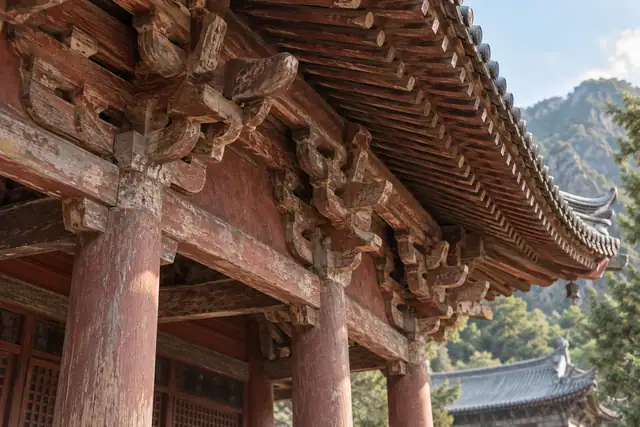
- The Wangmu Palace on the summit of Hui Mountain, with its hui-shaped plan and the Jin-dynasty iron bell cast in the third year of the Jin Da'an era
- The three steles the essay singles out as especially valuable among the many at the palace: the Northern Wei 'Stele of the Southern Cave Temple', the Song 'Stele in Praise of the Rebuilt Hui Mountain Wangmu Palace' and the Yuan 'Zhenhai Stele'
- The Yaochi at the southern foot of Hui Mountain, given as Xiwangmu's court and the site of her legendary peach banquets
- The Dayun Temple site, where the 1964 stone reliquary casket and the 2013 Song-dynasty underground chamber were found
Location & getting there
Getting to Dayun Temple and Queen Mother Palace
Check which interiors and courtyards are accessible. Active places of worship and protected monuments may have different visitor rules.
- Search for 大云寺王母宫 with 平凉市 and 泾川县.
Find Dayun Temple and Queen Mother Palace
大云寺王母宫 · 泾川县
No reliable map pin yet: search by the Chinese name.
Sources & visit information
The linked sources support the identity and background described in this introduction. Opening hours, admission, activity availability and exact arrival arrangements have not been comprehensively checked. Confirm current visitor information with the venue; the original catalogue locality and editorial review flag are retained.