


Photo adjustments
EXIF orientation normalized; resized without changing aspect ratio; converted to WebP. No subject edits.
Explore the region
About Tianfu Shagong Scenic Area
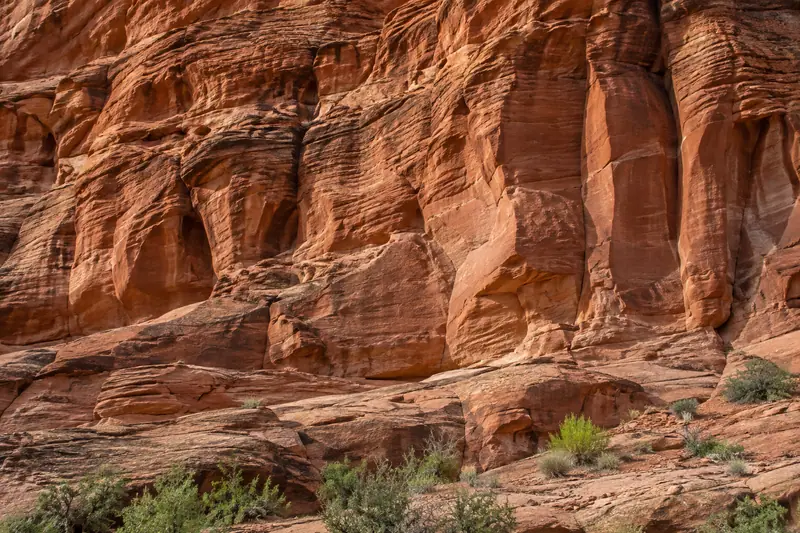
The Gansu Daily travel feature describes Tianfu Shagong as red sandstone about 25 million years old, weathered and water-eroded into a group of danxia-like landform features and named because it is naturally formed like a sand palace cut by a divine axe. The Lanzhou Daily inspection report gives the same age and the same description of the rock and the naming. The sources do not agree on where the site sits or how big it is. The Gansu Daily feature places it in the Longfeng gorge in Jiuhe town, Anning District, next to Renshou Mountain, with a gorge about 5 kilometres deep, an area of about 3 square kilometres and an elevation of 1,700 metres, while both the 2017 inspection report and the 2013 Lanzhou Morning Post report place it on the boundary between Anning District and Gaolan County, and the 2017 report gives the scenic area as about 1,154 hectares. Both versions are reported here.
The Gansu Daily feature describes the shape of the rock in detail. It says the sand-column cliffs and walls are formed of loess and gravel layers shaped like palace halls and temples, standing singly or in rows, round-topped and square-based or pointed-topped and wide-waisted, between ten and several tens of metres high and hundreds of metres or more wide, and that long weathering has left much of the mass as broken cliff and wall. It divides the scenic area into three valleys, Phoenix Valley, Flying Dragon Gorge and the Silk Road Ancient Route, two staging posts, Lanquan Post and Longfeng Inn, and three water features, Longfeng Lake, Jade Pool and Hidden Dragon Pool. Walking from the south gate it names the Fairy Greeting the Guests formation, the Crouching Tiger Terrace and the Lin Gong Buddhist Temple peak cluster, and in Phoenix Valley it lists sights including a Hundred Birds Paying Homage to the Phoenix, a Divine Turtle Sounding the Sea, a Golden Toad Gazing at the Moon, Lingzhi Cliff, Qifeng Ridge, a Red Phoenix Spreading its Wings and Fengyi Terrace. It also notes rock bodies that are grey-green, with thick grey-green soil layers lying over the coloured rock like armour, and says the scenery changes with the time of day, the angle of view and the light.
The site's protection and management record is set out in the two news reports. The Lanzhou Morning Post report of April 2013 says the site was approved as a provincial geological park early that year, and that most of the sand quarries inside the park were still working, the Anning landfill had not been relocated and construction had begun on the third section of the North Ring Road, all of which it said was further damaging the danxia-like landform and its surroundings. The Lanzhou Daily inspection report of July 2017 records that the Lanzhou municipal government's general office issued trial measures for the management of Tianfu Shagong geological park in October 2015, valid for two years, and that an inspection found the whole scenic area of about 1,154 hectares looked after by a single gatekeeper and badly lacking basic facilities. Its gatekeeper told the paper that two staff looked after the whole site, mainly to stop rubbish dumping and new graves, that there was no bin anywhere and no staff patrolling the route, and that apart from weekends the site had very few visitors.
The site's opening and access arrangements are not established by any of the three sources. The two news reports describe conditions in 2013 and 2017 respectively and are not treated here as current, and the 2024 travel feature describes a drive through the valleys without saying whether the route is a managed visitor route, whether there is a gate, or what the current management arrangements are. The statement that the site was approved as a provincial geological park rests on the 2013 newspaper report alone, and no government designation list was consulted in this round. The named formations are the Gansu Daily feature's own naming of the rock shapes, not established place names.
What to look for
- The south gate area, where the Gansu Daily feature names the Fairy Greeting the Guests formation, the Crouching Tiger Terrace and the Lin Gong Buddhist Temple peak cluster
- Phoenix Valley, which the feature says has many formations, including a Hundred Birds Paying Homage to the Phoenix, a Divine Turtle Sounding the Sea, a Golden Toad Gazing at the Moon, Lingzhi Cliff, Qifeng Ridge, a Red Phoenix Spreading its Wings and Fengyi Terrace
- The grey-green soil layers lying over the coloured rock like armour, which the feature describes among the rock bodies
- The layout the feature sets out of three valleys, two staging posts and three water features
Location & getting there
Getting to Tianfu Shagong Scenic Area
Use an authorised visitor route. Cave sections, geological sites and access roads can close independently, so confirm the area that your ticket covers.
- Search for 天斧沙宫 with 兰州市 and 安宁区.
Find Tianfu Shagong Scenic Area
天斧沙宫 · 安宁区
No reliable map pin yet: search by the Chinese name.
Sources & visit information
The linked sources support the identity and background described in this introduction. Opening hours, admission, activity availability and exact arrival arrangements have not been comprehensively checked. Confirm current visitor information with the venue; the original catalogue locality and editorial review flag are retained.