

Explore the region
About Cai Lun Bamboo Sea
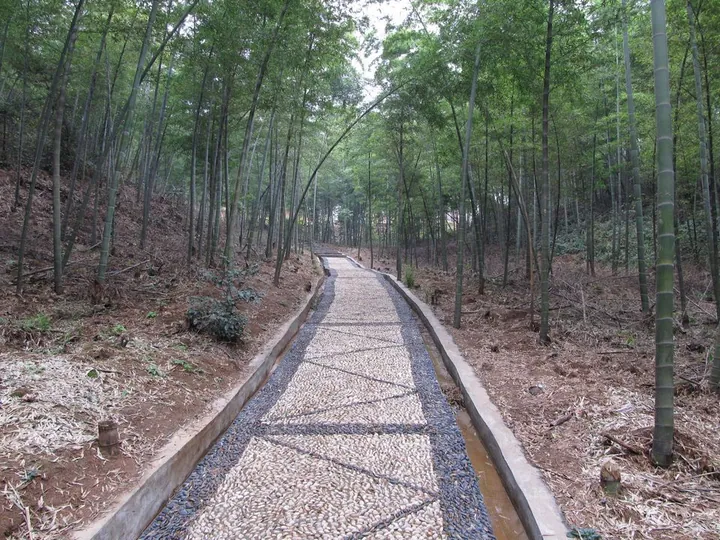
The park lies on the upper Lei River about 41 kilometres from the Leiyang urban area and covers 12,100 hectares in total, with a core scenic area of 160,000 mu spread across dozens of hills. More than eighty bamboo species grow there, dominated by moso bamboo, and the provincial forestry bureau describes it as the largest moso-dominated bamboo park in Asia; the Leiyang municipal government calls it the largest contiguous bamboo sea in Asia and the only scenic area in southern Hunan built around bamboo. Leiyang itself has carried the same name for more than 2,200 years and is known locally as a home of moso bamboo and tea-oil camellia.
The bamboo and the name are connected. The forestry bureau records that Cai Lun sought papermaking materials here and taught the craft locally two thousand years ago, and that several hundred workshops using traditional methods still stand deep in the bamboo. The park also contains Zixia Chan Temple, founded in the Chongzhen reign of the Ming, which later served as the headquarters of the southern Hunan guerrilla force, with its monks taking part in the fighting. Local tradition additionally links the area with the Han statesman Zhang Liang's retirement and with a visit by the Ming traveller Xu Xiake.
What to look for
- The moso bamboo stands of the core area, where more than eighty bamboo species grow across 160,000 mu
- The traditional handmade-paper workshops that survive within the bamboo forest, the link to Cai Lun that gives the park its name
- Zixia Chan Temple, a Ming Chongzhen foundation that later served as the southern Hunan guerrilla headquarters
- The upper Lei River valley that the park follows in the south of Leiyang
Location & getting there
Getting to Cai Lun Bamboo Sea
Check weather, trail access and the last return service. A mountain or forest area is not one entrance, and a map’s central pin may be far from the trailhead.
- Search for 蔡伦竹海 with 衡阳市 and 耒阳市.

Find Cai Lun Bamboo Sea
蔡伦竹海 · 耒阳市
No reliable map pin yet: search by the Chinese name.
Sources & visit information
The linked sources support the identity and background described in this introduction. Opening hours, admission, activity availability and exact arrival arrangements have not been comprehensively checked. Confirm current visitor information with the venue; the original catalogue locality and editorial review flag are retained.
Image credits & notes (1)
- A stone footpath through the bamboo forest at Cai Lun Zhu Hai (Cai Lun Bamboo Sea), Leiyang · 耒阳市蔡伦竹海景区内的石径 Source-recorded photograph date: Taken on 1 December 2010.Photo: Yin沩 · CC BY-SA 3.0Resized for the web; the photo itself has not been edited. Thumbnails may show a cropped view.
