

Explore the region
About Feitian Mountain
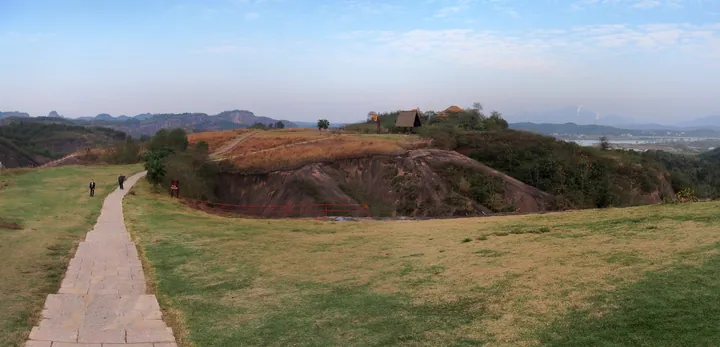
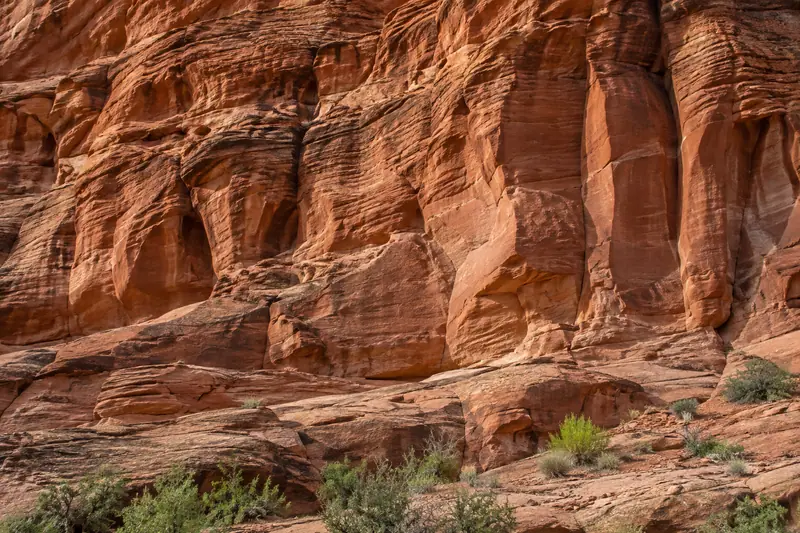
The Danxia area covers 48 square kilometres and takes in three kinds of geological heritage: a Cretaceous fault basin, Carboniferous karst caves and hot-spring water bodies. The red-rock hill country here has weathered into forms that local description reads as figures of people, animals and birds, but the dominant Danxia type is the zhai, a steep-sided flat-topped butte or 'fort'. The buttes stand in ordered groups with sheer red walls and a cap of trees on top, and many of the summits have been dissolved into rounded hollows.
Two rivers thread between the buttes, and the interplay of red rock and green water is the combination the provincial natural-resources department uses to describe the area. Between the buttes are gorges, rock caves, a natural bridge, a stone gate and a narrow cleft of the 'thread of sky' type, while some summit hollows hold water as small pools.
What to look for
- Shenxianzhai, named by the provincial natural-resources department as one of the principal features of the area
- The flat-topped buttes with sheer red walls and trees on their summits, the characteristic Danxia form here
- Summit hollows dissolved into rounded basins, some of which hold water as small pools
- The gorges, rock caves, natural bridge, stone gate and 'thread of sky' cleft between the buttes
- The karst caves cut into Carboniferous limestone, which sit alongside the Cretaceous Danxia beds
Location & getting there
Getting to Feitian Mountain
Use an authorised visitor route. Cave sections, geological sites and access roads can close independently, so confirm the area that your ticket covers.
- Search for 飞天山 with 郴州市 and 苏仙区.
Find Feitian Mountain
飞天山 · 苏仙区
No reliable map pin yet: search by the Chinese name.
Sources & visit information
The linked sources support the identity and background described in this introduction. Opening hours, admission, activity availability and exact arrival arrangements have not been comprehensively checked. Confirm current visitor information with the venue; the original catalogue locality and editorial review flag are retained.
