

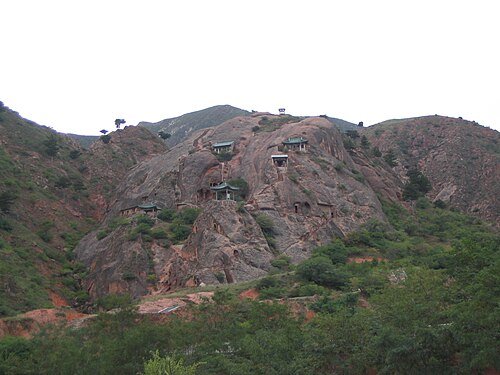
Photo adjustments
Wikimedia thumbnail; fitted to the ranking-card frame.
Explore the region
About Xumishan Grottoes
The large seated Maitreya at Dafo Tower is the best-known image, while the Yuanguang Temple and Xiangguo Temple areas reveal a wider sequence of cave carving. The site developed across several dynasties along routes connected with the Silk Road. Its museum helps explain the imagery before the outdoor climb.
Before the grottoes were carved the site was known as Fengyishan. Construction is thought to have begun in the late Northern Wei, linked to Guyuan's position on the Silk Road, and continued through the Western Wei, Northern Zhou, Sui and Tang dynasties. During the Tang, Jingyun Temple (景云寺) was built nearby; it was rebuilt in 1443 and renamed Yuanguang Temple (圆光寺) by Emperor Yingzong, while Xiangguo Temple (相国寺) was built nearby.
A 1986 survey by Peking University (北京大学) and Ningxia's cultural heritage office (宁夏回族自治区文化厅文物处) numbered 132 caves across eight areas spread along more than 1,500 metres of hillside, including the Dafo Tower, Zisun Palace, Yuanguang Temple, Xiangguo Temple and Taohua Cave areas. Statues, wall paintings and inscribed stelae are found within the grottoes, some of which may have served to house monks; the seated Maitreya at Dafo Tower stands 65 feet tall.
Statues were smashed during the Cultural Revolution, and the largest cave served as a shooting range. The site was listed as a Major Historical and Cultural Site Protected at the National Level (全国重点文物保护单位) in 1982, but continued to suffer damage from weathering and illegal digging; cement was used on the seated Buddha in 1982 during conservation work, and in 2007 the grottoes were placed on the World Monuments Fund's list of the world's 100 most endangered sites.
What to look for
- The seated Maitreya at Dafo Tower is the major landmark.
- Yuanguang and Xiangguo cave groups reveal varied Buddhist carving.
Location & getting there
Getting to Xumishan Grottoes
Use the Xumishan Tourism Area visitor entrance in the Huangduobao/Sanying area of Yuanzhou District, Guyuan. Plan the road transfer from Guyuan and check the open cave route, internal transport and return pickup.
Combine your visit
Choose from these complementary stops when planning your visit.
-
Xumishan Museum须弥山博物馆
Start with Silk Road and Buddhist-art context.
-
Dafo Tower area大佛楼
See the large seated figure from the visitor route.
-
Open cave groups开放石窟群
Choose Yuanguang or Xiangguo according to the day’s access.
This is a suggested combination, not a timed route; confirm the opening and transport arrangements for your date.
Find Xumishan Grottoes
须弥山石窟 · 固原
The pin marks the area, not the entrance.
More places nearby
Approximate straight-line distances between map pins, not travel distances.
Huoshizhai National Geopark 火石寨国家地质公园
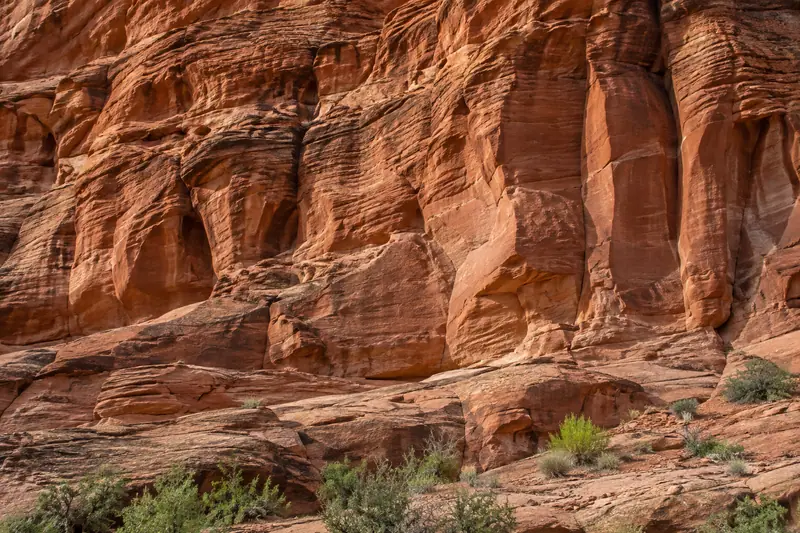
28 km awayHuoshizhai is known for dark red rock hills that stand out against green vegetation north of Xiji. Eroded pillars and cliff forms give the landscape its dramatic profile, while small religious caves add a cultural layer…
View guide →Guyuan Museum 固原博物馆
39 km awayGuyuan Museum is especially valuable for understanding the Silk Road through objects. A Persian gilded silver vessel, a studded glass bowl and painted lacquer-coffin remains show how materials and imagery moved between regions…
View guide →Liupan Mountain Long March Memorial Museum 六盘山红军长征纪念馆
70 km awayThe Liupan Mountain Long March memorial site combines a museum, monument, square and outdoor commemorative route. Its displays and landscape installations interpret the Red Army’s passage through the mountain region. The…
View guide →Sources & visit information
The sources below support the place-specific description and arrival information. Suggested combinations are editorial planning ideas; confirm current opening, entry arrangements and transport services for your date.
- Ningxia Culture and Tourism Department: Xumishan cave groups, museum and location ↗
- Xumishan Grottoes — Wikipedia geographic and historical reference ↗
- Chinese Wikipedia: 须弥山石窟 (revision 90853628, 2025-12-26) ↗
- English Wikipedia: Xumishan Grottoes (revision 1306366552, 2025-08-17) ↗
Geographic and historical facts selectively adapted from Wikipedia contributors, Xumishan Grottoes · CC BY-SA 4.0. Source revision 1306366552.
Background paragraphs translated and condensed from Wikipedia contributors, "须弥山石窟", Chinese Wikipedia · CC BY-SA 4.0. Source revision 90853628.
Background paragraphs condensed from Wikipedia contributors, "Xumishan Grottoes", English Wikipedia · CC BY-SA 4.0. Source revision 1306366552.