

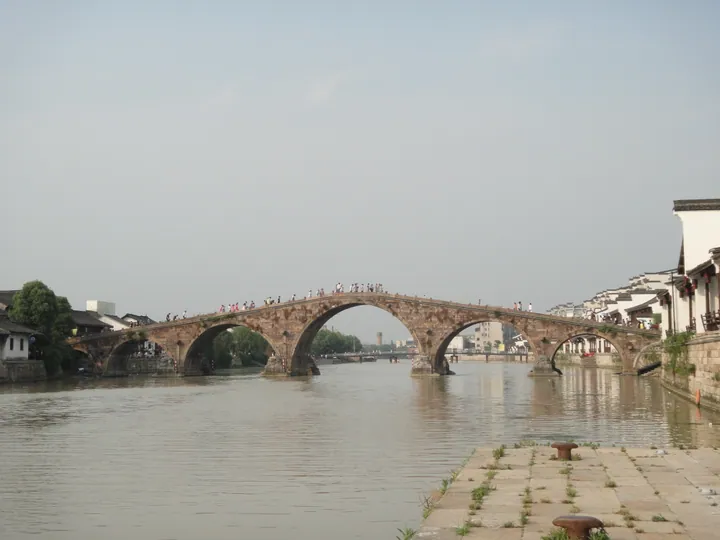
Photo adjustments
Full frame retained; proportionally resized and converted to WebP. No retouching or changes to the photographed subject. Card displays may crop the view.
Explore the region
About Tangqi
Its seven stone arches give the crossing an unusually long profile, while the steps reveal its role as a pedestrian link between the canal banks. The Qianlong imperial stele adds another layer of canal history nearby. A visit works well as a focused look at bridge, waterfront houses and inscriptions rather than a tour of the modern town.
The town was first established in the Northern Song dynasty. From the Yuan dynasty on, merchants gathered there and it grew into a major market town, and by the Ming and Qing dynasties it was prosperous enough to be ranked first among the 'Ten Great Towns of Jiangnan' (江南十大名镇). At the end of 2010 it became one of 27 pilot towns in Zhejiang for developing small cities. The town was formerly administered under Yuhang District, and in April 2021 it was transferred into the newly established Linping District.
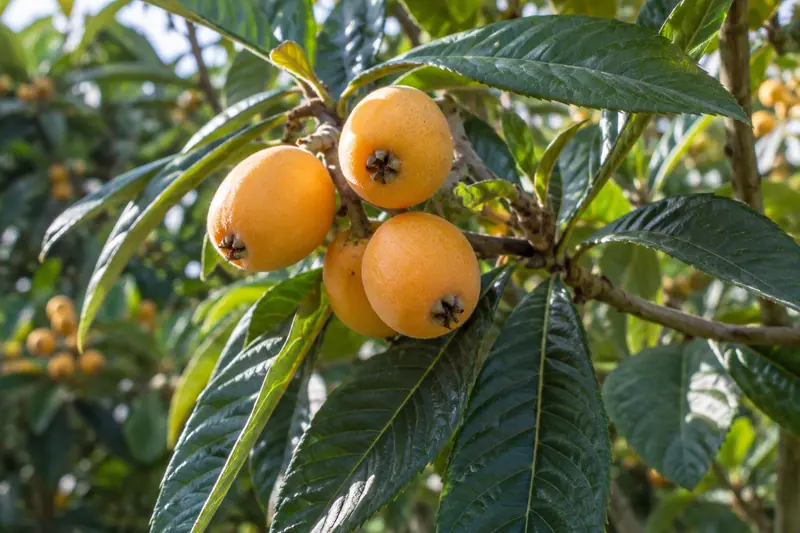
Tangqi covers 79 square kilometres and has a population of 99,051, at the southern end of the Hangjiahu Plain, with the Beijing-Hangzhou Grand Canal running through the town. It borders Deqing County in Huzhou to the north. The area is known for growing loquats and Prunus mume, particularly around neighbouring Chaoshan Mountain.
Guangji Bridge was built in 1494 and was the only seven-arch stone bridge on the Grand Canal. The nearby Qianlong stele originally stood at a branch of the Hangzhou Water Conservancy Office; after that office was destroyed in the early Republican era, the stele survived because it had been built into the wall of a nearby house.
What to look for
- The seven-arched stone span of Guangji Bridge.
- The Qianlong imperial stele and the historic canal-side streets.
Location & getting there
Getting to Tangqi
Use the Tangqi Ancient Town visitor approach at No 9 Jiangyuan Lane in Tangqi Town. Continue towards Guangji Bridge and the old canal frontage; specify the ancient town when arranging the last road leg.
Combine your visit
A suggested sequence linking the specific features of this visit.
-
Guangji Bridge
Study the stone arches and the historic crossing between the canal banks.
-
Old canal-side streets
See how the commercial houses address the waterway.
-
Qianlong imperial stele
Add the inscribed monument to the town’s canal history.
This order is editorial. Confirm access and any transfers between stops; it does not establish a walking route, same-day connection or common admission ticket.
Find Tangqi
塘栖古镇 · 临平区
The pin marks the area, not the entrance.
More places nearby
Approximate straight-line distances between map pins, not travel distances.
China Knife, Scissors and Sword Museum 中国刀剪剑博物馆
18 km awayThe China Knife, Scissors and Sword Museum belongs to the Hangzhou Arts and Crafts Museum group in the Qiaoxi historic district. The buildings reuse textile factories and warehouses beside the Grand Canal.
View guide →Gongchen Bridge 拱宸桥
18 km awayGongchen Bridge arches over the Grand Canal between two distinct parts of Hangzhou’s canal district. To the west, Qiaoxi’s whitewashed walls and dark roofs retain the character of an older waterside neighbourhood; to the east…
View guide →Beijing-Hangzhou Grand Canal Museum 中国京杭大运河博物馆
18 km awayThe Grand Canal Museum uses its position beside Gongchen Bridge to connect indoor displays with a working waterway outside. Models of canal vessels and a cross-section explaining water levels make the engineering story tangible…
View guide →Sources & visit information
The sources below support the place-specific description and arrival information. Suggested combinations are editorial planning ideas; confirm current opening, entry arrangements and transport services for your date.
- zh.wikipedia.org ↗
- zjjcmspublic.oss-cn-hangzhou-zwynet-d01-a.internet.cloud.zj.gov.cn ↗
- Tangxi, Hangzhou ↗
- Chinese Wikipedia: 塘栖镇 (revision 92151580, 2026-04-03) ↗
- English Wikipedia: Tangxi, Hangzhou (revision 1333046206, 2026-01-15) ↗
Visitor information adapted and edited from Wikipedia contributors, “Tangxi, Hangzhou” · CC BY-SA 4.0. Source revision 1333046206.
Background paragraphs translated and condensed from Wikipedia contributors, "塘栖镇", Chinese Wikipedia · CC BY-SA 4.0. Source revision 92151580.
Background paragraphs condensed from Wikipedia contributors, "Tangxi, Hangzhou", English Wikipedia · CC BY-SA 4.0. Source revision 1333046206.