

Photo adjustments
Proportionally resized and converted to WebP without cropping, retouching or changing the photographed subject.
Explore the region
About Baiyangdian
Boat routes reveal how vegetation shapes the water passages and how communities have lived with this wetland landscape. The Lotus Grand View Garden adds a cultivated flower setting, while the Culture Garden presents local history, including the Yanling guerrilla team. Choose between a garden-and-history outing and a quieter wetland route before boarding; the different boat products cover different places.
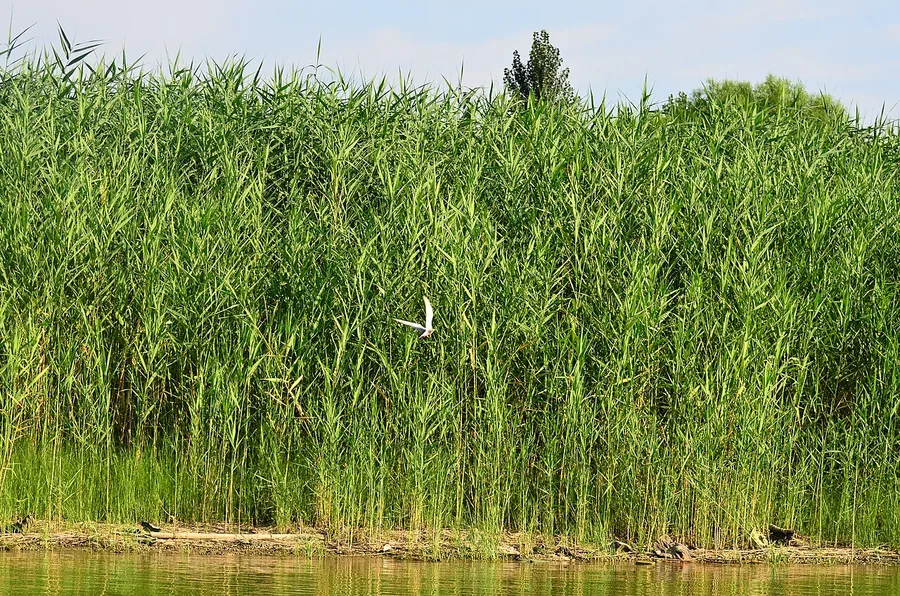
Reed beds and lotus ponds cover most of the shallow water, while channels remain navigable, and the surface freezes in winter. During the freezing and thawing transition, when neither boats nor ice sledges can cross, island residents stock food and fuel because they are largely cut off from the outside, a period known locally as 'chanqi' (潺期).
Baiyangdian lies between Anxin (安新), Xiong (雄县) and Rongcheng (容城) counties in Xiong'an New Area, in the Haihe River (海河) basin of the northern North China Plain, and is the largest freshwater lake in North China. It is fed by nine rivers from the Taihang Mountains foothills, forming 146 interconnected lakes across a total area of 366 square kilometers, with 36 villages on its islands and shores.
From the 1960s the lake repeatedly dried up, including five consecutive years from 1983 to 1988, before diversion projects drawing water from the Yuecheng Reservoir (岳城水库) and the Yellow River restored regular inflow after 2000. It was rated a 4A tourist site in 2003 and a 5A site in 2007, and by 2022 recorded wild bird species had risen to 237, including the critically endangered Baer's pochard (青头潜鸭).
What to look for
- Reed-lined channels and open water, whose changing pattern is the defining landscape of Baiyangdian.
- Lotus Grand View Garden and the Culture Garden's Yanling-team historical displays.
Location & getting there
Getting to Baiyangdian
The main Anxin departure point is Baiyangdian Pier on Tourism East Road; specify this pier when arranging the road transfer.
- Choose a boat route that actually serves the gardens or wetland area you want, and confirm its return pier.
Combine your visit
Suggested order within this visit:
-
Anxin Baiyangdian Pier
Select the boat itinerary and return arrangement.
-
Lotus Grand View Garden
Explore the garden stop when served by the selected route.
-
Culture Garden
Add local historical interpretation, including the Yanling-team story.
This sequence is an editorial suggestion based on the features described in the sources. Access to individual buildings or areas should be checked locally; no travel time or shared admission is implied.

Find Baiyangdian
白洋淀 · 雄安新区
The pin marks the area, not the entrance.
More places nearby
Approximate straight-line distances between map pins, not travel distances.
Baoding Museum 保定市博物馆
39 km awayBaoding Museum tells the region's story through archaeology and living traditions. The Baoding Story exhibition connects the Yan capital, the Mancheng tombs and Ding-kiln ceramics with the area's later role near the imperial…
View guide →Ancient Lotus Pond 古莲花池
44 km awayAncient Lotus Pond is a compact historic garden beside Baoding's Zhili Governor's Office area. It began as a private garden and later served imperial visitors, with water occupying a substantial part of the grounds. Towers and…
View guide →Zhili Governor's Office 直隶总督署
44 km awayBaoding's former Zhili Governor's Office makes the workings of a Qing provincial administration visible through its courtyards. The public audience hall, the quieter second hall and the residential rooms occupy different…
View guide →Sources & visit information
The sources below support the place-specific description and arrival information. Suggested combinations are editorial planning ideas; confirm current opening, entry arrangements and transport services for your date.
Visitor information adapted and edited from Wikipedia contributors · CC BY-SA 4.0. Source revision 85690185.
Background paragraphs translated and condensed from Wikipedia contributors, "白洋淀", Chinese Wikipedia · CC BY-SA 4.0. Source revision 85690185.