


Photo adjustments
Proportionally resized and converted to WebP without cropping, retouching or changing the photographed subject.
City & district guides
About Guanlin
Its historical complex combines tomb, temple and commemorative grove.
The surviving architecture is mainly associated with Ming and Qing rebuilding. The site remains part of the wider cultural tradition of devotion to Guan Yu.
Guanlin was first established at the end of the Eastern Han dynasty. According to tradition, Guan Yu (关羽) was captured and beheaded in 220, and Cao Cao buried his head here with the rites of a prince, then built a shrine. Before the Song the tomb was called Hanshou Tinghou Zhong (汉寿亭侯冢), later Guanwang Dazhong (关王大冢), and by the Ming, Guandi Ling (关帝陵). Rebuilt in 1592, it was renamed Guanlin in 1666, paired with Confucius's Kong Lin (孔林) in Qufu.
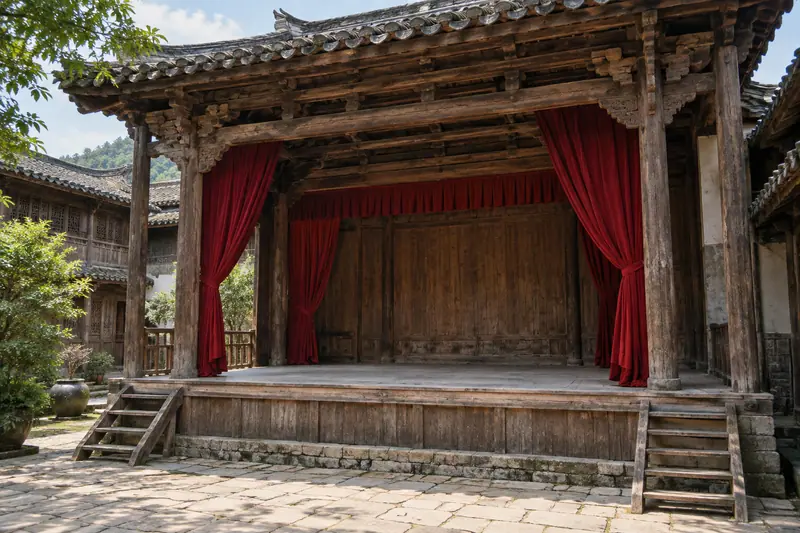
The complex places its temple at the front and the tomb mound behind, reaching its present scale of about 100 mu (亩) after a Qing Qianlong-era expansion. The core compound follows the shape of the Chinese character 回, with four courtyards covering more than 180 mu (亩) and over 150 halls and rooms, its north-south axis lined with an opera stage, gates, the Hall of Peace, the God of Wealth Hall and the Spring and Autumn Hall (春秋殿) before reaching the tomb mound.
The grounds hold more than 70 stone steles, four stone memorial archways, over 110 stone and iron lions and 800 old cypress trees. Guanlin is a national AAAA-rated attraction and a Major Historical and Cultural Site Protected at the National Level (全国重点文物保护单位), and a protection unit for the intangible cultural heritage of Guan Gong worship customs (关公信俗).
What to look for
- The complex combines a temple, commemorative grove and tomb tradition.
- Ming- and Qing-period rebuilding shaped the surviving halls dedicated to Guan Yu.
The surrounding area
A city base for Longmen, soup breakfasts, old-city food streets and contemporary hanfu visitor districts.
Location & getting there
Getting to Guanlin
Approach Guanlin in Luoyang’s Luolong district; the temple-and-tomb precinct is the destination rather than a general transfer to the district.
- Confirm the visitor entrance and access to the named areas before departure.
Combine your visit
A suggested sequence through the named features described in the source.
-
Temple halls
Begin with the rebuilt halls dedicated to Guan Yu.
-
Commemorative grove and tomb precinct
Continue to the grove and the tomb traditionally associated with Guan Yu’s head.
The order is an editorial suggestion. Internal opening arrangements and transfers between sectors need checking; no walking duration or access entitlement is implied.
Find Guanlin
关林 · 洛阳市
The pin marks the area, not the entrance.
More places nearby
Approximate straight-line distances between map pins, not travel distances.
Luoyang Museum · Nietai Road洛阳博物馆·聂泰路馆址
5 km awayLuoyang Museum presents objects from the successive cultures and capitals of the Luo River valley. Its bronze collection is especially distinctive: a three-wheeled dove cart turns an animal into a small vehicle, while ritual…
View guide →Longmen Grottoes龙门石窟
6 km awayLongmen’s Buddhist figures occupy limestone cliffs on both sides of the Yi River, with the densest sequence on the west bank. Small niches and inscriptions lead to compositions on a very different scale, especially the great…
View guide →Yingtian Gate应天门遗址
8 km awayYingtian Gate marked the southern entrance to the palace city of Sui and Tang Luoyang. Today, a large protective reconstruction gives the gateway’s scale and projecting towers a visible form above the archaeological remains. The…
View guide →Sources & visit information
The linked encyclopedia sources support background and place descriptions. Current opening hours, ticket prices, booking rules and transport schedules have not been independently verified for this guide. Confirm them with the venue or operator before travelling.
Visitor information adapted and edited from Wikipedia contributors, “关林” · CC BY-SA 4.0. Source revision 94207065.
Background paragraphs translated and condensed from Wikipedia contributors, "关林", Chinese Wikipedia · CC BY-SA 4.0. Source revision 94274862.