

Photo adjustments
EXIF orientation normalized; resized without changing aspect ratio; converted to WebP. No subject edits.
Explore the region
About Laosicheng
The remains of administrative and residential areas, streets and drainage reveal how a Tusi capital functioned, while surviving religious buildings and the surrounding village add other layers. The site museum is a useful first stop because much of the city survives as foundations and landscape traces rather than intact palace halls. Read the excavated evidence alongside the living Tujia setting, without confusing it with a newly built themed ancient town.
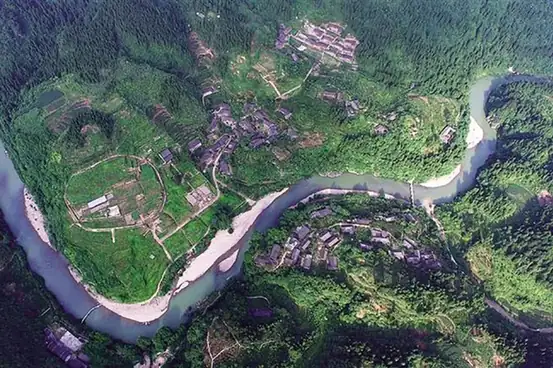
Laosicheng was built in 1135, during the Southern Song dynasty, as the historic capital of the Peng clan Tusi (彭氏土司), who ruled the area for six centuries before the site was abandoned in 1724, during the Qing dynasty. It was originally named Fushicheng (福石城), or Fushi City. In 2015 it was designated a UNESCO World Heritage Site as one of three Tusi Sites (土司遗址).
The site lies beside the Lingxi River (灵溪河), on the upstream section of the Niulu River (牛路河), a second-level tributary of the You River. It is described as the first world cultural heritage site in Hunan province and the largest, earliest and best-preserved ancient Tusi city in China, covering a total area of 25 square kilometres, with a core zone of more than 250,000 square metres. Relics unearthed there include the Hall of the Patriarch, a Peng-clan patriarch temple, tombs of Tusi chieftains, ancient city walls and memorial arches.
What to look for
- The former Tusi capital’s streets, foundations and drainage layout.
- The museum and surviving religious-cultural landscape beside the Lingxi River.
Location & getting there
Getting to Laosicheng
Go to the Laosicheng visitor and museum area in Sicheng Village, Lingxi Town, Yongshun County. Confirm the current connection between museum, site paths and any river transfer; the archaeological area is outside Yongshun’s town centre.
Combine your visit
A suggested order for exploring this place and its immediate setting.
-
Laosicheng Museum老司城博物馆
Learn the site plan and Tusi historical context.
-
City remains and Left Street城址与老司城左街
Compare the archaeological traces with the reconstructed plan.
-
Lingxi River setting灵溪河沿岸
Finish with the landscape that supported the former capital.
Check access to the individual stops. A suggested sequence does not imply a combined ticket or guaranteed transfer.
Find Laosicheng
老司城 · 湘西土家族苗族自治州
The pin marks the area, not the entrance.
More places nearby
Approximate straight-line distances between map pins, not travel distances.
Zhangjiajie Museum 张家界市博物馆
49 km awayZhangjiajie Museum links the region’s famous geology with its human and urban history. The ground-floor geological display provides a useful introduction to the landscape, while the upper historical galleries move through local…
View guide →Tianmen Mountain 天门山
50 km awayTianmen Mountain is defined by its enormous natural arch and cliff-edge paths above Zhangjiajie city. The mountain-top circuit, temple area and Tianmen Cave give it a different character from Wulingyuan’s sandstone pillars…
View guide →Puguang Chan Temple 普光禅寺
52 km awayPuguang Chan Temple is an older cultural stop within Zhangjiajie’s Yongding city centre. The surviving complex reflects more than a single Buddhist tradition, with the temple, martial shrine and Wenchang-related buildings…
View guide →Sources & visit information
The sources below support the place-specific description and arrival information. Suggested combinations are editorial planning ideas; confirm current opening, entry arrangements and transport services for your date.
- Laosicheng ↗
- Hunan government — museum, site zones and visitor landmarks ↗
- English Wikipedia: Laosicheng (revision 1349750600, 2026-04-18) ↗
Visitor information adapted and edited from Wikipedia contributors: Laosicheng · CC BY-SA 4.0. Source revision 1349750600.
Background paragraphs condensed from Wikipedia contributors, "Laosicheng", English Wikipedia · CC BY-SA 4.0. Source revision 1349750600.