

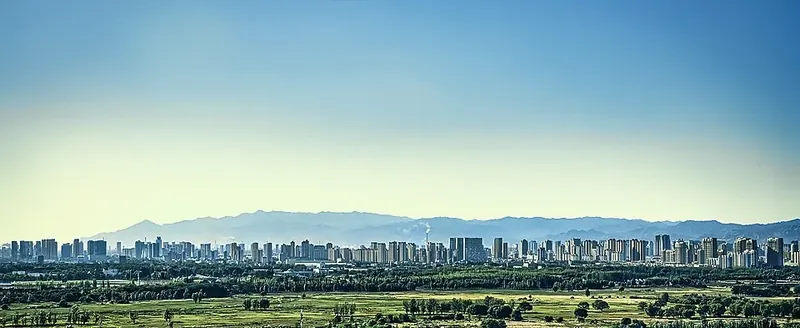
Photo adjustments
Full frame retained; proportionally resized and converted to WebP. No retouching or changes to the photographed subject. Card displays may crop the view.
Explore the region
About Baotou
The museum's rock art and regional-history displays reach back beyond the steelworks, while Saihantala preserves an open grassland landscape within the built-up city. Pairing the two makes a practical introduction to the contrast. Begin with the museum's mountain-and-steppe history, then travel across the city for a walk on the grassland's maintained public paths.
Baotou was inhabited by nomadic peoples whose descendants were later categorized as Mongols; near the end of the Han dynasty, the warrior Lü Bu was born in what is now the city's Jiuyuan District. The city was incorporated as a town in 1809, later than Hohhot, at a site chosen for its arable land in the Yellow River's Great Bend. A railway from Beijing reached Baotou in 1923, spurring early industrial development.
The city lies where the Yinshan mountain range (阴山) crosses between Baotou proper and Guyang County, with the Daqing (大青山) and Wula (乌拉山) ranges averaging around 2,000 meters and reaching a highest peak of 2,324 meters. The old town, Donghe (东河区), sits on a Yellow River terrace and centers on commerce and light industry, while Kundulun (昆都仑区) district, further west, is the site of the Baotou Iron and Steel Company's heavy industry.
The city's Mongolian name means 'place with deer', giving rise to the nickname 'Lucheng' (鹿城), or City of Deer, while it is also known as the 'City of Steel on the Grassland' (草原钢城); Baotou mines and refines over half of the rare-earth minerals produced worldwide, which has led to environmental contamination near its industrial sites. Baotou received the UN-Habitat Award in 2002, and was named a 'Natural City' at the 2024 COP16 biodiversity summit.
What to look for
- Baotou Museum's Yinshan rock-art and regional trade displays.
- Saihantala's grassland paths and the contrast between open vegetation and the surrounding city.
The surrounding area
Western city base with a separate monastery excursion to Wudangzhao.
Location & getting there
Getting to Baotou
Start at Baotou Museum, 25 A'erding Avenue, then use local transport to a signed Saihantala entrance.
- Baotou's main districts extend along a broad east–west urban corridor; plan the museum-to-grassland transfer as part of the visit.
Combine your visit
Suggested order within this visit:
-
Baotou Museum包头博物馆
Begin with the region's cultural and trading history.
-
Saihantala city grassland
Continue to the open landscape within the modern city.
This sequence is an editorial suggestion based on the features described in the sources. Access to individual buildings or areas should be checked locally; no travel time or shared admission is implied.
Find Baotou overview
包头 · 包头
The pin marks the area, not the entrance.
More places nearby
Approximate straight-line distances between map pins, not travel distances.
Baotou Museum 包头博物馆
10 km awayBaotou Museum connects the city's trading history with the older cultures of the Yinshan region. Its rock-art collection is especially useful: animal figures, hunting and pastoral scenes preserve a visual record that differs…
View guide →Wudang Lamasery 五当召
36 km awayWudang Lamasery, also called Badekar Monastery, spreads up a mountain valley northeast of Baotou. White, flat-roofed buildings form a Tibetan architectural ensemble, with larger teaching and assembly halls set among smaller…
View guide →Xiangshawan 响沙湾
42 km awayXiangshawan combines a high crescent-shaped sand slope with a developed desert resort at Kubuqi's eastern edge. Its name refers to the sound that dry sand can make when disturbed, although conditions do not always produce it…
View guide →Sources & visit information
The sources below support the place-specific description and arrival information. Suggested combinations are editorial planning ideas; confirm current opening, entry arrangements and transport services for your date.
- Wikipedia: Baotou ↗
- Baotou Culture and Tourism: museum arrival address ↗
- Museum-supplied account: Baotou rock-art collections ↗
- Baotou News: Saihantala public grassland paths ↗
- Chinese Wikipedia: 包头市 (revision 94239231, 2026-09-08) ↗
Visitor information adapted and edited from Wikipedia contributors · CC BY-SA 4.0. Source revision 1367294181.
Background paragraphs translated and condensed from Wikipedia contributors, "包头市", Chinese Wikipedia · CC BY-SA 4.0. Source revision 94239231.
Background paragraphs condensed from Wikipedia contributors, "Baotou", English Wikipedia · CC BY-SA 4.0. Source revision 1367294181.