


Photo adjustments
Full frame retained; proportionally resized and converted to WebP. No retouching or changes to the photographed subject. Card displays may crop the view.
About Ragya Monastery
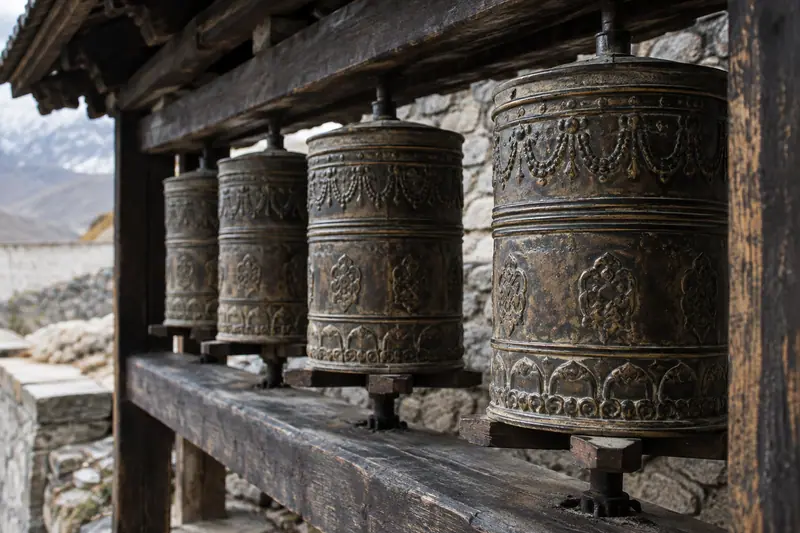
The hillside buildings, main hall and turning prayer wheels make the relationship between monastery and landscape particularly clear. This Gelug institution has Qing-period roots and remains active. The river-facing setting is part of the experience, but worship and residential areas have their own access boundaries.
The original name, Zhaxi Gongdelin (扎西功德林), means 'Auspicious Temple of Broad Peace' (吉祥广安寺). The later name, Gandan Zhaxi Huini (甘丹扎西回尼), means 'Source of Goodness and Auspiciousness' (具善吉祥源地). It is also called Jiachan Temple. On 15 September 1988, it was included in the fifth batch of Qinghai provincial cultural heritage sites (青海省文物保护单位), classified as ancient architecture. National protection followed in 2013, when the State Council (国务院) added the monastery to the seventh batch of Major Historical and Cultural Sites Protected at the National Level (全国重点文物保护单位). The national listing also placed it in the category of ancient architecture.
What to look for
- The monastery occupies a mountain-backed bend of the Yellow River.
- The main hall and prayer wheels remain part of daily religious life.
Location & getting there
Getting to Ragya Monastery
Arrange road transport to Lajia town in Maqen County and specify Lajia Temple. Use the public temple approach and agree the onward road journey; this is not a city-centre attraction with assured passing transport.
Combine your visit
Choose from these complementary stops when planning your visit.
-
Public monastery approach拉加寺公共入口
Observe the mountain and river setting.
-
Permitted main-hall area开放的大殿区域
Look at the religious architecture without interrupting worship.
-
Outer river-facing view外围黄河景观
Finish from an established public viewpoint.
This is a suggested combination, not a timed route; confirm the opening and transport arrangements for your date.
Find Ragya Monastery
拉加寺 · 果洛州
The pin marks the area, not the entrance.
More places nearby
Approximate straight-line distances between map pins, not travel distances.
Amnye Machen阿尼玛卿山
110 km awayAmnye Machen is a sacred mountain massif in Golog, with jagged snow peaks and glaciers associated with the upper Yellow River landscape. Tibetan Buddhist traditions regard it as the home of Machen Pomra. The mountain’s scale is…
View guide →Rongwo Monastery隆务寺
153 km awayRongwo Monastery is a major Tibetan Buddhist institution in Tongren, also known as Rebgong. Its temples and monastic colleges connect worship with the study of philosophy, ritual and the Kalachakra tradition. The prayer hall and…
View guide →Tongren, Qinghai同仁
154 km awayTongren, known locally as Rebgong, is associated with the painting, applique and sculpture collectively recognised as Regong arts. Monks and village artists continue these traditions through apprenticeship. Rongwo Monastery…
View guide →Sources & visit information
The sources below support the place-specific description and arrival information. Suggested combinations are editorial planning ideas; confirm current opening, entry arrangements and transport services for your date.
- January 2026 report: Ragya’s mountain, river, main hall and prayer-wheel setting ↗
- 拉加寺 — Wikipedia geographic and historical reference ↗
- Chinese Wikipedia: 拉加寺 (revision 91958159, 2026-03-20) ↗
Geographic and historical facts selectively adapted from Wikipedia contributors, 拉加寺 · CC BY-SA 4.0. Source revision 91958159.
Background paragraphs translated and condensed from Wikipedia contributors, "拉加寺", Chinese Wikipedia · CC BY-SA 4.0. Source revision 91958159.