

Photo adjustments
Full frame retained; proportionally resized and converted to WebP. No retouching or changes to the photographed subject. Card displays may crop the view.
Explore the region
About Gaojiabao Ancient City
The plan is rectangular: the east and west walls are each 311 metres and the north and south walls each 431 metres, with a surviving height of 6.5 to 9.1 metres on a base 7.52 metres wide. A one-metre parapet with crenellations and lookout holes runs along the top, a 三官楼 stands at the north wall head and a 魁星楼 at the southeast corner; the Shenmu municipal government records that apart from the 魁星楼, the parapet, crenellations and lookout holes, which are damaged, the rest is well preserved. Arched gates open in the east, south and west walls, each with a barbican, while the gates' enemy towers, the lookout platform and the south gate are recorded as damaged.
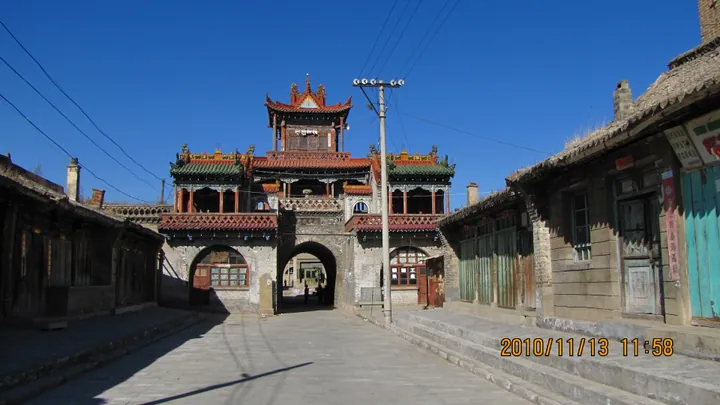
Inside, streets radiate from the central tower as east-west and north-south streets, and the Shenmu municipal government says South Street was the busiest from the Ming and Qing into the early Republic, with most shopfronts still preserved. The town originally held the 中兴楼 – listed by the county as a county-level protected cultural relic in 1988 – along with the 城隍庙, 财神庙, 五道庙, 祖师庙, 西门寺 and a 贞节牌坊, among other old buildings; only 中心楼 and 财神庙 survive, restored to their original appearance. The lanes hold dwellings including courtyard houses, forecourt-and-rear-garden houses and multi-storey compounds, most of them intact. The site was listed by Shenmu county in June 2004, by Yulin city in June 2007 and by Shaanxi province in September 2008.
What to look for
- The surviving town wall – rectangular in plan, with east and west walls of 311 metres and north and south walls of 431 metres, standing 6.5 to 9.1 metres high on a 7.52-metre base.
- The 中心楼 at the crossing from which the east-west and north-south streets radiate, restored to its recorded appearance.
- The 财神庙, one of only two of the town's old buildings the Shenmu municipal government records as surviving alongside 中心楼.
- The three arched gates, in the east, south and west walls, each with a barbican – and the damaged gate towers, lookout platform and south gate the Shenmu municipal government records.
- The lanes and their dwellings, mostly intact, among them courtyard houses, forecourt-and-rear-garden houses and multi-storey compounds.
Location & getting there
Getting to Gaojiabao Ancient City
Identify the main visitor approach and any separately managed houses, museums or performances. Ask before entering residential spaces or photographing residents.
- Search for 高家堡古城 with 榆林市 and 神木市.

Find Gaojiabao Ancient City
高家堡古城 · 神木市
No reliable map pin yet: search by the Chinese name.
Sources & visit information
The linked sources support the identity and background described in this introduction. Opening hours, admission, activity availability and exact arrival arrangements have not been comprehensively checked. Confirm current visitor information with the venue; the original catalogue locality and editorial review flag are retained.