


Explore the region
About Yaowang Mountain
The mountain's earlier name was Wutai. The national intangible cultural heritage listing records that its five peaks spread out like the fingers of a hand and that it was anciently called Wutai Mountain, and that it was renamed Yaowang Mountain because Sun Simiao withdrew into seclusion here. The same listing places the mountain on the border between the Guanzhong plain and the Weibei plateau, describes it as having a typical northern hilly-gorge landform with ancient cypresses, halls and standing steles, and records that it was listed in the first batch of national key cultural relic protection units.
A temple fair has been held here for centuries. The listing says the fair grew out of the commemoration of Sun Simiao, that in the Northern Song the observances were held at the Jingming palace in the southern nunnery, and that in the Jiajing period of the Ming the centre of the rites moved to the northern cave. It quotes a stele of the eleventh year of Shunzhi, which it dates to 1654, on the crowds at the fair: men and women of Qin, old and young, near and far, the noise of people and horses continuing through the night for more than a month, with princes and officials of Qin and Jin all coming up to pay their respects. In the late Qing and the Republican period, the listing says, the fair ran for ten days, opening on the second day of the second lunar month, with opera from the sixth day and the close on the eleventh.
The fair itself is a listed item. The listing records that during it bells and chimes sound and drums and music are loud, with performances including roadside lanterns, lions, dragon lanterns, fireworks and all-night opera, and tens of thousands of people gathering. It gives the project number 991 and the code X-84, records publication in 2008 as part of the second batch under the category of folk custom, with Shaanxi province as the area, Tongchuan city as the applying unit and the Yaowang Mountain administration as the protecting unit. A China City News feature describes the mountain as the place where Sun Simiao lived in seclusion and practised medicine, and says that most of his several firsts in the history of Chinese medicine were arrived at in Tongchuan, which has made the mountain a centre for the study of Chinese medicine and its spirit.
What to look for
- The five peaks, which the national listing says spread out like the fingers of a hand.
- The northern cave, to which the centre of the temple rites moved in the Jiajing period of the Ming.
- The Jingming palace in the southern nunnery, where the Northern Song observances were held.
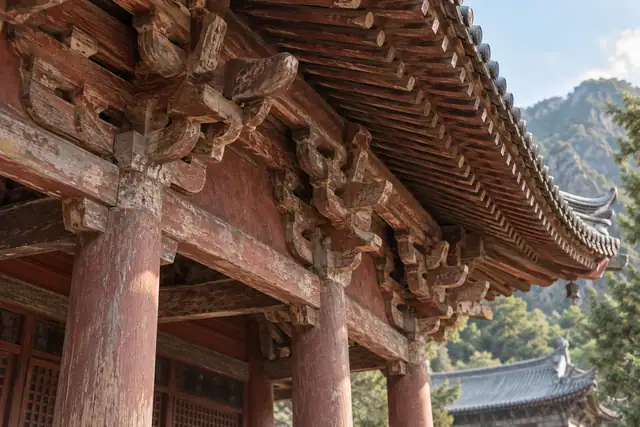
- The ancient cypresses, halls and standing steles the listing describes on the mountain.
- The stele of the eleventh year of Shunzhi, dated 1654 by the listing, whose account of the fair's crowds the listing quotes.
Location & getting there
Getting to Yaowang Mountain
Check which interiors and courtyards are accessible. Active places of worship and protected monuments may have different visitor rules.
- Search for 药王山 with 铜川市 and 耀州区.
Find Yaowang Mountain
药王山 · 耀州区
No reliable map pin yet: search by the Chinese name.
Sources & visit information
The linked sources support the identity and background described in this introduction. Opening hours, admission, activity availability and exact arrival arrangements have not been comprehensively checked. Confirm current visitor information with the venue; the original catalogue locality and editorial review flag are retained.