

Photo adjustments
Proportionally resized and converted to WebP without cropping, retouching or changing the photographed subject.
Explore the region
About Dai Temple
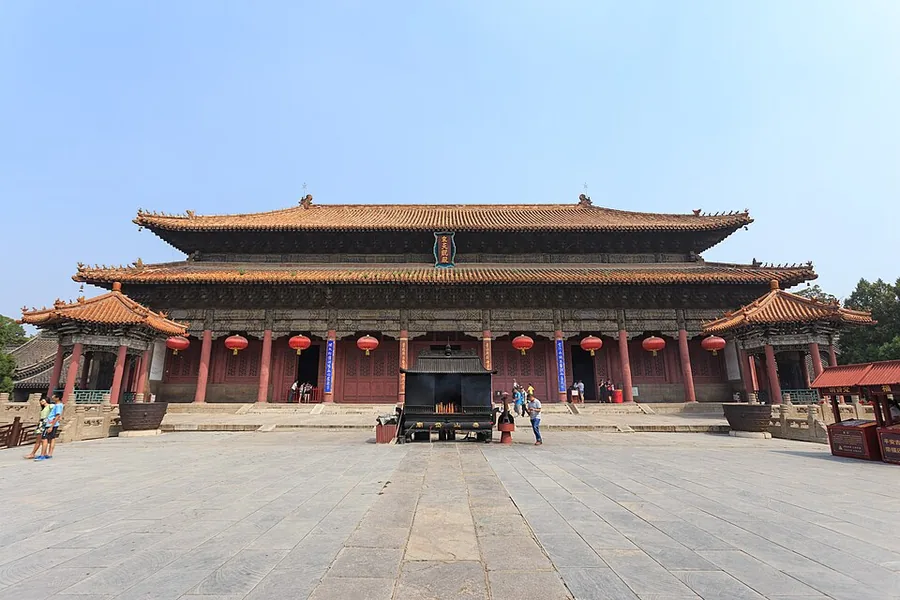
The central Tiankuang Hall is roofed in yellow glazed tiles and contains a large mural of the mountain deity’s procession and return. Elsewhere, steles, old trees and surviving inscribed stones add layers of imperial patronage. Follow the courtyards slowly: this is a palace-like place of worship within the city, with its own scale and atmosphere before any mountain ascent.
Dai Temple was originally built in the Han dynasty (202 BC – AD 220) as a site for imperial sacrifices to the deity of Mount Tai, beginning with Emperor Wu of Han in 110 BC. It was expanded under the Tang and Song; in 1008 Emperor Zhenzong of Song performed the feng and shan sacrifices at Mount Tai, and ordered the temple enlarged the following year, with Tiankuang Hall built on the earlier hall to the mountain deity. The Taiwei Hall (太尉殿) was later demolished and several gates rebuilt in concrete, altering the complex's style, until restoration in 1998 returned it to its original appearance.
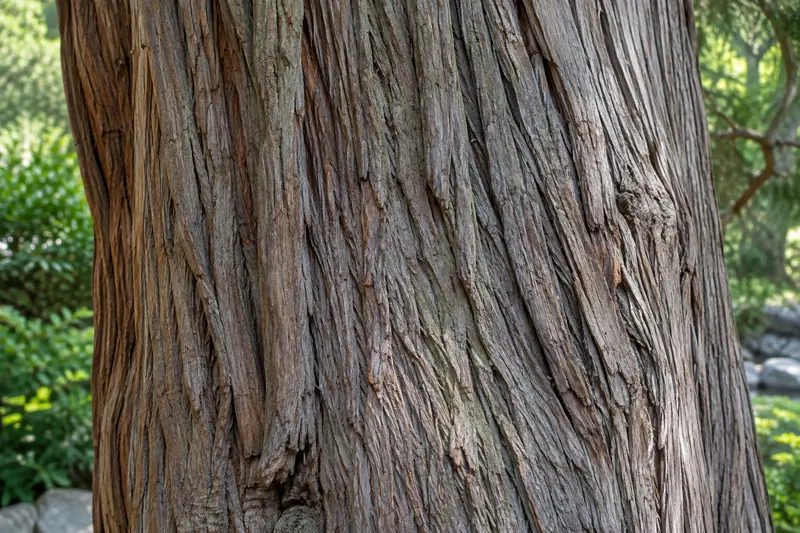
Dai Temple covers a total area of 100,000 square meters, the largest surviving ancient architectural complex on Mount Tai, and was listed as a Major Historical and Cultural Site Protected at the National Level (全国重点文物保护单位) in 1988. It preserves 211 stone steles and inscriptions dating from the Qin and Han dynasties onward, and more than 200 old trees, the most notable being a Han cypress and a Tang scholartree.
Since 1986 the temple has also housed the Tai'an City Museum, a nationally rated second-tier museum and a nationally designated key protection unit for ancient books. Its holdings include more than 10,000 cultural relics and nearly 40,000 volumes of ancient books, over 10,000 of them rare editions.
What to look for
- Tiankuang Hall and the mural showing the mountain deity’s procession.
- Historic steles and the old cypresses and scholar trees within the temple grounds.
The surrounding area
A separate provincial base for Mount Tai, with mountain logistics distinct from a Jinan city day.
Location & getting there
Getting to Dai Temple
Head to 191 Dongyue Avenue in central Tai’an. Zhengyang Gate is the southern ceremonial entrance, with a separate northern gate on the other side of the complex. Dai Temple is in the city, well below Mount Tai’s summit.
Combine your visit
A suggested sequence linking the specific features of this visit.
-
Zhengyang Gate and central courtyards
Follow the formal approach into the temple complex.
-
Tiankuang Hall
Focus on the principal hall and its Taoist mural.
-
Stele and ancient-tree courts
Read the inscriptions and examine the older landscape around the halls.
This order is editorial. Confirm access and any transfers between stops; it does not establish a walking route, same-day connection or common admission ticket.
Find Dai Temple
岱庙 · 泰安市东岳大街191号岱庙正阳门
The pin marks the area, not the entrance.
More places nearby
Approximate straight-line distances between map pins, not travel distances.
Mount Tai 泰山
7 km awayMount Tai’s ascent is layered with gateways, inscriptions and shrines reflecting its long role in imperial and popular worship. Near the upper mountain, Nantianmen marks a dramatic transition into the summit precinct. Bixia…
View guide →Lingyan Temple 济南灵岩寺
23 km awayLingyan Temple lies in the hills of Changqing, where a major Buddhist complex survives around halls, a pagoda and a burial stupa forest. The Thousand Buddha Hall is especially known for its painted arhat figures, whose varied…
View guide →Thousand Buddha Mountain 千佛山
50 km awayThousand Buddha Mountain rises above southern Jinan with Buddhist carvings cut into its northern slopes. Xingguochan Temple stands partway up the hill, and the cliff behind it retains Sui-period images and small caves. Nearby…
View guide →Sources & visit information
The sources below support the place-specific description and arrival information. Suggested combinations are editorial planning ideas; confirm current opening, entry arrangements and transport services for your date.
- en.wikipedia.org ↗
- ditu.amap.com ↗
- 岱庙 ↗
- Chinese Wikipedia: 岱庙 (revision 93959890, 2026-08-20) ↗
- English Wikipedia: Dai Temple (revision 1366915173, 2026-07-30) ↗
Visitor information adapted and edited from Wikipedia contributors, “岱庙” · CC BY-SA 4.0. Source revision 93959890.
Background paragraphs translated and condensed from Wikipedia contributors, "岱庙", Chinese Wikipedia · CC BY-SA 4.0. Source revision 93959890.
Background paragraphs condensed from Wikipedia contributors, "Dai Temple", English Wikipedia · CC BY-SA 4.0. Source revision 1366915173.