


Photo adjustments
Proportionally resized and converted to WebP without cropping, retouching or changing the photographed subject.
About Haihe at Jiefang Bridge
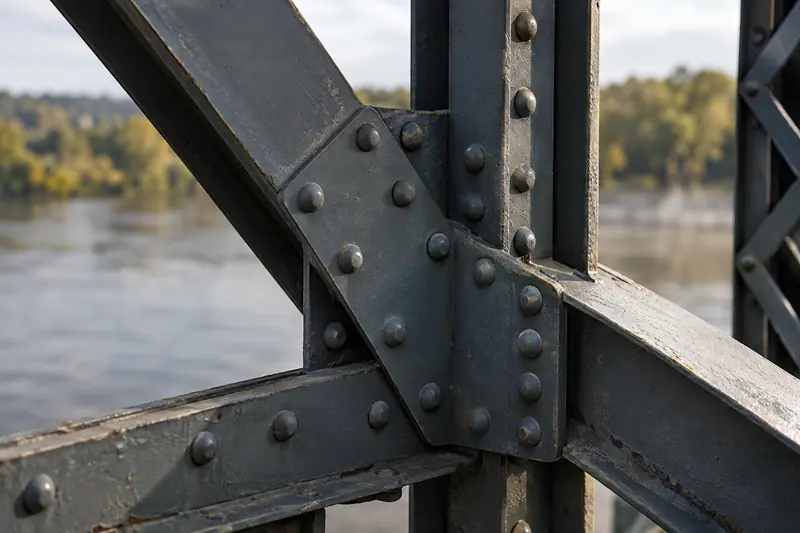
Opened in 1927, its steel structure incorporates a movable central span designed to let vessels pass. The bridge's changing names reflect Tianjin's twentieth-century political history, but its engineering is the clearest feature to examine on site. Look at the trusses from the riverbank before crossing. Bridge-opening displays are occasional events, so an ordinary visit should be planned around the fixed structure and waterfront views.
The bridge's predecessor, the Laolongtou Iron Bridge (老龙头铁桥), was built after the French Concession authorities asked the Qing government for a crossing to the nearby railway station in 1902. The Tianjin Metropolitan Yamen (天津都统衙门) approved the request and funded the work; a French contractor completed the four-span steel truss bridge, which opened in January 1904 at a cost of about 250,000 francs.
By the mid-1920s the old bridge was congested and worn, and in 1926 the French concession authorities built a new bascule bridge on the site, reviewed by the Haihe Conservancy Commission (海河工程局); it opened on 18 October 1927 as Wanguo Bridge (万国桥), and the old iron bridge was demolished. In 1946 the Nationalist government renamed it Zhongzheng Bridge (中正桥) after Chiang Kai-shek.
The 1927 bridge is 97.64 metres long, with three spans in a double-leaf bascule configuration, a deck 19.5 metres wide and a load limit of 20 tons; the middle span opened to a 45-degree angle in two to three minutes, four times a day, to let large vessels pass. It is one of the significant buildings surviving from Tianjin's concession era and is now a Tianjin municipal cultural relic protection unit (天津市文物保护单位).
What to look for
- The steel trusses and movable central span of the historic opening bridge.
- Views between Tianjin Railway Station, Jinwan Plaza and the Haihe banks.
Location & getting there
Getting to Haihe at Jiefang Bridge
Approach from Tianjin Railway Station's Haihe side or from Jiefang North Road beside Jinwan Plaza; the bridge connects the two banks.
Combine your visit
Suggested order within this visit:
-
Station-side riverbank
See the bridge's structure in profile.
-
Jiefang Bridge crossing
Examine the trusses at closer range.
-
Jinwan Plaza津湾广场
Finish with the opposite-bank view.
This sequence is an editorial suggestion based on the features described in the sources. Access to individual buildings or areas should be checked locally; no travel time or shared admission is implied.
Find Haihe at Jiefang Bridge
海河解放桥 · 河东区/和平区海河沿岸
The pin marks the area, not the entrance.
More places nearby
Approximate straight-line distances between map pins, not travel distances.
Jinwan Plaza津湾广场
Less than 1 km awayJinwan Plaza occupies a bend on the south bank of the Haihe, directly facing Tianjin Railway Station. Its European-influenced commercial buildings and open riverside platforms form a modern waterfront ensemble on land once…
View guide →Cao Yu Former Residence曹禺故居纪念馆
Less than 1 km awayCao Yu's former residence preserves two adjoining courtyard properties associated with the playwright's childhood and youth in Tianjin. Brick-and-timber houses contain restored living and study spaces, while photographs…
View guide →Italian Concession of Tianjin意式风情区
Less than 1 km awayTianjin's Italian-style district reuses streets and buildings from the former Italian concession as a dining and heritage neighborhood. Marco Polo Plaza forms its best-known center, while the surrounding grid retains villas…
View guide →Sources & visit information
The sources below support the place-specific description and arrival information. Suggested combinations are editorial planning ideas; confirm current opening, entry arrangements and transport services for your date.
Visitor information adapted and edited from Wikipedia contributors · CC BY-SA 4.0. Source revision 93455367.
Background paragraphs translated and condensed from Wikipedia contributors, "解放桥 (天津)", Chinese Wikipedia · CC BY-SA 4.0. Source revision 93455367.