


About Tianjin
Tianjin at a glance
- Population
- 13,630,000Year-end resident population, entire provincial-level administrative area · 2025Source ↗
- Income per person
- 55,918Mean annual disposable income per person, all residents · 2025 · CNYSource ↗
- Languages & dialects
- Mandarin (普通话) and local Tianjin speech (天津话).Source ↗
- Geography
- Hai River lower reaches and Bohai coast; mostly plains, with Yanshan foothills in northern Jizhou.Source ↗
- Elevation
- Mostly low coastal plains; northern Jiushanding reaches 1,078.5 m.Jiushanding is a municipal high point, not downtown elevation.Source ↗
- Main gateway
- TianjinDirect-administered municipality and port city
Discover Tianjin
Follow the river and architectural streets
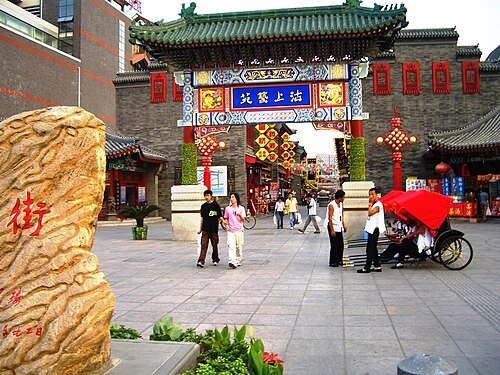
The Haihe gives central Tianjin a clear organising line, with bridges and river-facing buildings linking different neighbourhood views. The Five Great Avenues and Minyuan Square offer a closer look at the city's architectural variety. Read the former concession streets in the context of treaty-port history, then contrast them with Ancient Culture Street around Tianhou Temple. An architectural walk, a temple or craft stop and another stretch of waterfront make a coherent introduction.
Let breakfast shape a slower morning
Food is an everyday point of entry into Tianjin. Jianbing guozi brings together a thin pancake and crisp fried dough, while gabacai turns pancake strips into a savoury bowl with gravy. Miancha is a sesame-topped grain preparation rather than a cup of tea. Try different breakfasts across your stay instead of ordering everything at once. The city's central food stops fit naturally between neighbourhood walks and provide a useful contrast to the formal architecture.
Choose between the coast and the northern hills
Binhai's contemporary cultural buildings and maritime attractions belong to a separate coastal outing. Jizhou, in the north, offers another direction through Dule Temple's timber architecture and Buddhist sculpture. A central Haihe or Heping base suits the first city visit; an overnight farther out makes sense when those areas become the priority. Rail connects Tianjin with Beijing, but check the station carefully: Tianjin, Tianjin West and Binhai-area stations serve different parts of the municipality.
Explore Tianjin
Core places to explore, with English and Chinese names.
Tianjin centre 天津市中心
Five Great Avenues 五大道
St. Joseph Cathedral (Tianjin) 西开教堂
Porcelain House 瓷房子
Jing Garden 静园
Minyuan Stadium 民园体育场
Haihe at Jiefang Bridge 海河解放桥
Ancient Culture Street 古文化街
Tianjin Water Park 天津水上公园
Tianjin Confucian Temple 天津文庙
Guangdong Guild Hall (Tianjin) 广东会馆
Drum Tower of Tianjin 天津鼓楼
Tianhou Temple (Tianjin) 天津天后宫
Zhou Enlai and Deng Yingchao Memorial Hall 周恩来邓颖超纪念馆
Tianjin Eye 天津之眼
Dabei Temple 大悲禅院
Wanghailou Church 望海楼教堂
Italian Concession of Tianjin 意式风情区
Liang Qichao Former Residence 梁启超故居
Tianjin Museum 天津博物馆
Tianjin Natural History Museum 天津自然博物馆
Tianjin Art Museum 天津美术馆
Tianjin Science and Technology Museum 天津科学技术馆
Shi Family Grand Courtyard 石家大院
Yangliuqing 杨柳青古镇
Binhai Library 滨海图书馆
National Maritime Museum of China 国家海洋博物馆
Binhai Aircraft Carrier Theme Park 泰达航母主题公园
Taku Forts 大沽口炮台
Dule Temple 独乐寺
Huangyaguan 黄崖关长城
Mount Pan 盘山
Tianjin Binhai International Airport 天津滨海国际机场
Happy Valley Tianjin 天津欢乐谷
Joy City Shopping Mall (South Gate Street) 南开大悦城
Xiaozhan Military Training Park 小站练兵园
Duliu Canal Town 独流古镇
Xigu Park 西沽公园
Beichen Country Park 北辰郊野公园
Nanhu Green Expo Park 南湖绿博园
Guangji Temple in Baodi 宝坻广济寺
Tianzun Pavilion 天尊阁
Qingwang Mansion 庆王府
Tianjin Radio and Television Tower 天津广播电视塔(天塔)
Zhongshan Park 天津中山公园
Astor Hotel Heritage Museum 利顺德博物馆
Pingjin Campaign Memorial Museum 平津战役纪念馆
Jinwan Plaza 津湾广场
Tianjin Tropical Botanical Garden 天津热带植物观光园
Tianjin Zoo 天津动物园
People’s Park 天津人民公园
Nancuiping Park 南翠屏公园
Cao Yu Former Residence 曹禺故居纪念馆
Awakening Society Memorial 觉悟社纪念馆
Tianjin Postal Museum 天津邮政博物馆
Tianfei Palace Archaeological Museum 元明清天妃宫遗址博物馆
Riverside 66 恒隆广场
Tianjin Polar Ocean Park 天津极地海洋公园(原海昌)
Dongjiang Bay Beach 东疆湾沙滩
Jinwan Plaza and Jiefang Bridge 津湾广场与解放桥
Liang Qichao Memorial Hall 梁启超纪念馆
Tianjin Fantawild Adventure 天津方特欢乐世界
Limutai Scenic Area 梨木台
Jizhou Karst Cave 蓟州溶洞
Yangliuqing Old Town and Shi Family Courtyard 杨柳青古镇与石家大院
Haihe Cruises 海河游船
Former Residence of Zhang Xueliang 张学良故居
Zhangyuan 张园
Tianjin local specialties
天津特色美食 · 47 specialties to discover
 Jianbing guozi 煎饼馃子
The wrapper is soft and grain-scented, while the filling provides the decisive crunch. It quickly loses that contrast if left wrapped for too long.
Source ↗Read the dish guide →Photo adjustments
EXIF orientation applied where present; resized proportionally to at most 640 px on the long edge and encoded as WebP. No crop, retouching, recoloring or subject changes.
 Gabacai 锅巴菜
Soft, slightly resilient strips absorb the gravy; the condiments bring nutty, salty and sometimes spicy flavors.
Source ↗Read the dish guide →Photo adjustments
EXIF orientation applied where present; resized proportionally to at most 640 px on the long edge and encoded as WebP. No crop, retouching, recoloring or subject changes.
 Miancha 面茶
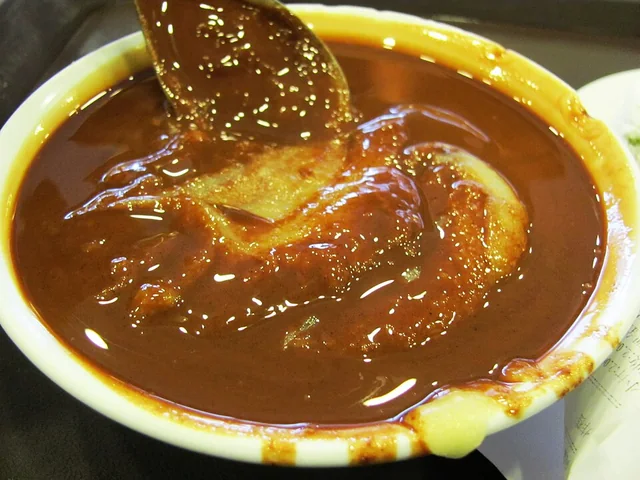
The grain base is smooth and mild; the concentrated sesame layer brings a roasted aroma and savory richness.
Source ↗Read the dish guide →Photo adjustments
EXIF orientation applied where present; resized proportionally to at most 640 px on the long edge and encoded as WebP. No crop, retouching, recoloring or subject changes.
 Shaobing with beef 烧饼夹牛肉
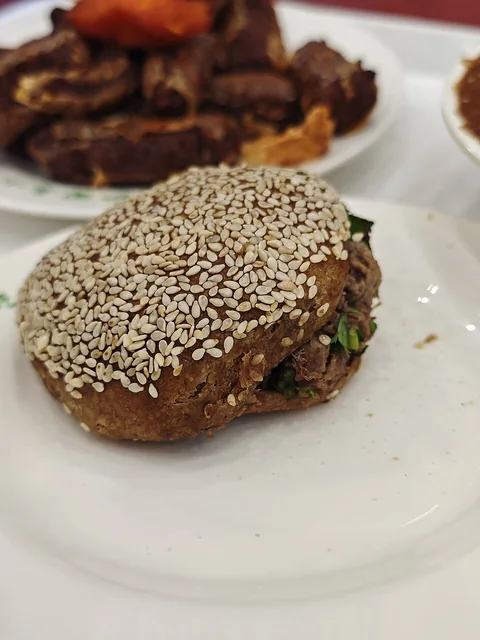
A crisp, flaky crust contrasts with firm, savory beef and a softer inner crumb. The meat's cooking juices provide flavor without requiring a heavy sauce.
Source ↗Read the dish guide → Goubuli buns 狗不理包子
Expect a savory, juicy center and a substantial but tender skin. Quality depends on the particular kitchen and the freshness of the basket.
Source ↗Read the dish guide →Photo adjustments
EXIF orientation applied where present; resized proportionally to at most 640 px on the long edge and encoded as WebP. No crop, retouching, recoloring or subject changes.
 Erduoyan fried cakes 耳朵眼炸糕AI dish illustration · AI 菜品示意图
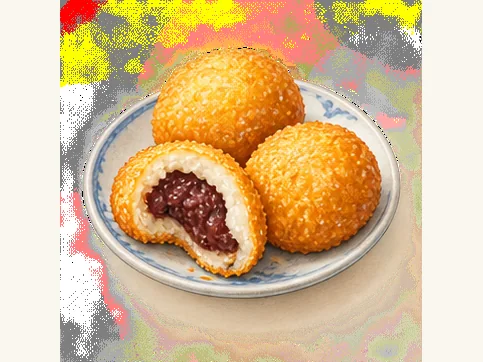
The outside is crisp, the rice layer chewy and the bean center smooth and sweet.
Source ↗Read the dish guide →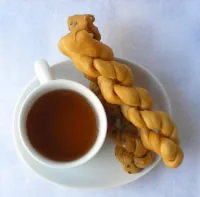 Mahua dough twists 麻花
Expect a firm crunch, fried-wheat fragrance and varying levels of sweetness. Filled versions can add nuts, seeds or a softer sweet seam.
Source ↗Read the dish guide →Photo adjustments
EXIF orientation applied where present; resized proportionally to at most 640 px on the long edge and encoded as WebP. No crop, retouching, recoloring or subject changes.
 Shuligao steamed rice cakes 熟梨糕AI illustration · AI 示意图
The base is soft, lightly grainy and fairly neutral, allowing fruity or other sweet toppings to dominate. Freshly steamed cakes are gentler than ones that have dried out.
Source ↗Read the dish guide →All dish names · 全部菜名 (47)
- Jianbing guozi · 煎饼馃子
- Gabacai · 锅巴菜
- Miancha · 面茶
- Shaobing with beef · 烧饼夹牛肉
- Goubuli buns · 狗不理包子
- Erduoyan fried cakes · 耳朵眼炸糕
- Mahua dough twists · 麻花
- Shuligao steamed rice cakes · 熟梨糕
- Sweet grain-flour pudding · 茶汤
- Roasted-soybean candy · 豆根糖
- Tianjin sour-jujube paste · 酸磨糕
- Huitou pan-fried parcels · 回头
- Shidasu flaky pastries · 什大酥
- Garlic stir-fried offal · 老爆三
- Cornbread with braised small fish · 贴饽饽熬小鱼
- Crisp bean-curd-skin rolls · 卷圈
- Fried vegetable balls · 素丸子
- Shrimp with braised wheat gluten · 虾仁笃面筋
- Whitebait and crab hotpot · 银鱼紫蟹火锅
- Stir-fried freshwater shrimp · 炒青虾仁
- Lard-enriched flatbread · 脂油饼
- Zhongwang sausage · 中旺香肠
- Crisp sweet-and-sour carp · 罾蹦鲤鱼
- Eight-treasure tofu · 八珍豆腐
- Tianjin sweet fried dough · 天津糖皮儿
- Tianjin festive vegetable dumplings · 天津素饺子
- Duliu mung-bean steamed cake · 独流绿豆潮糕
- Duliu braised fish · 独流焖鱼
- Bangjun lamb soup · 邦均羊汤
- Tianjin Red-Braised Oxtail · 天津红烧牛尾
- Slow-Simmered Wheat Gluten · 火笃面筋
- Tianjin Lightly Stir-Fried Shrimp · 炒清虾仁
- Pan-Fried and Braised Prawns · 煎烹大虾
- Tianjin Braised Pork · 天津烧肉
- Tianjin Braised Vegetable Assortment · 扒全素
- Tianjin Sauced Tongue Sole · 官烧目鱼
- Tianjin Twist-Shaped Fish · 麻花鱼
- Jianbing Crepe with Fried Dough · 煎饼果子
- Shibajie Fried Dough Twists · 十八街麻花
- Tianjin Savoury Tofu Pudding · 老豆腐
- Tianjin Fried Filled Cakes · 炸糕
- Tianjin Sesame and Fermented-Tofu Dumplings · 津味素饺
- Silver-Thread Steamed Rolls · 银丝卷
- Tianjin Simmered Wheat Gluten · 独面筋
- Luohan Stuffed Pork Stomach · 罗汉肚
- Historical Tianjin Whole-Fin Banquet Dish · 扒通天鱼翅
- Tianjin Noodles with Savoury Gravy · 天津卫打卤面
Top sights in Tianjin
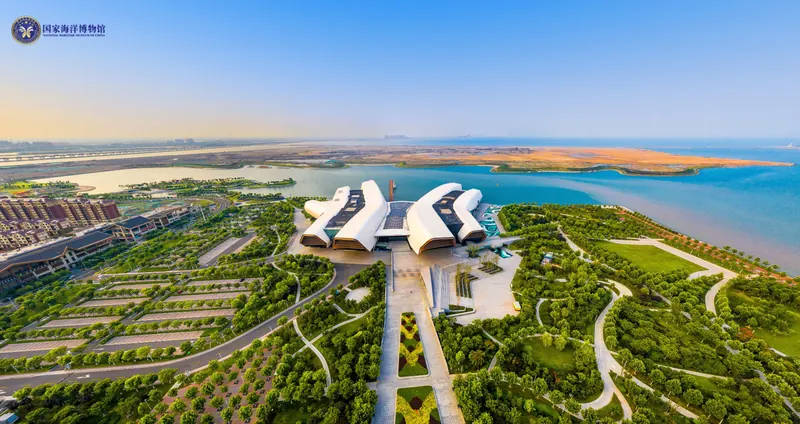 TOP1滨海新区
The National Maritime Museum links the origin of the oceans with marine life, exploration and the future of the sea. Its permanent areas include Ancient Oceans, the Age of Dragons, Today's Oceans and Journeys of Discovery…
 TOP2滨海新区
The central attraction of this Binhai theme park is Kiev, a retired Soviet aircraft carrier adapted for visitors. Its scale is most apparent when comparing the flight deck with the vessel's internal spaces. Other displayed naval…
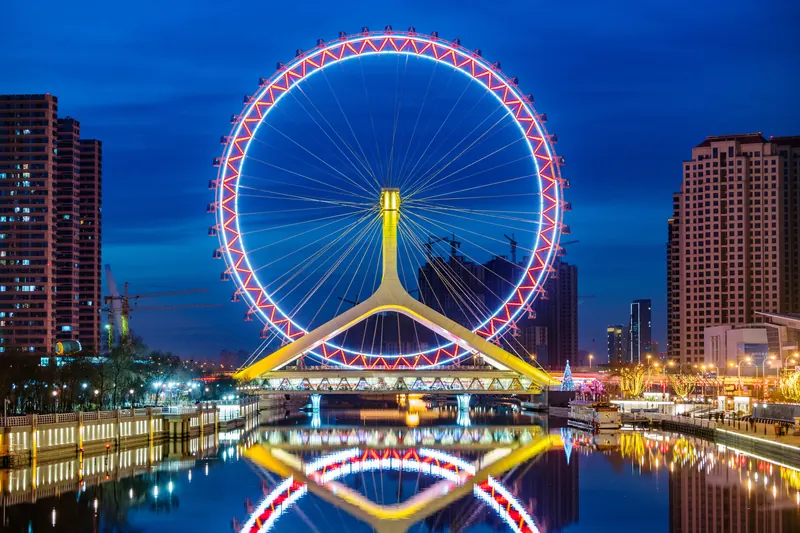 TOP3河北区
The Tianjin Eye is a giant observation wheel built over Yongle Bridge on the Haihe. Its most distinctive feature is the combination of transport structures: the circular wheel rises above a working river crossing, with the…
 TOP4和平区
Porcelain House transforms a former European-style residence into an exuberant display of collected ceramics. Owner Zhang Lianzhi covered the building with porcelain fragments and objects, turning walls and roof ornament into a…
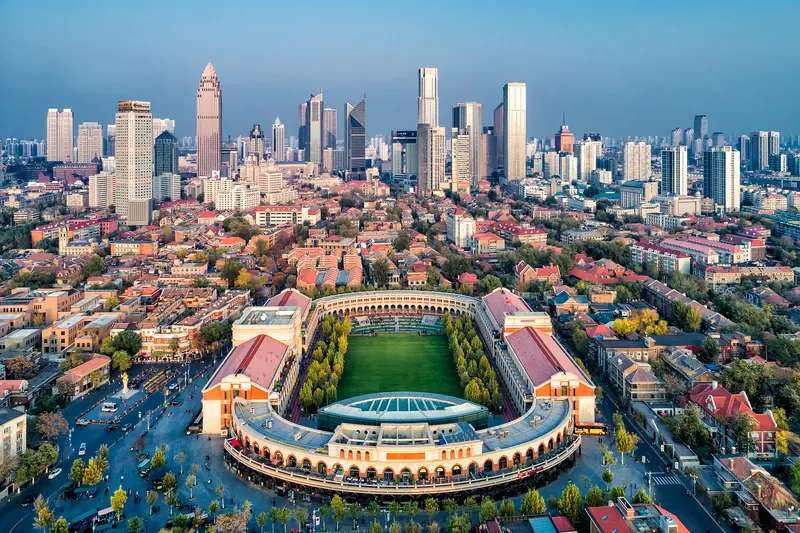 TOP5和平区
The Five Great Avenues are a residential district of former concession-era villas, not five grand monuments. Chongqing, Changde, Dali, Munan and Machang roads carry a mixture of European architectural influences, with…
 TOP6
TOP6Haihe Cruises海河游船
Show on map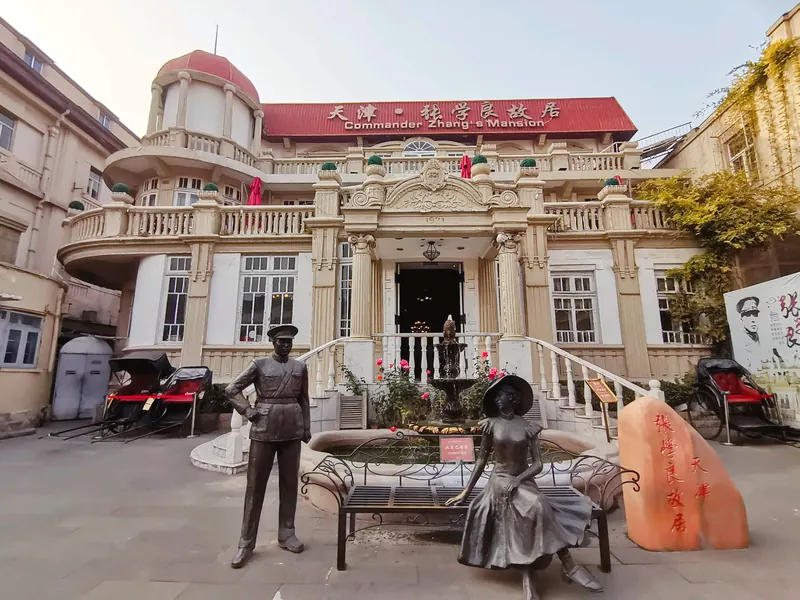 TOP7和平区
Former Residence of Zhang Xueliang张学良故居
Show on map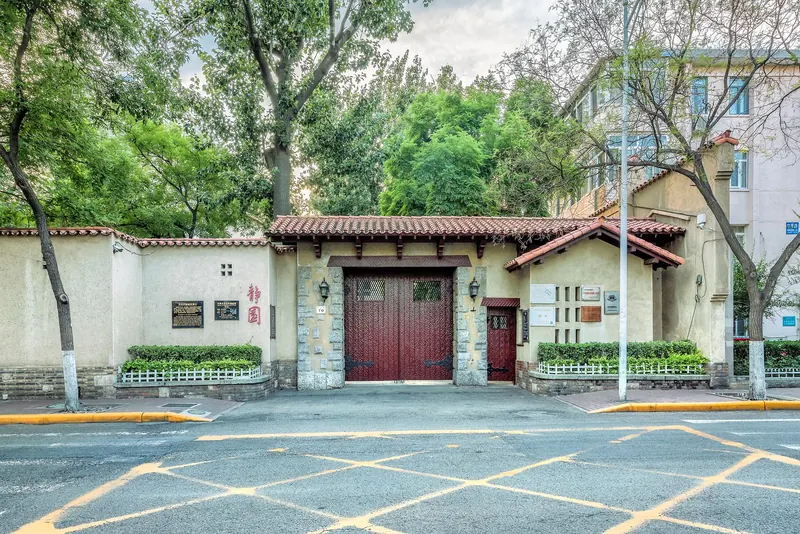 TOP8和平区
Jing Garden, or the Garden of Serenity, was a private residence before Puyi, the last Qing emperor, moved here in 1929. The house combines a Spanish-influenced main building with other architectural details and a compact…
 TOP9和平区
Zhangyuan张园
Show on map TOP10滨海新区
Tianjin Fantawild Adventure is a technology-led theme park in the Sino-Singapore Tianjin Eco-City, within Binhai New Area.
 Show on map


Change your destination on Trip.com.
Ranking source & photo credits
The first ten entries of Trip.Best Best Things to Do. Rankings reflect platform recommendations, not counts of international visitors. Read on 20 September 2026; platform pages may use cached snapshots.
- National Maritime Museum of China: Source: Trip.com · Resized and WebP compressed; fitted to the ranking card.
- Binhai Aircraft Carrier Theme Park: Source: Trip.com · Resized and WebP compressed; fitted to the ranking card.
- Tianjin Eye: Source: Trip.com · Resized and WebP compressed; fitted to the ranking card.
- Porcelain House: Source: Trip.com · Resized and WebP compressed; fitted to the ranking card.
- Five Great Avenues: Source: Trip.com · Resized and WebP compressed; fitted to the ranking card.
- Haihe Cruises: Source: Trip.com · Resized and WebP compressed; fitted to the ranking card.
- Former Residence of Zhang Xueliang: Source: Trip.com · Resized and WebP compressed; fitted to the ranking card.
- Jing Garden: Source: Trip.com · Resized and WebP compressed; fitted to the ranking card.
- Zhangyuan: Source: Trip.com · Resized and WebP compressed; fitted to the ranking card.
- Tianjin Fantawild Adventure: Source: Trip.com · Resized and WebP compressed; fitted to the ranking card.
Cities, counties & districts in Tianjin
16 areas belong directly to Tianjin.
16 areas
Heping District和平区
Heping District (simplified Chinese: 和平区; traditional Chinese: 和平區; pinyin: Hépíng Qū; lit. 'Peace District') is a district in the center of Tianjin, China.
Explore the area →DistrictHedong District河东区
Hedong District (simplified Chinese: 河东区; traditional Chinese: 河東區; pinyin: Hédōng Qū) is located at the heart of the municipality of Tianjin, People's Republic of China.
Explore the area →DistrictHexi District河西区
Hexi District (simplified Chinese: 河西区; traditional Chinese: 河西區; pinyin: Héxī Qū; lit. 'west of the (Hai) River")' is a district in the south-western corner of urban Tianjin, People's Republic of China.
Explore the area →DistrictNankai District南开区
Nankai District is a district of Tianjin, People's Republic of China. Nankai District borders the Hai River in the east and Chentangzhuang Railway in the west and south.
Explore the area →Show fewer areas
Hebei District河北区
Hebei District is a district of the municipality of Tianjin, People's Republic of China. Its name literally means "District north of the River", as the district is located on the northern shore of the Hai…
Explore the area →DistrictHongqiao District红桥区
Hongqiao District (simplified Chinese: 红桥区; traditional Chinese: 紅橋區; pinyin: Hóngqiáo Qū) is a district in the city of Tianjin, China.
Explore the area →DistrictDongli District东丽区
Dongli District (simplified Chinese: 东丽区; traditional Chinese: 東麗區; pinyin: Dōnglì Qū) is a district of the municipality of Tianjin, People's Republic of China.
Explore the area →DistrictXiqing District西青区
Xiqing District (simplified Chinese: 西青区; traditional Chinese: 西青區; pinyin: Xīqīng Qū) is a district in Tianjin, People's Republic of China.
Explore the area →DistrictJinnan District津南区
Jinnan District (simplified Chinese: 津南区; traditional Chinese: 津南區; pinyin: Jīnnán Qū), formerly Nanjiao District (南郊区; 南郊區; Nánjiāo Qū; 'south suburb') is a district of Tianjin, People's Republic of China…
Explore the area →DistrictBeichen District北辰区
Beichen District (simplified Chinese: 北辰区; traditional Chinese: 北辰區; pinyin: Běichén Qū) is a district of the municipality of Tianjin, People's Republic of China.
Explore the area →DistrictWuqing District武清区
Wuqing District (simplified Chinese: 武清区; traditional Chinese: 武清區; pinyin: Wǔqīng Qū) is a district of Tianjin, bordering Hebei province to the north and west, Beijing Municipality to the northwest, Baodi…
Explore the area →DistrictBaodi District宝坻区
Baodi District (simplified Chinese: 宝坻区; traditional Chinese: 寶坻區; pinyin: Bǎodí Qū) is a district of the municipality of Tianjin, People's Republic of China.
Explore the area →DistrictBinhai New Area滨海新区
Binhai, fully known as Binhai New Area, abbreviated as Bincheng, is a sub-provincial division, new area and special economic zone of China under the jurisdiction of Tianjin, People's Republic of China…
Explore the area →DistrictNinghe District宁河区
Ninghe District (simplified Chinese: 宁河区; traditional Chinese: 寧河區; pinyin: Nínghé Qū; lit. 'Tranquil River'), formerly Ninghe County, is a district of the municipality of Tianjin, People's Republic of China…
Explore the area →DistrictJinghai District静海区
Jinghai District (simplified Chinese: 静海区; traditional Chinese: 靜海區; pinyin: Jìnghǎi Qū) is a district of the municipality of Tianjin, People's Republic of China, located in the southwest portion of the…
Explore the area →DistrictJizhou District蓟州区
Jizhou District (simplified Chinese: 蓟州区; traditional Chinese: 薊州區; pinyin: Jìzhōu Qū), formerly a county known as Ji County, is a district in the far north of the municipality of Tianjin, People's Republic…
Explore the area →No areas match this name.
Arrive, stay & get around Tianjin
交通枢纽、住宿与天气
Tianjin天津
Transport gateways for Tianjin; check the named terminal or station on the ticket.
Airports
Tianjin Binhai International AirportTSN
天津滨海国际机场
Tianjin’s airport in Dongli; the Binhai name does not mean it is beside the coastal railway stations.
Railway stations
Tianjin Railway Station
天津站
Central rail gateway on the Haihe, useful for arriving near the historic city center.
Tianjin West Railway Station
天津西站
Major high-speed and conventional rail interchange northwest of the historic center.
Metro & city transport
Tianjin Metro Network 天津轨道交通线路图
The network links the main city, airport and Binhai corridors. Use the official route guide to choose the correct station.
- 1Find your stations确认起点与终点站
- 2Check interchanges查看换乘线路与站点
- 3Follow exit signs到站后按站内标识出站
 Explore the full network查看站名、线路与换乘Enlarge map点击放大线路图
Check the legend for closed, reserved or future sections. 停运、预留与规划区间,请按图例辨识。
Map edition: 2026-01-24 · Diagram reviewed 2026-09-06
Map coverage & sources 图示范围与来源说明
Operating Tianjin metro network including Line 4 north, Line 7 south, Jinjing line and Z4 north. The source dotted Z4 path south of Beitang is unopened; it does not provide a rail connection to Line 9. Northern/southern Line 4 sections are not connected. Source label 8 refers to the existing segment also called Line 6 Phase II; the new Line 8 section is excluded. Closed TEDA tram was removed and an explicit on-image note added. Black dashed railway is an ancillary railway depiction, not an urban metro line.
Removed retired TEDA tram, added explicit note that Z4 dotted southern extension is not operating; WebP conversion. Adaptation released CC BY-SA 4.0.
Coaches, ferries & onward travel
Tongsha Coach Station
通莎客运站
A practical departure point toward Jizhou; official tourism guidance identifies the 187/188 corridor to Jizhou Coach Station.
Transport reference review: 2026-09-06. Consult the operator for current services and timetables.
More about getting around
Rail links make Tianjin straightforward to combine with Beijing. Check whether your train uses Tianjin, Tianjin West, or a Binhai-area station. Within the centre, combine metro journeys with walking; plan a separate transfer for Jizhou or coastal Binhai attractions.
Stay in Tianjin
For a first visit, stay near the central Haihe or Heping's historic streets, with a metro station within easy reach. Binhai accommodation makes sense for coastal plans. A Jizhou overnight is useful when temple visits and mountain scenery are the priority.
Find hotels on Trip.com →Change your destination, dates and guests on Trip.com.
Tianjin weather
The current-hour forecast loads when this section is visible. It uses MET Norway model data for the named city, not station observations.
Seasons & when to go
Expect hot, humid summer days and cold, dry winter weather. Wind can make the open riverfront uncomfortable in colder months. Spring and autumn generally suit neighbourhood walks; carry a layer for evening riverside stops even after a warm afternoon.
Local life & communication
A northern port whose former-concession streets sit beside Chinese craft traditions and an unusually elaborate everyday breakfast culture.
Tianjin's architecture records its history as a trading port, including the foreign concession era. Dule Temple adds a much older chapter through surviving timber architecture and Buddhist sculpture. At breakfast counters, jianbing offers an everyday entry into the city's food culture.
Language & communication
Mandarin is useful throughout the city, although Tianjin's local speech has recognisably different sounds and rhythms. The city's comic storytelling traditions depend heavily on wordplay. If booking a performance, ask about language before assuming the visual action will explain everything.
Useful local tips
- Separate a central-city day from Binhai or Jizhou excursions.
- Historic facades do not imply public access inside each building.
- Save breakfast names in Chinese; miancha is food rather than ordinary tea.
- Check the language and venue of any performance before buying tickets.
Sources & useful links
- Tianjin Municipal Government: Breakfast
- Tianjin Municipal Government: Architecture
- Tianjin Municipal Government: Dule Temple
- Tianjin Municipal Government: Haihe tour
- Tianjin Municipal Government: Historic architecture
- Tianjin Basic Facts 2024
- Tianjin — population background
- Tianjin — languages background
- Tianjin — geography background
- Tianjin — elevation background
- Tianjin — Tianjin centre map reference
- Tianjin — Five Great Avenues map reference
- Tianjin — Haihe at Jiefang Bridge map reference
- Tianjin — Dule Temple map reference
- Tianjin — Binhai Library map reference
- Tianjin — Tianjin Binhai International Airport map reference
- Tianjin — Ancient Culture Street map reference
- Tianjin — Tianjin Eye map reference
- Tianjin — St. Joseph Cathedral (Tianjin) map reference
- Tianjin — Tianjin Museum map reference
- Tianjin — Huangyaguan map reference
- Tianjin — Mount Pan map reference
- Tianjin — Tianjin Water Park map reference
- Tianjin — Haihe at Jiefang Bridge map reference
- Tianjin attraction ranking source
- Tianjin Government: tourism-development plan
- Tianjin Government: Ancient Culture Street
- Lonely Planet: Tianjin
- Tianjin specialty reference — whly.tj.gov.cn
- Tianjin specialty reference — whly.tj.gov.cn
- Tianjin specialty reference — nmfsj.moa.gov.cn
- Tianjin specialty reference — www.visitbeijing.com.cn
- Tianjin specialty reference — www.visitbeijing.com.cn
- Tianjin specialty reference — shangwuju.tj.gov.cn
- Tianjin specialty reference — www.csair.com
- Tianjin specialty reference — www.bjdch.gov.cn
- Destination food reference — www.bjdch.gov.cn
- Tianjin on-site heritage interview: sorghum-flour chatang
- Sweet grain-flour pudding — local food reference
- Tianjin Culture and Tourism: traditional soybean-flour candy craft
- China Cooperative: Zhongwang sausage producer and preparation
- Tianjin culture and tourism: tangpi breakfast
- China Youth Daily / CCTV: Tianjin New Year dumplings
- 独流绿豆潮糕 — local food reference
- 邦均羊汤 — local food reference
- Local food reference: 天津红烧牛尾
- Local food reference: 煎饼果子
- Local food reference: 十八街麻花
- Tianjin Government: Haihe River tour, Jinwan Plaza and Jiefang Bridge
- Tianjin Culture and Tourism: Liang Qichao residence, study and collection
- Tianjin Government: conservation of the Yinbingshi study, 2026
- Fantawild operator: Tianjin tourism complex and park identity
- Tianjin Culture and Tourism: Fantawild’s themed entertainment setting
- Tianjin Government: Limutai location, forest and quartzite gorge landforms
- Tianjin Government: Jizhou Cave locality and cave system
- Tianjin Culture and Tourism: cave formations and visitor setting
- Tianjin Government: Shi Family Courtyard, canal setting and Yangliuqing collection
- Tianjin Cooking Association — chef Zhao Keqin and traditional Tianjin techniques
- Beijing Tourism — Tianjin specialties
- Encyclopedia of China — Guan Shao Mu Yu Tiao
- Tianjin Cooking Association — Guan Shao Mu Yu
- CCTV Taste — Tianjin mahua fish, 2022 programme
- Jinyun — Tianjin breakfast map and local preparations
- Original home-cook recipe — Tianjin laodoufu, 7 June 2022; one example
- Tianjin Government — Ear-hole fried rice cakes
- Jinyun official account — Tianjin TV New Year food traditions
- Tianjin Government — hand-pulled silver-thread rolls
- Tianjin Culture and Tourism official account — local food and noodle toppings; attributed reprint