

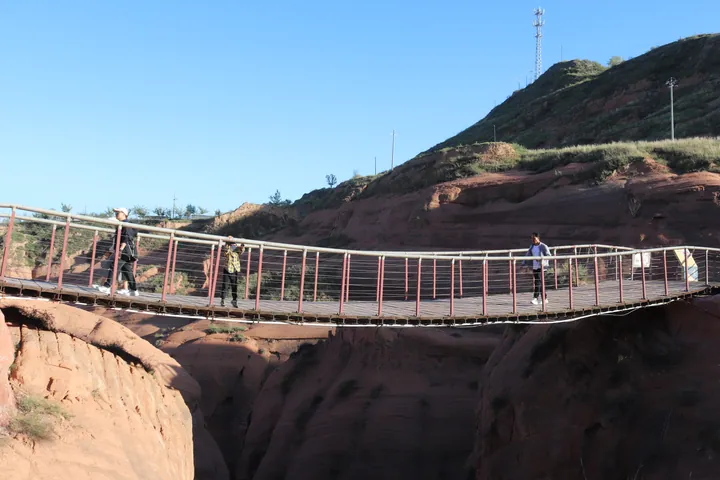
Photo adjustments
Full frame retained; proportionally resized and converted to WebP. No retouching or changes to the photographed subject. Card displays may crop the view.
Explore the region
About Wave Valley
The rock at the site is red sandstone. A signed essay published on the Shaanxi Provincial CPPCC website divides 龙洲丹霞 into three main parts – 火焰丹霞, 赤壁丹霞 and 地心丹霞 – and describes 火焰丹霞 as taking its name from the vivid colour of the rock; the writer reached 流波台 by following a sightseeing boardwalk. 地心丹霞 in turn has three main areas, 飞波台, 龙回首 and 一线天. Beyond the main scenic area there is 水上丹霞, a lake set among the red cliffs.
The site was originally called 红砂峁 and was renamed 波浪谷 by photographers. The essay says it came to wider public notice only after 2005 and was found by travel enthusiasts rather than by any survey, and it places the moment travellers came across it around 2000 at 闫家寨子. The essay also sets out the town's name: 龙洲 was formerly written 龙州, and the water radical was added in the 1970s, when the commune was carrying out irrigation works, to stress the importance of water. The Ming Great Wall runs past not far away, with the frontier fort 龙洲堡 beside it.
What to look for
- The three main parts the essay distinguishes: 火焰丹霞, 赤壁丹霞 and 地心丹霞.
- 火焰丹霞, named for the vivid colour of its red sandstone, which the essay compares to a flaming mountain.
- The three areas of 地心丹霞: 飞波台, 龙回首 and 一线天.
- 水上丹霞, a lake set among the red cliffs beyond the main scenic area.
- The Ming Great Wall running past not far from the site, with the frontier fort 龙洲堡 beside it.
Location & getting there
Getting to Wave Valley
Use an authorised visitor route. Cave sections, geological sites and access roads can close independently, so confirm the area that your ticket covers.
- Search for 波浪谷 with 榆林市 and 靖边县.
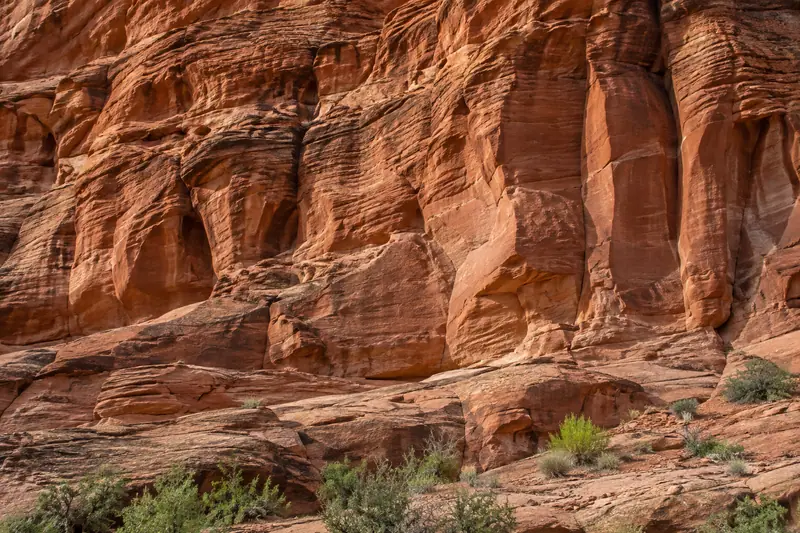
Find Wave Valley
波浪谷 · 靖边县
No reliable map pin yet: search by the Chinese name.
Sources & visit information
The linked sources support the identity and background described in this introduction. Opening hours, admission, activity availability and exact arrival arrangements have not been comprehensively checked. Confirm current visitor information with the venue; the original catalogue locality and editorial review flag are retained.