


Photo adjustments
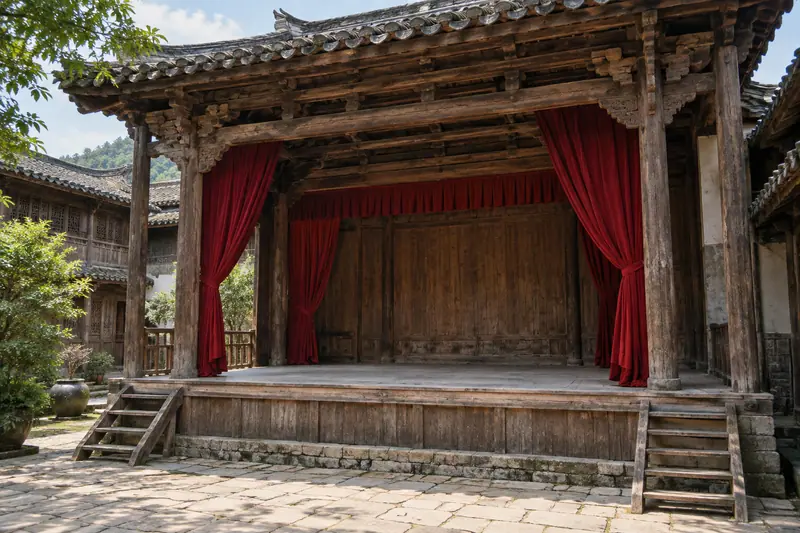
Full frame retained; proportionally resized and converted to WebP. No retouching or changes to the photographed subject. Card displays may crop the view.
Explore the region
About Hancheng Ancient City
The town's position is a river position. A Western Network feature credited to CCTV's first channel records that after the Yellow River leaves the Shaanxi-Shanxi gorge the channel at Longmen widens from about 90 metres to more than 2,500 metres, that the narrowest point at Shimen is only 38 metres and suits a bridge, and that downstream the Zhichuan ferry has a broad, steady channel that suits boats. Hancheng lies between the two crossings, the feature says, commanding the throat between Shanxi and Shaanxi as a contested transport and military point.
Its defences were organised in two rings. The feature records five camps inside the town, placed at the east, west, south, north and centre to hold the gate positions, and five stockades outside it, the best known being Jiujiu stockade on the tableland north of the town, standing tens of metres above it. It says the Zhao family stockade to the east still preserves the underground troop passage of the period, by which soldiers could move into the stockade, and that the town thus formed a threefold defensive system of the Yellow River, the five outer stockades and the five inner camps.
The feature describes the town as a museum of ancient building, naming its timber frames, bracket sets, roof ridges and glazed screen walls. It records carp motifs running through the streets – a brick carp on the screen wall of the Confucian temple, fish patterns on old house doors, fish-dragon glazed figures on the roof ridges – and notes that the old opera stage still used for Qinqiang performances was historically a barracks for the garrison. It also describes the Hancheng practice of moulding steamed bread into shapes copying bronze ritual vessels for sacrifices, since ordinary families could not afford bronzes, and says that this ritual tradition shaped the town's layout as a place built according to propriety.
What to look for
- The brick carp on the screen wall of the Confucian temple, one of the carp motifs the feature lists across the town.
- The fish-dragon glazed figures on the roof ridges and the fish patterns on old house doors.
- The old opera stage, which the feature says was historically a barracks for the garrison and is still used for Qinqiang performances.
- The five inner camps and five outer stockades the feature describes, including Jiujiu stockade on the tableland north of the town.
- The underground troop passage preserved at the Zhao family stockade east of the town.
Location & getting there
Getting to Hancheng Ancient City
Identify the main visitor approach and any separately managed houses, museums or performances. Ask before entering residential spaces or photographing residents.
- Search for 韩城古城 with 渭南市 and 韩城市.
Find Hancheng Ancient City
韩城古城 · 韩城市
No reliable map pin yet: search by the Chinese name.
Sources & visit information
The linked sources support the identity and background described in this introduction. Opening hours, admission, activity availability and exact arrival arrangements have not been comprehensively checked. Confirm current visitor information with the venue; the original catalogue locality and editorial review flag are retained.