


Photo adjustments
Proportionally resized and converted to WebP without cropping, retouching or changing the photographed subject.
Explore the region
About Emperor Qinshihuang's Mausoleum Site Museum
The heritage administration's page on the museum sets out what the museum is and what it covers. It describes it as a large site museum based on the Qin Terracotta Warriors and Horses Museum and resting on the mausoleum's archaeological site park, and as a public cultural space combining such functions as education, research, visiting and leisure. The museum is made up of the Qin Terracotta Warriors and Horses Museum, the mausoleum site park, the Qin Mausoleum Bronze Chariot and Horse Museum and the exhibition halls for burial pits 9901 and 0006. The mausoleum is laid out tightly and built on a large scale, and more than 600 burial pits, attendant tombs and the like have been found in its area. In 1961 the State Council declared the Qin Shi Huang Mausoleum a nationally protected cultural relics unit of the first batch, and in 1987 UNESCO inscribed the mausoleum, including the terracotta pits, on the World Heritage List.
The visitor guide gives the pits one by one. Pit 1 was found in March 1974, when villagers of Xiyang village in Lintong, then a county and now a district, were sinking a drought-relief well. It covers 14,260 square metres and holds about 6,000 pottery figures and horses, of which more than 500 figures, 24 horses, six wooden chariots and large quantities of bronze weapons, chariot-and-horse fittings and the like have been cleared. Pit 2 is L-shaped with a projecting north-east corner, 124 metres east to west and 98 metres north to south, about 6,000 square metres, with 11 gateways on three sides. It has four units: a crossbow formation of more than 300 kneeling and standing archers in the north-east, a cavalry formation of six chariots and 108 cavalrymen in three corridors to the north, a mixed infantry and chariot formation south of the cavalry, and eight corridors of four-horse chariots in the south; the pit holds 939 figures, 472 horses and 89 chariots. Pit 3 lies north of the west end of Pit 1, 25 metres from Pit 1 to the south and 120 metres from Pit 2 to the east, covers about 520 square metres and is recessed in shape, with north and south side rooms and a chariot-and-horse room holding a four-horse chariot and four figures, and it can yield 68 figures in all. The guide records that from its internal layout it should be the command post for Pits 1 and 2, and that it is the only one of the four pits not burnt, so more of the polychrome on its figures survives and the colours are brighter.
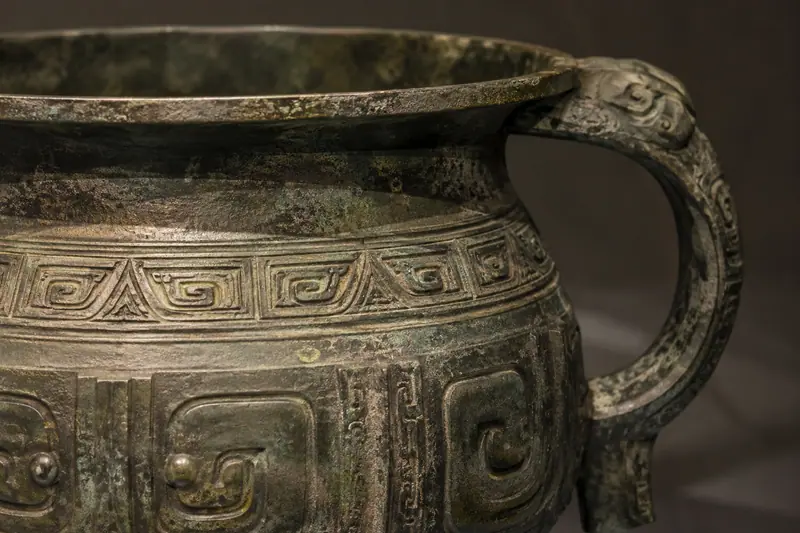
The mausoleum ground is the second half of the visit. The guide records that the mausoleum park was originally called Lishan Park, because the mausoleum stands on the northern slope of Mount Li, that the dense relic area is the part within the outer wall at about 2.13 square kilometres inside a park of more than 50 square kilometres, and that more than 180 burial pits, nearly 200 attendant tombs and large areas of building remains have been found there; it quotes the World Heritage Committee's assessment that the mausoleum is one of the world's largest archaeological reserves. The heritage administration's page records that the site park opened on 1 October 2010, covering 3,386 mu in the core area of the mausoleum, with the mausoleum mound, the main building remains so far identified and the burial pits among its main visiting points. On 30 September 2011 the exhibition halls for pits 9901 and 0006 opened: pit 0006, found in 2000 inside the inner wall south-west of the mound and about 410 square metres, yielded eight painted civil-official figures, four charioteer figures, four bronze yue axes, the remains of one wooden carriage and about 20 live horses buried with the dead, while pit 9901, found in 1999 between the inner and outer walls south-east of the mound and about 800 square metres, yielded a large bronze ding weighing 212 kilograms, 71 centimetres across the mouth and 61 centimetres high, and 11 painted acrobat figures. The guide records that in 1980 two large sets of bronze chariots and horses were found in a burial pit 20 metres west of the mound, one behind the other, that restored they are about half life size and were made no later than the building of the tomb, before 210 BCE, and that their bronze bodies carry some gold and silver fittings, the parts cast separately and joined by methods including casting, welding, inlay, pinning, hinged joints, mortise-and-tenon joints and pivots. It describes them as the most complex and largest ancient bronzes found in twentieth-century archaeology, records that they are known as the crown of bronzes, and records that restoration took eight years; the new bronze chariot and horse museum opened for trial on 18 May 2021 with a hall of about 8,000 square metres.
The museum's own site gives the arrangements a visitor needs. It states hours of 08:30 to 17:00 from 16 March to 15 November, with the site closing at 18:30, and 08:30 to 16:30 from 16 November to 15 March, with the site closing at 18:00. It records that the museum is made up of the Qin Terracotta Warriors and Horses Museum and the Qin Shi Huang Mausoleum Archaeological Site Park, called Lishan Park, that each of the two takes about 1.5 hours to visit and that a free shuttle runs between them. Booking is by real name, and visitors, including those exempt from tickets and visitors from Hong Kong, Macao, Taiwan and abroad, book through the official website and the official WeChat account. The administration's guide, dated 1 February 2023, gives a single adult ticket price of 120 yuan for the year, half price for full-time students at bachelor's level and below and free entry for several categories, and records that the museum runs a one-way route with the north gate as the only entrance and the east gate as the only exit. The museum's own site carries a notice dated 4 September 2026: the first stage of the exhibition upgrade in the Pit 2 hall, on the north side, is complete, the second stage on the south side began on 5 September with a planned one-month construction period, the south side is closed while the work runs, and the north side runs one-way, entering by the west gate and leaving by the east gate. That is the state of the hall at the time of writing. Hours, daily caps and closures are set by the museum and change, and its own site carries an 开放公告 column; its site also records that in the summer of 2026, over the 42 days from 11 July to 21 August, it raised the daily cap from 65,000 to 70,000 and extended the day by 60 minutes.
What to look for
- Pit 1, found in 1974 and covering 14,260 square metres, which the visitor guide records holds about 6,000 pottery figures and horses, with more than 500 figures, 24 horses and six wooden chariots cleared
- Pit 2, which the guide records holds 939 figures, 472 horses and 89 chariots in four units, among them a crossbow formation of more than 300 kneeling and standing archers and a cavalry formation of six chariots and 108 cavalrymen
- Pit 3, about 520 square metres and recessed in shape, which the guide records is the only one of the four pits not burnt, so more of the polychrome on its figures survives
- The mausoleum mound and the site park around it, which the heritage administration's page records opened on 1 October 2010 over 3,386 mu, with the building remains so far identified and the burial pits among its main visiting points
- The bronze chariots and horses, found in 1980 in a pit 20 metres west of the mound, about half life size and restored over eight years, which the guide describes as the most complex and largest ancient bronzes found in twentieth-century archaeology and records are known as the crown of bronzes
- The exhibition halls for pits 9901 and 0006, opened on 30 September 2011, where the administration's page records the finds of eight painted civil-official figures and 11 painted acrobat figures
- The two grounds themselves, the Terracotta Warriors museum and Lishan Park, which the museum's site records take about 1.5 hours each and are linked by a free shuttle
Location & getting there
Getting to Emperor Qinshihuang's Mausoleum Site Museum
Confirm the venue or campus, reservation channel and exhibition calendar. A museum name may cover more than one building.
- Search for 秦始皇帝陵博物院 with 西安市 and 临潼区.
Find Emperor Qinshihuang's Mausoleum Site Museum
秦始皇帝陵博物院 · 临潼区
No reliable map pin yet: search by the Chinese name.
Sources & visit information
The linked sources support the identity and background described in this introduction. Opening hours, admission, activity availability and exact arrival arrangements have not been comprehensively checked. Confirm current visitor information with the venue; the original catalogue locality and editorial review flag are retained.