

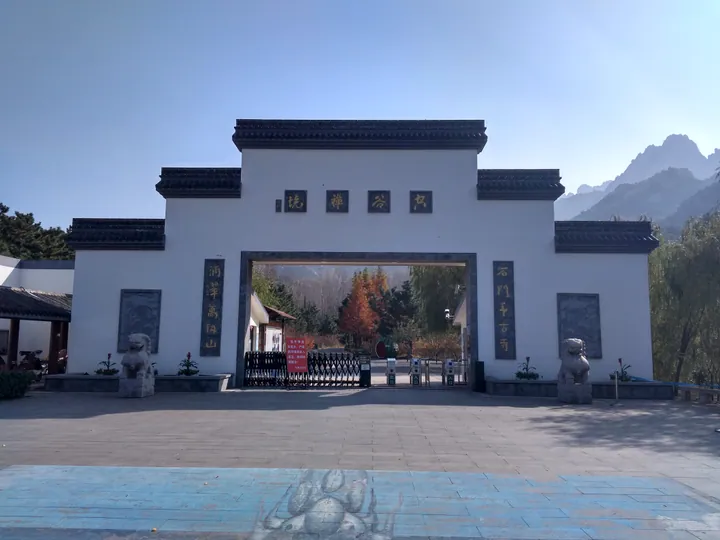
Photo adjustments
Full frame retained; proportionally resized and converted to WebP. No retouching or changes to the photographed subject. Card displays may crop the view.
Explore the region
About Dazhu Mountain
Dazhu Mountain (大珠山) is a coastal massif of about 65 km² in Binhai Subdistrict (滨海街道), Huangdao District (黄岛区), on the west coast of Qingdao (青岛), Shandong. Its highest point, Dazhaiding (大砦顶), reaches 486 m.
Xinhua describes the peaks as a string of beads scattered along the sea, and the mountain has long been known for its lush valleys, odd peaks, strange rocks and masses of flowers. Historically it was called a "famous mountain on the sea shore" (岸海名山). With the smaller Xiaozhu Mountain (小珠山) it formed the "twin pearls" of Shuangzhu Qianyun (双珠嵌云), a scene in the old Eight Views of Jiaozhou (胶州八景). The Dazhushan Scenic Area was the first in Qingdao to be rated a national 4A tourist attraction.
Paths climb the mountain from two sides. From the north the path starts at Shimen Temple (石门寺), named for the two natural boulders that form its gate. Qingdao News dates its founding to the fifth year of the Jin-dynasty Dading reign (1165); a spring beside the gate that does not dry up in drought gave it the second name Yuquan (玉泉, "Jade Spring"). The main hall and the pagoda forest were rebuilt in 1995. In front of the temple runs Shimen Gorge (石门涧), and a boulder on its west side carries a poem in the hand of the Ming writer Wang Wujing (王无竟).
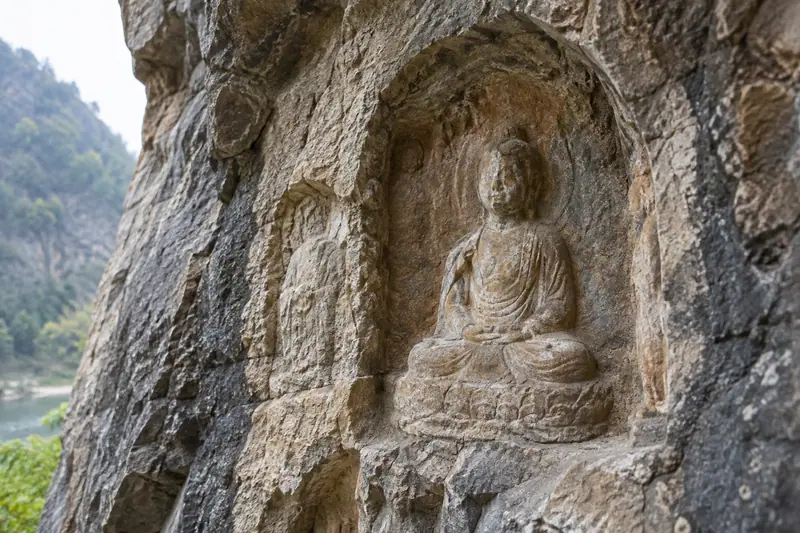
From the east the path enters Zhushan Xiugu (珠山秀谷), three valleys covered with wild azaleas across some ten thousand mu. Qingdao News names three kinds: lanjingzi (蓝荆子), in flower from early to late April; yingshanhong (映山红), with larger, redder blooms from late April; and kongtonghua (崆峒花), which lasts into early June. An azalea festival is held each spring. Around the mountain are further Buddhist remains, including rock-cut grottoes dated to the Sui and Tang and the Zhushan stone chambers (珠山石室).
What to look for
- Shimen Temple (石门寺), entered between two natural boulders, with its Jade Spring
- The temple's pagoda forest (墓塔林), restored in 1995
- Shimen Gorge (石门涧), with a poem by the Ming writer Wang Wujing carved on a boulder
- Zhushan Xiugu (珠山秀谷), three valleys of wild azaleas flowering from April to early June
- Sui and Tang grottoes (隋唐石窟) and the Zhushan stone chambers (珠山石室)
- Relics of the mountain's recluses: the Poetry Recitation Terrace (吟诗台), Mayi Nunnery (麻衣庵) and the Sea-Viewing Tower (望海楼)
- Dazhaiding (大砦顶), the 486 m main summit
Location & getting there
Getting to Dazhu Mountain
- Search for 大珠山 with 青岛市 and 黄岛区.
Find Dazhu Mountain
大珠山 · 黄岛区
No reliable map pin yet: search by the Chinese name.
Sources & visit information
Written from the linked sources and checked sentence by sentence against quoted extracts by a separate reviewer on 2026-09-23. Opening hours, admission and access arrangements are not covered; confirm current visitor information with the site.
Some facts checked against Wikipedia contributors, "大珠山" · CC BY-SA 4.0.