

Explore the region
Tap any red Chinese text to hear it in Mandarin.
Why visit
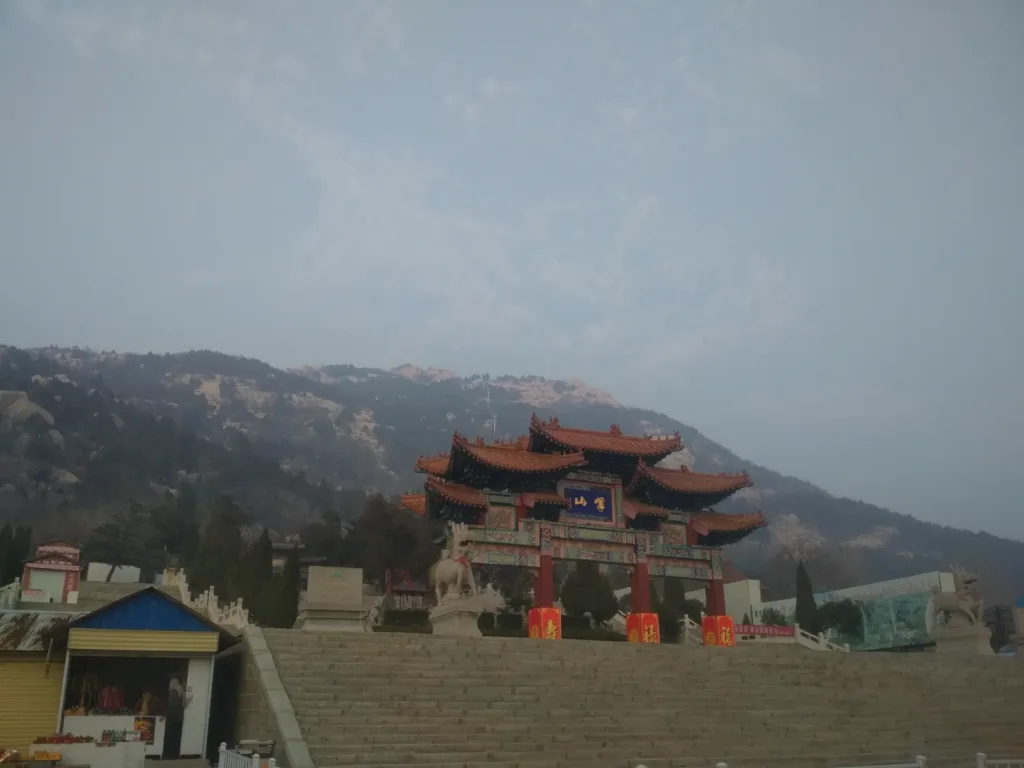
Mount Yi is a mountain landscape rather than a single hall or viewpoint. Rounded granite boulders, stacked rocks, steep stone paths and cave-like passages make the climb feel close to the geology. The main summit is Wuhua Peak (五华峰), and the mountain’s paths also lead past temples, academies and carved stones.
Its cultural identity is unusually layered. Mount Yi is widely identified with the “Eastern Mountain” in the Mencius passage about Confucius climbing high enough to see the state of Lu as small; the local landmark Xiaolu Terrace (小鲁台) keeps that story attached to a physical overlook. The identification is a traditional and scholarly association, not a claim that every named platform preserves an untouched ancient structure.
The most important things to look for are the Northern Qi Buddhist cliff inscriptions. The Jining cultural-heritage authority records two well-known Mount Yi examples: the Manjusri Prajnaparamita Sutra carving on Wuhua Peak and the carving beside Yaojing Cave (妖精洞). It also records more than 80 historical stelae and over 300 cliff and cave inscriptions across the mountain. Read the marks as protected heritage: do not rub, chalk or climb on the carved surfaces.
Mount Yi is also tied to the First Emperor of Qin’s eastern tour and the Qin Yishan Stele. That association explains why calligraphy and imperial travel recur in accounts of the mountain, but the original Qin stele is not preserved on the mountain according to a 2020 account in Guangming Daily. Do not plan the visit as a chance to see the original Qin inscription.
What to notice on the climb
- The boulder country: watch how rounded granite blocks form walls, openings and short passages rather than a smooth mountain trail. Some sections are steep or confined, so sturdy shoes and free hands are more useful than dress shoes.
- Wuhua Peak (五华峰): the main summit and the setting for one of the mountain’s Northern Qi sutra carvings. Weather, vegetation and the angle of the rock can make the inscription difficult to read; treat it as a protected surface, not a photo prop.
- Yaojing Cave (妖精洞): the cave-side inscription is another key reason to look beyond the scenery. The nearby rock passages are part of the experience, but they are not a promise of easy access for every visitor.
- Xiaolu Terrace (小鲁台): a place to connect the landscape with the “Eastern Mountain” story. The value is the relationship between the lookout, the surrounding plain and the text attributed to Mencius, rather than a surviving Qin monument.
- Religious and educational remains: Taiping Xingguo Temple (太平兴国寺), Yiyang Academy (峄阳书院) and other rebuilt or restored structures add later Buddhist, Daoist and educational layers to the route. Check what is open on the day rather than assuming every named building is an operating temple or museum.
How to visit
Use the Chinese destination 峄山风景区 Yìshān Fēngjǐngqū when checking local directions. The mountain is in Zoucheng (邹城市), Jining, rather than in Qufu city. Current sources read for this guide do not establish one permanent visitor gate, a current daily opening schedule, or a current ticket and cableway package. If a map offers more than one gate, confirm the actual visitor entrance with the operator before setting out; do not infer an entrance from an old route description.
This is a route for people comfortable with uneven stone steps and narrow rock sections. The exact amount of climbing depends on the route and any facilities operating that day. A 2020 on-foot account entered from the south-west side and climbed without using the cable car, but that is a travel account rather than a current gate or operating notice.
Getting there and back
From Zoucheng, use Zoucheng Route 2 (邹城2路) and ask for the Chinese destination 峄山风景区 Yìshān Fēngjǐngqū. A 20 September 2026 report attributed to Zoucheng Tourism describes the upgraded Route 2 tourism bus as linking the railway and coach transport hubs, adding Meng Temple and Mansion, and running south directly to Mount Yi Scenic Area. The report does not provide a dependable departure table, platform number or exact stop sequence. Confirm the vehicle direction and the destination shown on the bus before boarding.
For the return, wait at the marked scenic-area stop and take the opposite-direction Route 2 only after checking that it is going back toward the city transport hubs. Do not assume that the last bus, the stop location or the service frequency is unchanged; the local bus operator lists its current consultation channels as the Zoucheng Bus website and WeChat account.
The named urban rail gateway is Zoucheng Railway Station (邹城站). A local travel guide also identifies the city coach hub as Zoucheng Coach Station (邹城汽车站), while the newer tourism-bus report refers more generally to the railway and coach hubs. Use those Chinese names when checking the day’s interchange, but verify the actual Route 2 stop on arrival.
If you arrive at Qufu East Railway Station (曲阜东站 / 曲阜高铁), do not confuse it with Zoucheng Station or treat it as the scenic entrance. A 2026 Qufu transport-operator table lists business-vehicle services between “曲阜高铁” and “邹城”, including return directions, but it does not establish a direct Mount Yi shuttle. Confirm the drop-off at 峄山风景区 Yìshān Fēngjǐngqū and arrange the return before relying on that service.
A taxi or ride-hailing car can use 峄山风景区 Yìshān Fēngjǐngqū as the Chinese destination. If the driver or map presents several gates, ask the operator which gate is admitting visitors that day. No fixed fare, journey time or cableway operating status is stated here because the current source set does not verify them. Recent local coverage also described extended night-tour programming during a holiday-oriented tourism push; that report is not a general daily opening timetable, so evening visitors should confirm the current notice first.
Find Mount Yi
峄山 · 邹城市
The pin marks the area, not the entrance.
Sources & visit information
Sources checked on 25 October 2026. Hours, tickets, reservations and transport can change; confirm with the operator before you go.
Image credits & notes (1)
- Entrance gate and granite boulder landscape of Mount Yi Scenic Area, Zoucheng Photo: Air7538Photo: CC BY-SA 4.0