

Photo adjustments
EXIF orientation normalized; resized without changing aspect ratio; converted to WebP. No subject edits.
Explore the region
About Tianshang Wangcheng Scenic Area
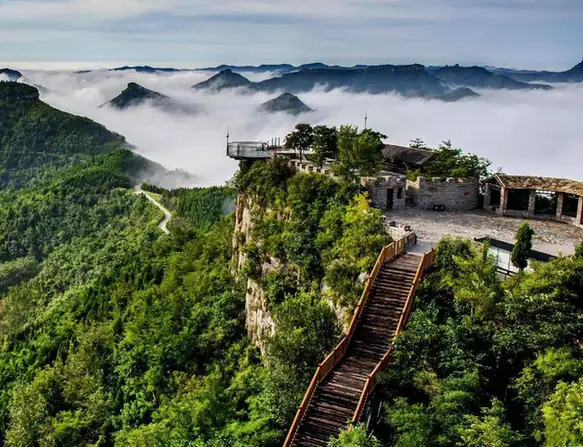
Jiwanggu is one of the flat-topped mesas, known locally as gu, that characterise this part of the Yimeng mountains; the Shandong culture and tourism department calls it the foremost of the 'seventy-two gu of Yimeng'. Its summit carries three large rock knolls running from south to north and stands at 577.2 metres. A Qing gazetteer of Yishui County dated to 1672 describes the top as broad and flat and repeats a tradition that the Marquis of Ji left his state and settled here, which is where the name Jiwang, king of Ji, comes from.
In early 2012 construction work on a water-based amusement facility south of the summit reservoir turned up bronze fragments. With approval from the National Cultural Heritage Administration, the Shandong Provincial Institute of Cultural Relics and Archaeology, Shandong University and the Linyi and Yishui heritage departments carried out rescue excavation over the following two years and uncovered two Spring and Autumn tombs. Tomb No. 1 is a rectangular pit cut into the rock, about 28 metres north to south as preserved and 13.6 metres across, some 400 square metres in area, with the coffin chamber at the south end and a chariot-and-horse pit at the north; bronzes, jades and pottery came from object boxes set around the coffin chamber. The department dates the burial to the middle-to-late Spring and Autumn period, judges it to be of princely rank, and describes the combination of burial chamber and chariot pit in a single rock cavity as a previously unrecorded type. The excavation was named one of China's ten major archaeological discoveries for 2013 at the announcement in Beijing in April 2014, and the Jiwanggu tomb group is one of eight provincial-level protected heritage sites in Yishui County.
Visitors should keep the two layers apart. Besides the excavated tombs, Yishui County government lists a set of remains surviving on the summit, among them a Jiwang hall, a rear palace, an altar, stretches of old wall, an old village site, a spring, a flagstaff socket and a reviewing platform, but it does not date them or say which are original fabric. The finds themselves are held off the mountain: more than 190 pieces or sets were recovered, and Yishui County Museum devotes a 428-square-metre gallery to the tomb, showing 174 objects.
What to look for
- The flat summit of Jiwanggu at 577.2 metres, with three rock knolls running south to north
- The site of the rock-cut Spring and Autumn tomb, where the coffin chamber and the chariot-and-horse pit share a single cavity
- The summit remains listed by the county government, including the Jiwang hall, the altar, the old walls and the village site
- The spring, flagstaff socket and reviewing platform among the named summit features
- The dedicated Spring and Autumn tomb gallery at Yishui County Museum in the county seat, where 174 of the excavated objects are displayed
Location & getting there
Getting to Tianshang Wangcheng Scenic Area
Check which interiors and courtyards are accessible. Active places of worship and protected monuments may have different visitor rules.
- Search for 天上王城 with 临沂市 and 沂水县.
Find Tianshang Wangcheng Scenic Area
天上王城 · 沂水县
No reliable map pin yet: search by the Chinese name.
Sources & visit information
The linked sources support the identity and background described in this introduction. Opening hours, admission, activity availability and exact arrival arrangements have not been comprehensively checked. Confirm current visitor information with the venue; the original catalogue locality and editorial review flag are retained.