

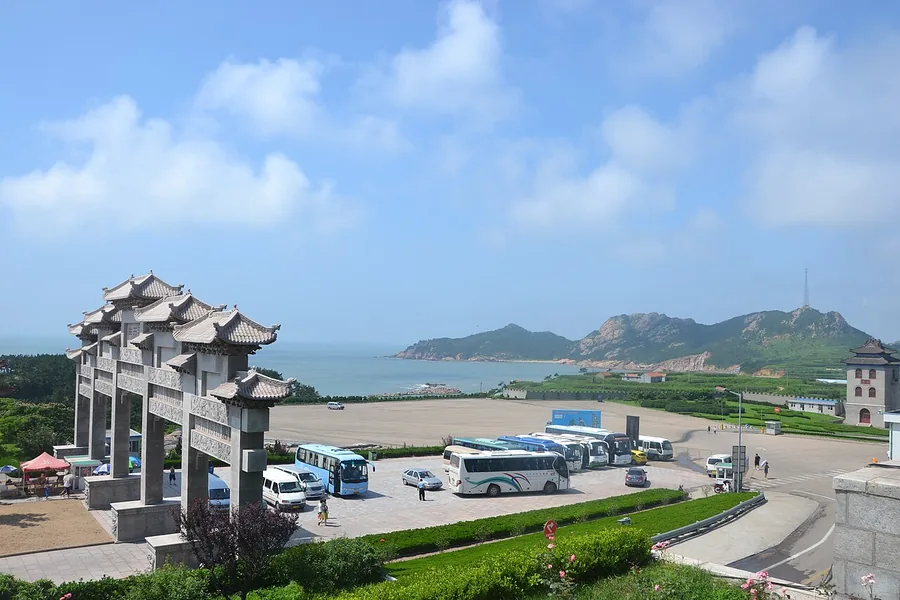
Photo adjustments
Proportionally resized and converted to WebP without cropping, retouching or changing the photographed subject.
Explore the region
About Chengshantou
Sea surrounds the promontory on three sides.
The scenic area also contains monuments associated with Qin Shi Huang, including the First Emperor Temple. Coastal geography and imperial-era traditions therefore form two distinct strands of the visit.
Chengshantou takes its name from the Chengshan mountain range (成山山脉), at whose eastern end it lies, and was regarded by ancient people as the dwelling place of a sun god. Qin Shi Huang visited twice between 219 and 210 BC, on one occasion having the minister Li Si (李斯) inscribe a stone tablet reading 'Tianjintou Qindongmen' (天尽头秦东门). Emperor Wu of Han (汉武帝刘彻) toured to the site in 94 BC. In 1895, during the Sino-Japanese naval battle, Japanese forces landed at Chengshantou and occupied Weihaiwei.
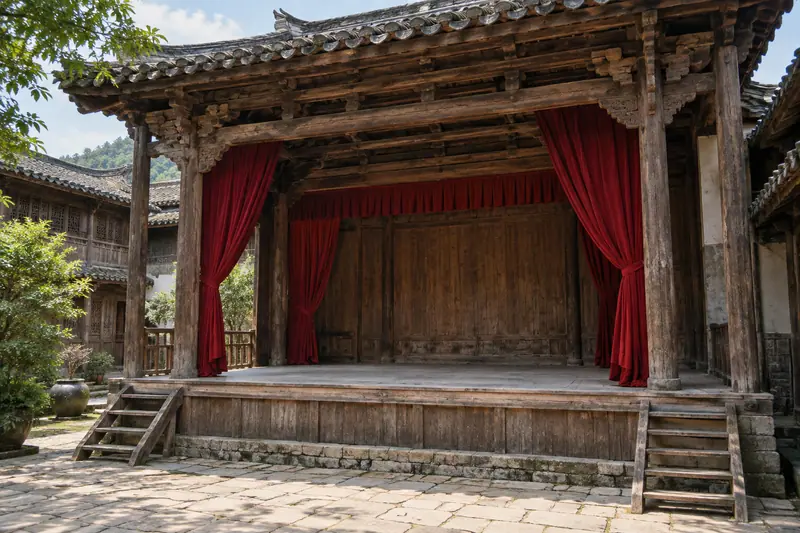
The First Emperor Temple, on the site of Qin Shi Huang's former temporary palace, covers 0.66 hectares and is said to be the only such temple in China; it contains the Hall of the First Emperor, a Shrine of the Sun Lord, Tianhou Palace, an opera stage and the Deng Gong Shrine, built in memory of Deng Shichang (邓世昌). Offshore to the north, the 0.07-square-kilometer Hailu Island (海驴岛) hosts many seagulls.
The area was approved as a national-level scenic area in 1988, rated a national 4A tourist attraction in 2002, and listed in 1992 as a provincial-level Major Historical and Cultural Site Protected (省级重点文物保护单位). Constant wave action has produced marine-erosion landforms such as sandbars and sea-eroded pillars and caves, and in 2002 the Chengshantou Marine Ecological Reserve, covering 63.66 square kilometers, was established there.
What to look for
- Sea surrounds the headland on three sides.
- The First Emperor Temple adds a Qin Shi Huang tradition to the coastal landscape.
Location & getting there
Getting to Chengshantou
Approach Chengshan town in Rongcheng for the headland scenic area. This is a coastal excursion to the eastern end of the peninsula rather than central Weihai.
- Confirm the visitor entrance and access to the named areas before departure.
Combine your visit
A suggested sequence through the named features described in the source.
-
Headland coastline
Sea surrounds the headland on three sides.
-
First Emperor Temple
The First Emperor Temple adds a Qin Shi Huang tradition to the coastal landscape.
The order is an editorial suggestion. Internal opening arrangements and transfers between sectors need checking; no walking duration or access entitlement is implied.
Find Chengshantou
成山头 · 威海市
The pin marks the area, not the entrance.
More places nearby
Approximate straight-line distances between map pins, not travel distances.
Liugong Island 刘公岛
48 km awayLiugong Island guards the mouth of Weihai Bay, with wooded slopes above a concentration of naval heritage sites. The former Beiyang naval headquarters and the Iron Pier show how the island functioned as a late-Qing fleet base…
View guide →Weihai 威海
53 km awayWeihai’s sheltered harbour and open bathing coast offer two different ways to understand the city. Offshore, Liugong Island preserves naval buildings and exhibitions connected with the Beiyang Fleet and the war of 1894–95. To…
View guide →Weihai International Bathing Beach 威海国际海水浴场
61 km awayWeihai’s International Bathing Beach occupies a long, naturally enclosed bay on the northwestern coast. Fine sand runs below Huanhai Road, with a coastal boardwalk and green spaces linking the beach approaches. White Sail Square…
View guide →Sources & visit information
The linked encyclopedia sources support background and place descriptions. Current opening hours, ticket prices, booking rules and transport schedules have not been independently verified for this guide. Confirm them with the venue or operator before travelling.
Visitor information adapted and edited from Wikipedia contributors, “成山头” · CC BY-SA 4.0. Source revision 92198850.
Background paragraphs translated and condensed from Wikipedia contributors, "成山头", Chinese Wikipedia · CC BY-SA 4.0. Source revision 92198850.